Microsoft Announces Project Helix as the Next Xbox
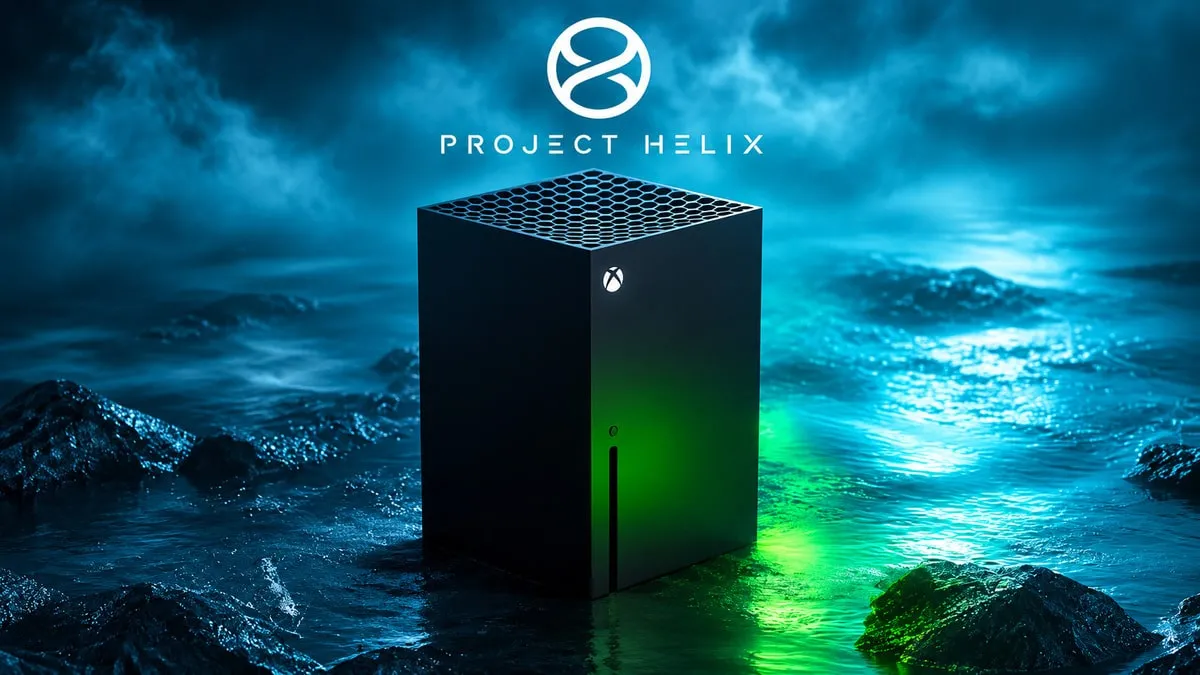
Microsoft is currently building its next-generation Xbox console, which carries the internal codenamed Project Helix. This new hardware is designed specifically to play both traditional Xbox console titles and computer games on a single device. Jason Ronald, who serves as Xbox vice president of next-generation, shared details about how the company plans to merge these two distinct libraries during an interview for the Xbox 25th Anniversary Magazine.
The announcement marks a significant shift in how Microsoft approaches hardware design by bridging the traditional gap between closed console ecosystems and open computer gaming platforms. Ronald stated that players will be able to carry over supported games and saved progress spanning four generations of Xbox hardware. Microsoft wants users to find and launch their titles quickly through a streamlined console-style interface, while simultaneously giving players who desire greater control access to detailed graphics and performance settings.
Despite these early revelations, Microsoft has yet to explain exactly how personal computer games will run on Helix, which digital stores the hardware will support, or whether players will be able to access software they already own on platforms like Steam. This leaves several technical questions unanswered as development on the platform continues behind closed doors at Microsoft headquarters.
How Project Helix Will Run PC Games and Console Titles
For decades, the video game industry maintained a strict boundary between dedicated living room consoles and desktop computers. Consoles traditionally offered plug-and-play simplicity with fixed hardware specifications, whereas desktop computers provided vast software libraries, modding capabilities, and adjustable graphical settings at the cost of higher complexity and expense. Project Helix aims to dissolve this boundary by merging the two paradigms into a single living room device.
The technical integration of computer software onto dedicated console hardware requires sophisticated translation layers and operating system adaptations. While Microsoft possesses deep expertise in both Windows operating systems and Xbox console development, running desktop titles efficiently on living room hardware presents unique engineering hurdles. Developers must optimize their software to run on standardized silicon while maintaining the flexibility that desktop gamers expect.
By allowing users to access advanced graphics and performance settings alongside a fast console interface, Microsoft is attempting to satisfy two distinct audiences. Casual players can enjoy the simplicity of traditional console launching, while enthusiasts can fine-tune frame rates, resolutions, and visual effects similar to a high-end desktop rig. However, the exact mechanics of how these settings will integrate with computer storefronts remain undisclosed by corporate leadership.
Custom AMD Chips and Neural Rendering Technology
Under the hood, Project Helix will use a custom AMD chip designed to handle the demanding workloads of both console and desktop software. Alongside this silicon architecture, the system will support advanced neural rendering capabilities. Ronald explained that this technology gives Microsoft a fresh method to generate frames and improve visual quality without requiring proportional increases in raw computing power or memory capacity.
Neural rendering uses machine learning algorithms to assist in image generation, potentially reducing the strain on the processor and graphics card. This approach reflects a broader industry trend toward artificial intelligence-assisted graphics, which helps systems achieve higher fidelity without demanding massive physical hardware footprints. Despite outlining the purpose of the technology, Microsoft has yet to detail which specific neural rendering features the console will offer or how external developers will implement them in their upcoming titles.
The reliance on custom AMD silicon continues a long-standing partnership between Microsoft and Advanced Micro Devices. Previous generations of Xbox hardware, including the Xbox Series X and Xbox Series S, also used custom AMD processors built on architecture that balanced CPU and GPU workloads. Project Helix represents the next evolution of this silicon partnership, tailored specifically for hybrid computing tasks.
Prioritizing Immersive Gameplay Over Headline Specs
Rather than focusing on traditional hardware marketing metrics, Ronald noted that the development team is putting more emphasis on new kinds of games and more immersive gameplay experiences. This strategy departs from the historical pursuit of headline specifications such as 8K resolution or 240Hz refresh rates, which often drive marketing campaigns but offer diminishing returns for the average player in a living room setting.
Ronald expects gaming technology to advance more rapidly over the next three to five years than it has over the past decade. This projected acceleration in technical capability encompasses software design, artificial intelligence integration, and novel interaction methods. By shifting focus toward immersion and software innovation, Microsoft hopes to define a new era of interactive entertainment that transcends traditional hardware limitations.
The emphasis on gameplay variety also addresses developer needs. As production costs for triple-A video games reach unprecedented heights, studios require flexible platforms that streamline creation across multiple form factors. By unifying computer and console environments, Project Helix could simplify development pipelines for studios that traditionally had to build separate versions for different platforms.
Release Timeline and Projected Pricing for Project Helix
The rollout timeline for Project Helix involves a phased approach that begins with developer hardware distribution. Microsoft plans to send early Helix hardware units to software creators in 2027, giving studios ample time to optimize their titles for the upcoming architecture. This early developer window is critical for ensuring that launch software is stable and fully uses the custom AMD chip and neural rendering features.
Regarding consumer availability, Microsoft has yet to announce an official release date or a retail price for the general public. However, external financial and industry reports have shed light on corporate expectations. Wccftech, citing a report from Fortune, indicated that Microsoft is targeting the 2028 holiday season for the consumer launch of Project Helix. Furthermore, the report revealed that Microsoft has internally projected an unsubsidized retail price ranging from $1,200 to $1,800.
This projected price point places the upcoming hardware in a fundamentally different market category than traditional living room consoles, which are frequently sold at a loss and subsidized by software sales. An unsubsidized price of up to $1,800 reflects the high-end nature of the custom AMD silicon and the ambition of combining a high-performance computer experience with a dedicated console. As development continues toward the 2028 horizon, industry watchers will monitor Microsoft for official confirmations regarding pricing, store compatibility, and hardware specifications.