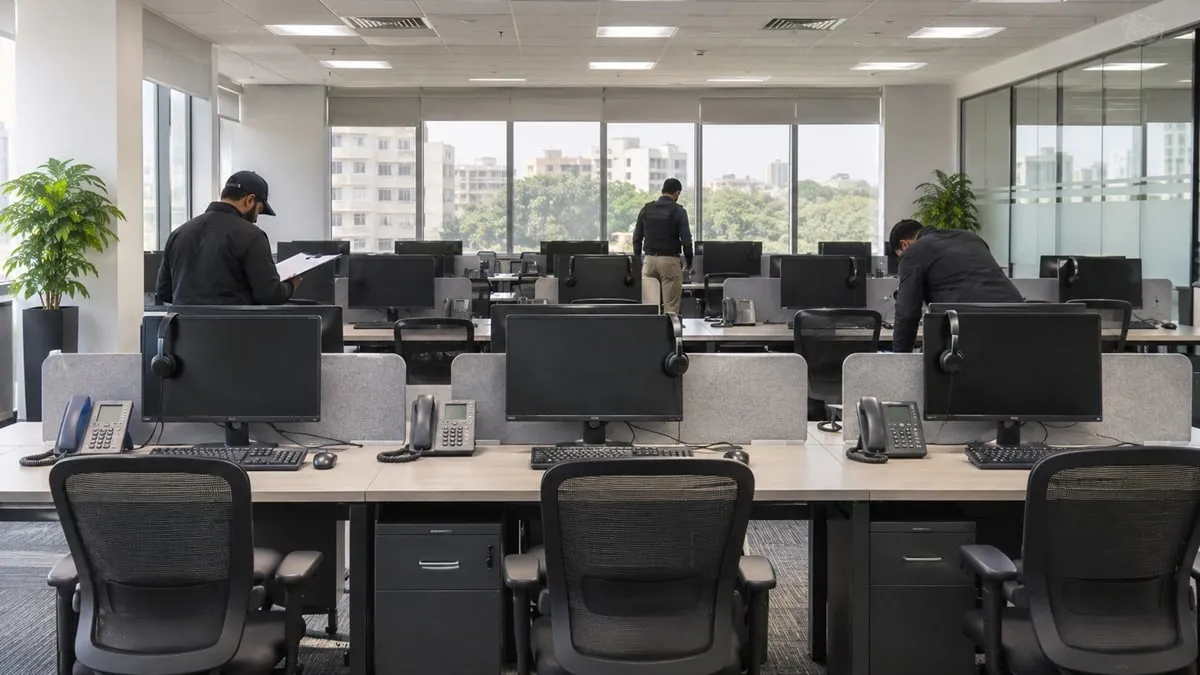
The National Cyber Crime Investigation Agency (NCCIA) has warned young job seekers against accepting attractive salary offers from illegal call centres in Islamabad without checking their legal status.
The agency urged applicants to verify a company's credentials before accepting employment to avoid becoming trapped in unlawful operations.
What Makes a Call Centre Legal in Pakistan?
According to the NCCIA, a call centre operating in Pakistan must be registered with the Securities and Exchange Commission of Pakistan (SECP) and must possess a National Tax Number (NTN) issued by the Federal Board of Revenue (FBR). These two identifiers confirm that the business is recognised under the Companies Act and is compliant with tax obligations.
In addition, the Pakistan Software Export Board (PSEB) maintains a list of certified software and BPO firms that are eligible for export incentives. While registration with PSEB is not a statutory requirement for all call centres, many legitimate firms seek this endorsement to demonstrate adherence to export-oriented standards.
Why Young Professionals Are Targeted
Pakistan's youth unemployment rate remains above 10 percent, according to the Pakistan Bureau of Statistics. The promise of a high-paying, entry-level position in a call centre therefore appears especially attractive to recent graduates and fresh school leavers. Illegal operators exploit this demand by advertising salaries that are markedly higher than market averages, often ranging from Rs. 30,000 to Rs. 50,000 per month for roles that require minimal experience.
These offers are typically circulated through social media groups, private messaging apps, and informal networks. Because the advertisements lack official branding, many applicants assume the postings are legitimate until they receive a job offer.
How to Verify a Call Centre's Legitimacy
The NCCIA outlined a three-step verification process:
- Check the company's registration on the SECP portal using the firm's name or registration number. The portal provides details such as incorporation date, directors, and current status.
- Confirm the presence of a valid NTN on the FBR's online verification system. An active NTN indicates that the firm is filing tax returns and is subject to audit.
- Search the PSEB's directory for the company's name to see if it has been granted export-oriented certification.
If any of these checks fail, the NCCIA advises candidates to treat the offer with suspicion and to report the listing to the agency's cyber-crime helpline.
Legal Consequences for Operating Illegal Call Centres
Operating a call centre without SECP registration and an NTN violates the Companies Act 2017 and the Income Tax Ordinance 2001. Penalties can include fines up to Rs. 1 million, seizure of equipment, and imprisonment for up to three years for repeat offenders.
Beyond financial penalties, illegal call centres have been linked to money-laundering schemes, fraudulent telemarketing, and the distribution of pirated software. The NCCIA's warning is part of a broader crackdown that began in early 2023, when the agency reported a 27 percent rise in complaints related to bogus employment offers.
Separate Case: Arrest of Imran Murtaza in Sialkot
In a separate investigation, the NCCIA arrested a man in Sialkot for allegedly blackmailing a woman from Gujranwala through social media. The suspect, identified as Imran Murtaza, works in the cloth business.
Investigators allege that Murtaza uploaded the woman's private videos and edited pictures on TikTok, then demanded money to remove the content. The NCCIA received credible information about the extortion, which led to a coordinated operation to secure his mobile phone and digital accounts.
After the arrest, the agency's forensic team began a detailed examination of the seized devices. Digital evidence, including chat logs, video files, and editing software metadata, was sent to the cyber-forensics laboratory for analysis.
How the Investigation Was Conducted
The NCCIA's cyber-crime unit follows a standard protocol when handling online blackmail cases:
- Receipt of a complaint or tip-off through the agency's hotline or online portal.
- Verification of the victim's identity and collection of initial evidence, such as screenshots or URLs.
- Obtaining a warrant, where required, to seize electronic devices.
- Forensic imaging of the devices to preserve data integrity.
- Analysis of metadata to trace the origin of the content and identify any accomplices.
In Murtaza's case, the forensic examination is expected to confirm the timeline of uploads, the tools used for editing, and any financial transactions linked to the extortion demand.
Impact on the Wider Community
The NCCIA's dual warnings affect several groups:
- Job seekers in Islamabad and other major cities, who now have a clear checklist for vetting employers.
- Legitimate BPO and software export firms, which benefit from a cleaner market environment and reduced competition from illegal operators.
- Women and other vulnerable internet users, who receive a reminder that online blackmail is actively pursued by law enforcement.
- Businesses in the cloth sector and similar industries, which may face heightened scrutiny if employees engage in cyber-crimes.
What Comes Next
The NCCIA has announced that it will continue to monitor social media platforms for suspicious job postings and will increase public awareness campaigns in universities and vocational institutes.
For the Sialkot case, the suspect will appear before a magistrate within the next 48 hours. If forensic analysis confirms the allegations, he faces charges under the Prevention of Electronic Crimes Act 2016, which carries a maximum imprisonment of seven years and fines up to Rs. 5 million.
Citizens are encouraged to report any similar incidents through the NCCIA's dedicated helpline (0800-123-456) or via the agency's official website.





