Nothing Reveals Design of First Screenless AI Device
Nothing CEO Carl Pei has revealed the design of the company's first artificial intelligence native device, which will launch in December 2026 without a screen. The company previously confirmed that it was developing a dedicated artificial intelligence product but had shared only a partial glimpse of its design. Pei has now posted a short video on X showing the upcoming device in greater detail. Although the teaser reveals its appearance, Nothing has yet to disclose the product's name, specifications, or exact purpose.
The tech industry has observed a growing trend of hardware manufacturers attempting to move beyond traditional smartphones and personal computers. As artificial intelligence models become more capable, companies are exploring form factors that remove displays entirely to reduce distractions and encourage natural interactions. This philosophy has led to various experimental gadgets hitting the market, ranging from lapel pins to wearable pendants.
Consumer electronics firms face significant challenges when launching screenless hardware because users rely heavily on visual feedback. Without a screen, these gadgets must depend entirely on audio cues, haptic feedback, or companion smartphone applications to communicate information. Nothing enters this competitive space with a reputation for transparent design aesthetics and minimalist hardware approaches, which could influence how consumers receive this new gadget.
Hardware Features and Physical Design of the New Device
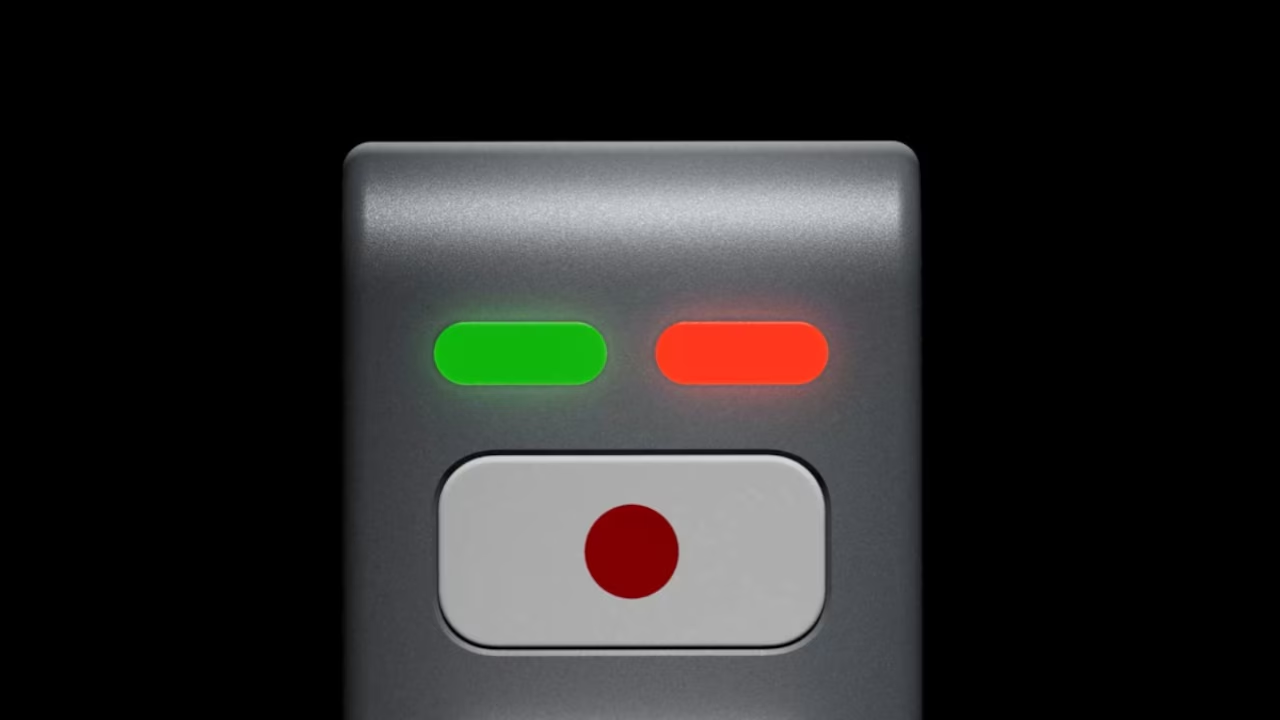
The video shows a compact device with a brushed metal body, rounded corners, and curved edges. Its front features a large physical button marked with a red dot, along with two pill-shaped LED indicators that illuminate in orange and green. The button resembles a recording control, suggesting the device could be designed to capture voice conversations or other audio. However, Nothing has not confirmed whether it will function as an artificial intelligence voice recorder or explained the purpose of the button and indicator lights.
The device also lacks a display, unlike conventional smartphones and other screen-based artificial intelligence products. The choice of a brushed metal finish aligns with the industrial design language that Nothing has used for its existing lineup of audio accessories and smartphones. Physical controls combined with status lights point toward a utilitarian approach, prioritizing rapid physical interaction over menu navigation.
Context doesn't live in a chat box pic.twitter.com/6o8dmanMik
— Carl Pei (@getpeid) November 10, 2026
Observers note that the absence of a screen places a heavy burden on the quality of the microphones and audio processing units inside the chassis. If the hardware is meant to capture spoken commands or ambient discussions in noisy environments, audio filtering technology must operate at a high level. Analysts watch closely to see whether Nothing builds proprietary audio hardware or relies on off-the-shelf components for this release.
Context and Expectations for Conversational Artificial Intelligence
Pei shared the teaser with the caption, "Context doesn't live in a chat box." The statement suggests Nothing may be developing an artificial intelligence device that can understand and remember information from real-world interactions rather than relying entirely on text-based conversations. This could allow users to provide context to an artificial intelligence system without repeatedly entering information into a chatbot. However, Nothing has not confirmed whether the device will support conversation recording, memory features, or other context-aware functions.
The company has also not explained how users will interact with the device or how its artificial intelligence capabilities will work. Modern large language models require substantial processing power, which raises questions about whether the device will process data locally on a chip or rely on cloud connectivity via a paired smartphone. Cloud dependency introduces considerations regarding battery life, latency, and continuous internet access, all of which dictate how practical a wearable hardware accessory proves to be during daily use.
Privacy advocates often scrutinize ambient listening devices because continuous audio capture creates potential risks for bystanders who have not consented to recording. Companies entering the wearable recording space must implement clear indicators, such as the orange and green LED lights seen on the Nothing teaser, to signal when data collection is active. Clear communication regarding data storage, encryption, and user control remains vital for consumer adoption.
Launch Timeline and What Comes Next in December
Nothing has previously confirmed that its first artificial intelligence native product would arrive in December 2026. Pei described the upcoming product as a dedicated tool rather than a smartphone application, emphasizing that its functionality required a separate hardware device. The company has not revealed its price, technical specifications, battery capacity, or availability. For now, the new teaser provides a closer look at the hardware, while the device's actual capabilities remain unknown. Nothing is expected to be revealed when it officially introduces the product next month.
As the official introduction approaches, supply chain checks and regulatory filings often provide additional clues regarding unannounced hardware. Technology analysts recommend watching for Bluetooth Special Interest Group listings or Federal Communications Commission filings, which typically appear weeks before a commercial rollout. These regulatory documents often reveal battery sizes, connectivity standards, and manufacturing origins that manufacturers omit from initial marketing teasers.
Retail pricing strategy will play a decisive role in how the market evaluates the new gadget. Competitors offering screenless artificial intelligence wearables have experienced mixed commercial results due to subscription costs, hardware limitations, and software reliability issues. Nothing will need to demonstrate clear utility that justifies carrying an extra piece of hardware alongside a modern smartphone.