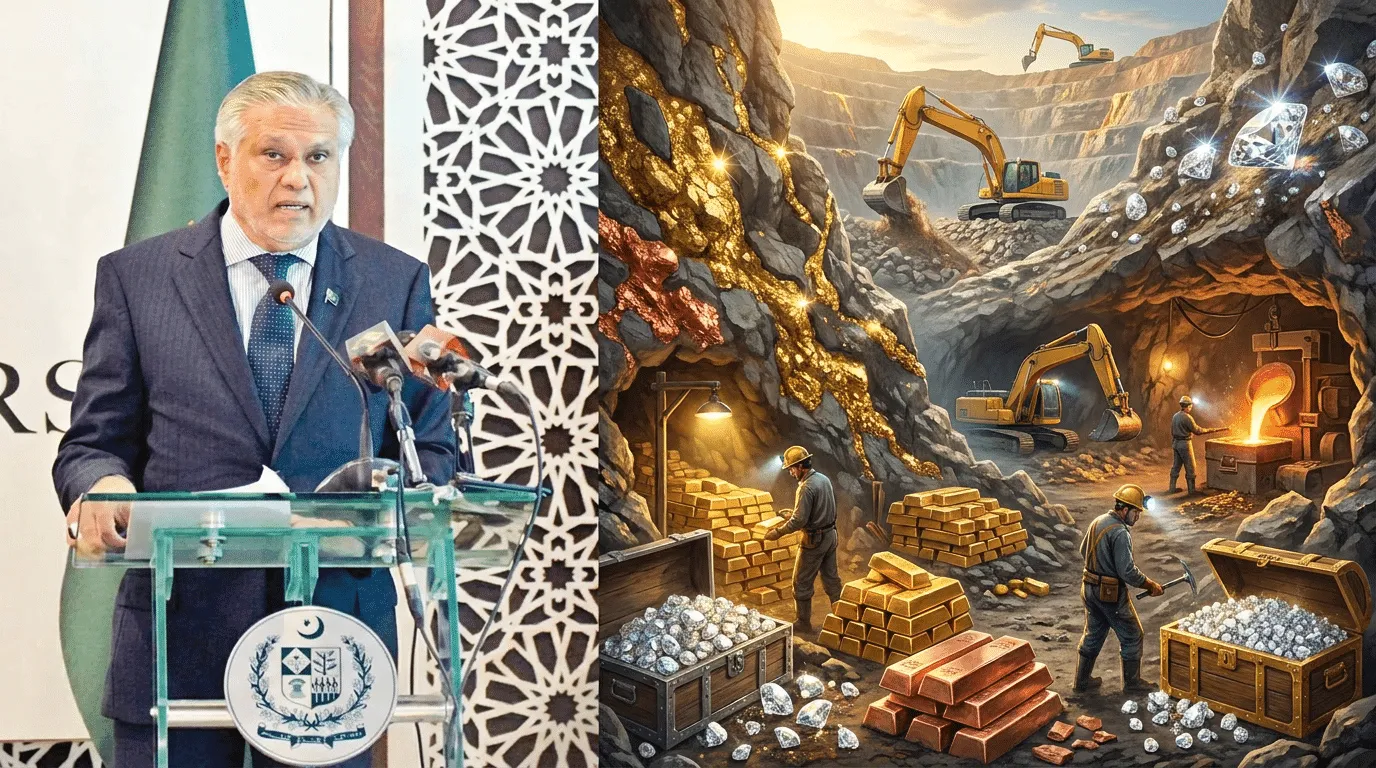
Pakistan Minerals Investment Forum 2026 Strategy Shift
Pakistan plans to develop local facilities to process, refine, and manufacture mineral products instead of exporting its mineral resources in raw form, Deputy Prime Minister Ishaq Dar said on Thursday.
Addressing the Pakistan Minerals Investment Forum 2026 in Islamabad, Dar said the government wanted to develop the entire mineral value chain by attracting investment in mining, technology, processing facilities, energy, transportation, and logistics.
This strategic pivot marks a distinct departure from historical practices where natural wealth left the country unprocessed. Building domestic refinement plants keeps more economic value inside national borders and provides higher-paying technical jobs for local workers.
Policymakers intend to transform the mining sector into a primary engine for industrial growth rather than keeping it a simple extraction industry. The government wants to use mineral development to diversify exports, expand domestic manufacturing, and strengthen Pakistan's industrial base.
Beyond Resource Extraction: Building Domestic Industrial Capacity
He said Pakistan's mineral development strategy would go beyond extracting resources and shipping them overseas, with a focus on building domestic industrial capacity.
The initiative could also create opportunities for Pakistani companies in engineering, equipment manufacturing, specialized services, and other related industries.
Industrial expansion of this scale requires reliable electricity, heavy transport networks, and skilled technical labor. Authorities plan to coordinate infrastructural improvements across multiple ministries to ensure that newly built processing zones receive adequate power and logistical support.
Local businesses that previously served only domestic markets can now upgrade their standards to supply the mining sector with heavy machinery, specialized tools, and engineering consulting services.
Target Minerals: Copper, Gold, and Critical Resources
Dar highlighted Pakistan's copper and gold potential along the Tethyan Metallogenic Belt in the western part of the country. He also identified iron ore, chromite, lead, zinc, coal, rock salt, marble, gypsum, and gemstones among the country's mineral resources.
The Tethyan Metallogenic Belt stretches across the region and contains some of the largest undeveloped mineral deposits in the world. Modern geological surveys indicate substantial underground wealth waiting for advanced extraction and processing techniques.
Industrial demand for these specific commodities has grown rapidly due to shifts in global manufacturing and energy consumption patterns. Government geologists maintain detailed inventories of these deposits to assist international mining consortia in planning their exploration blocks.
Global Demand for Critical Minerals and Clean Energy
He said growing demand for copper and other critical minerals, driven by electric vehicles, battery storage, clean energy, and advanced technologies, had created opportunities for Pakistan to attract international investment.
Automobile manufacturers and technology firms worldwide compete fiercely to secure long-term supply agreements for copper and lithium. Pakistan aims to position itself as a reliable supplier within these evolving international supply chains.
Clean energy infrastructure relies heavily on non-ferrous metals to transmit electricity from solar and wind farms to urban centers. By developing local refining capacity, the country connects directly to the green transition economy.
The Reko Diq Copper-Gold Project Model
Dar also highlighted the Reko Diq Copper-Gold Project in Balochistan as an example of how international expertise, federal participation, and provincial ownership could support major mining investments.
Located in the Chagai District of Balochistan, the Reko Diq deposit represents one of the largest copper and gold reserves globally. Past legal disputes and funding challenges delayed its progress for years before stakeholders reached a restructured agreement.
The current framework combines foreign capital and technical know-how with local administrative backing. Officials hope to replicate this cooperative governance model across other mineral-rich regions in the country.
Economic Diversification and Future Outlook
The government wants to use mineral development to diversify exports, expand domestic manufacturing, and strengthen Pakistan's industrial base.
Heavy reliance on a narrow range of traditional export goods has historically left the national economy vulnerable to external price shocks. Expanding into refined minerals opens up new international revenue streams.
Ministry officials continue discussions with foreign investors to secure financing for upcoming infrastructure phases. Observers watch for regulatory updates and upcoming licensing rounds as the strategic roadmap moves toward implementation.





