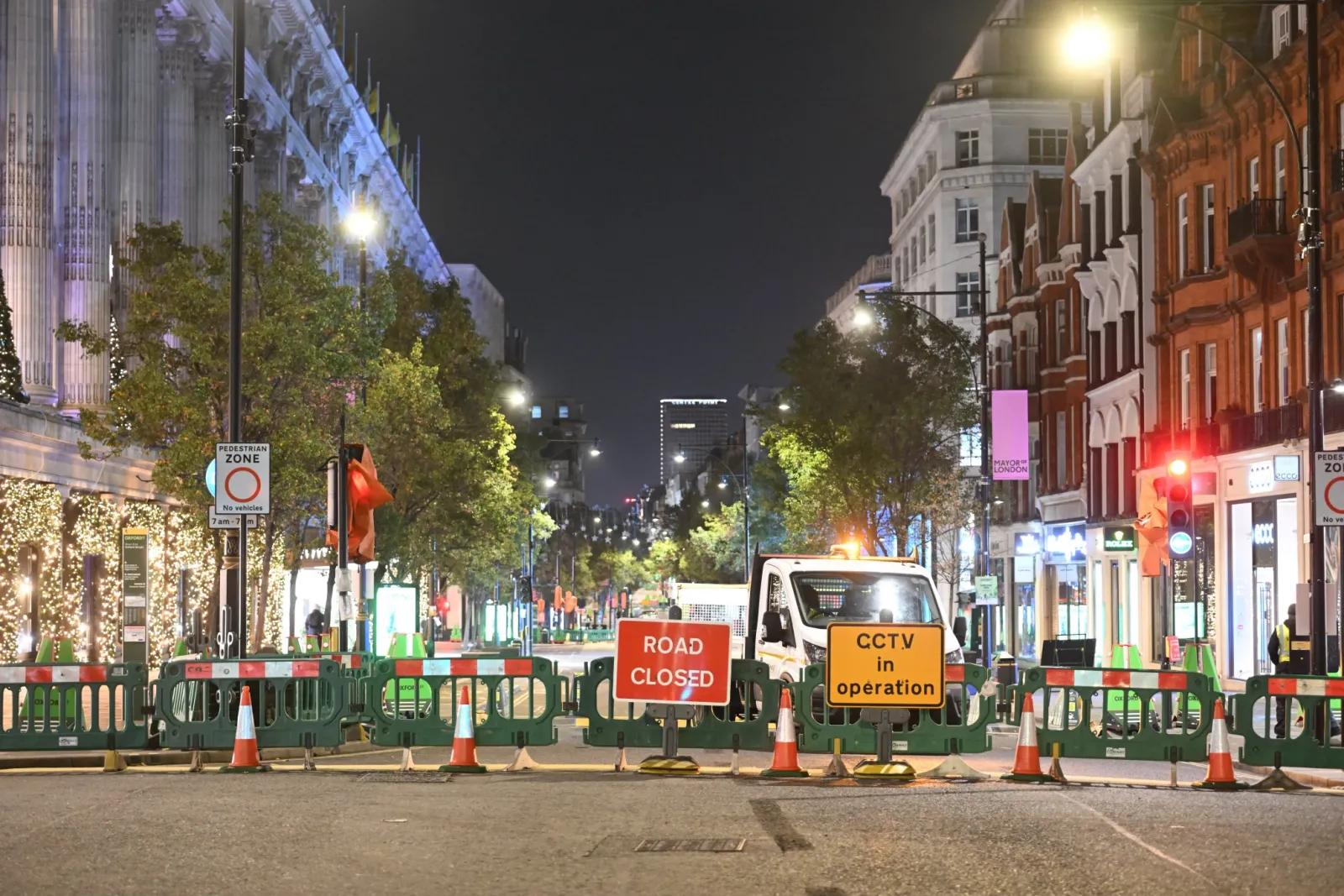
Oxford Street became pedestrian only today, with residents preparing for severe holiday shopping disruptions. A one-kilometre portion of the famous London road is now clear of cars and buses ahead of full pedestrianisation. Transport for London confirmed that pedal bikes, e-bikes, and e-scooters are likewise prohibited from traversing the zone.
The impacted stretch spans between Selfridges near Marble Arch and Great Portland Street, which includes Oxford Circus, right as the festive season approaches. This area will be closed to all vehicles daily from 7am to midnight. Deliveries are permitted between midnight and 7am, while emergency vehicles maintain access at all hours.
Numerous Londoners expressed fears that surrounding streets will face heavy traffic jams due to the alterations. As the busy holiday season begins, others questioned how shoppers will transport their purchases. One local councillor labeled the initiative a disaster for residents, accusing London Mayor Sadiq Khan of rushing it for an arbitrary deadline.
Tim Barnes, Westminster City Council Deputy Leader, stated: 'We're extremely disappointed that MHCLG have ignored legitimate concerns about the impact this scheme will have on central London. London deserves a world class shopping district but I'm worried we're heading for an unmanaged mess.' He added: 'It's going to be very difficult for people with accessibility issues to get to the street. There is no step free access from Oxford Circus Tube.'
This follows revelations that holiday shoppers visiting Britain's busiest high street will face facial recognition scans. The system is scheduled for installation in December, right in time for heavy festive shopping. Today's traffic ban on this section of the landmark retail destination is termed the first phase, though it has drawn substantial criticism.
Sean Lane, a 43-year-old taxi driver with a decade of experience navigating Oxford Street, expressed worry for disabled travelers and parents with strollers. He told The Times: 'It's gonna create gridlock. I just can't understand it. You can see how wide the pavements are. There's more than enough room for everybody. Even if you made it one lane, a one-way road, at least we can come along.'
Paul Fisher, a Conservative Westminster councillor, worries about losing the traditional postcard aesthetic of the high street during Christmas and throughout the year. He said: 'Why do people go to Oxford Street? They don't just go to shop, they go for the experience, for the iconic buses and taxis. Many tourists shop on Oxford Street because of the iconic view you get ... that vision will be lost forever.'
Traffic continues moving north and south along Regent Street at the Oxford Circus intersection. Pedestrians can cross at this junction, and traffic lights will be adjusted for the modifications. Vehicles may also cross the restricted zone via four other paths: Duke Street northbound, Davies Street and Stratford Place in both directions for local access, Vere Street and New Bond Street southbound only, and Holles Street northbound only.
Private vehicles have been banned for years, but now all motorised transport, including buses, black cabs, and bicycles, is excluded. London Mayor Khan praised the shift as a truly momentous occasion for the capital despite criticism. Transforming Oxford Street into a pedestrian zone has been attempted for years and remains contentious.
Although traffic has ceased, the initial construction project is not finished until spring next year. The closure forms part of a £150 million phased project to revitalize the district featuring mini parks, over 50 trees, benches, lighting, and public art. Organizers hope these updates will attract bars and restaurants alongside retailers, mirroring the style of Paris streets like Rue de Rivoli or La Rambla in Barcelona.