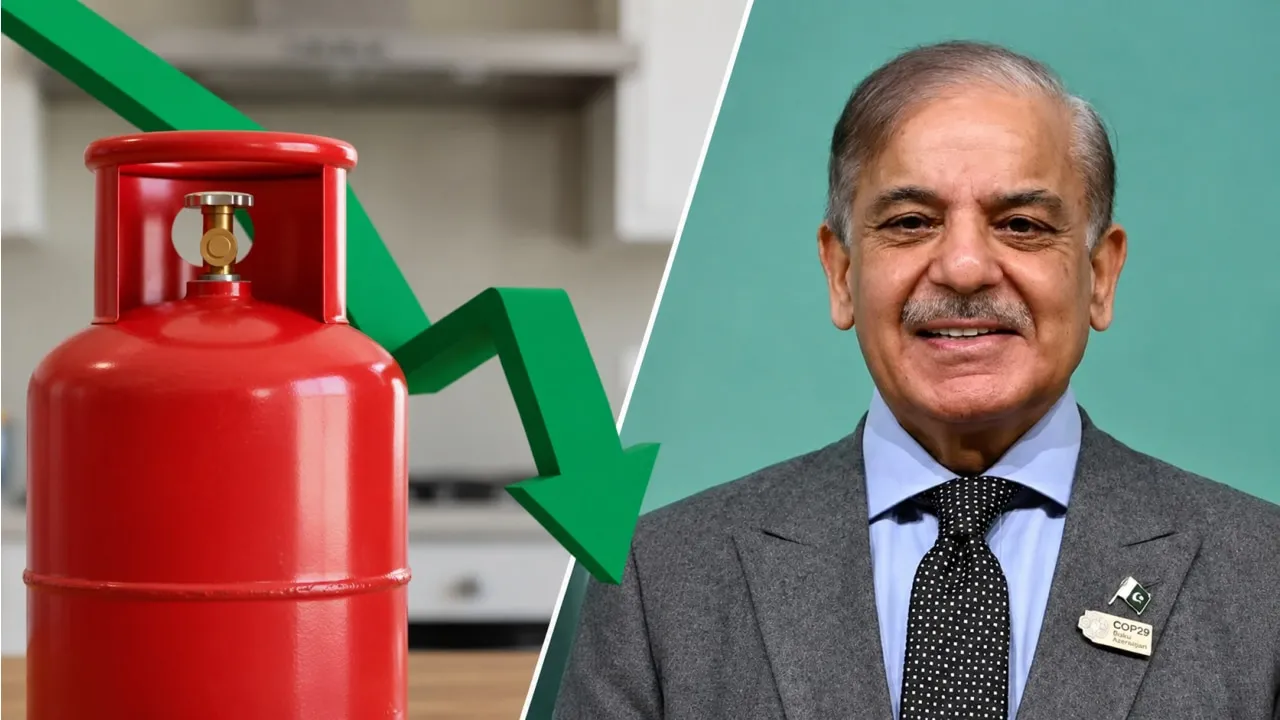
Prime Minister Shehbaz Sharif established an eight-member ministerial committee to examine proposed changes to the national liquefied petroleum gas policy. Market rates for an 11.57-kilogram cylinder climbed between Rs. 6,000 and Rs. 7,200 following recent supply disruptions.
State-owned enterprises would handle LPG imports and price setting instead of the Oil and Gas Regulatory Authority under the draft changes, with costs subsequently passed to private participants.
Marketing companies and dealers protested the plan because authorities finalized the strategy without consulting industry stakeholders. Officials originally scheduled the policy to take effect within a week.
New Fund Proposed to Subsidize LPG Consumers
Refineries and other producers would deposit the price gap between local and imported supplies into a dedicated Public Account to create a Producer Price Differential Fund.
The Auditor General of Pakistan would audit this fund, which the federal government intends to use for targeted consumer subsidies distributed via the BISP scorecard.
Authorities also reserved 10 percent of domestic LPG production for state-owned marketers at producer rates to supply Gilgit Baltistan, Northern Areas, and other remote locations using cylinders and air mix plants.
Prequalified bottlers would receive the remaining 90 percent through transparent monthly auctions, featuring a floor price established at 5 percent of the Pakistan State Oil import parity price.
LPG Import and Pricing Reforms Under Review
The petroleum minister leads the committee, which will evaluate the proposed reforms, cylinder standards, and the local LPG model before delivering a full report to the prime minister in one month.
Committee members comprise the ministers for economic affairs and information, the prime minister adviser on interprovincial coordination, the special assistant on energy, the petroleum secretary, the director general of liquefied gases, and the head of the Government Relations Unit.
Industry members expressed worry that state-owned companies lack sufficient import experience. They warned that a new levy on domestic LPG could increase costs further and requested a larger role for private operators.
LPG Prices Rise Above OGRA's Notified Rate
Reported market rates place an 11.57-kilogram cylinder between Rs. 6,000 and Rs. 7,200, which exceeds the notified OGRA rate of Rs. 3,296.
Supplies tightened after authorities suspended operations at the Iran border earlier this month and sea route imports declined.
The draft reforms create a new pricing and import system where state enterprises like Pakistan State Oil, Sui companies, PARCO, and Pakistan LNG guide the shift toward import parity pricing.
SOEs May Take Over LPG Import Pricing
A cabinet summary recommends keeping monthly pricing while stripping OGRA of its power to issue price notifications for domestic and imported gas.
State-owned enterprises would bring in bulk shipments and determine monthly costs using Saudi Aramco free on board rates, adding actual premiums, freight, insurance, incidentals, and import taxes from the prior month.
The summary advises keeping bidder financial offers off the Public Procurement Regulatory Authority website to maintain reform urgency and encourage participation from major players.
Proposed LPG Pricing Linked to Saudi Aramco Rates
Domestic producer pricing would remain on a monthly schedule tied to the current month Saudi Aramco contract price on a free on board basis, adjusted for the propane-butane ratio.
Local producers collect the Saudi contract price-linked rate, while the difference against the Pakistan State Oil base price goes into a fund to aid lower income buyers through the Benazir Income Support Programme.
Private businesses objected to the Saudi benchmark, noting that most imports arrive from nations such as Iran and Oman.
Should state enterprises skip imports, past month premiums, costs, and taxes would apply alongside the current contract price, mirroring petrol and diesel pricing.
LPG Company Margins Proposed to Increase
Reforms also propose raising company margins for importers and marketers to a minimum of Rs. 50,000 per tonne from Rs. 35,000 per tonne.
Officials suggested the adjustment to offset inflation since margins remained frozen under the 2016 policy, though competitive pressures will still apply.
The Competition Commission of Pakistan and the Oil and Gas Regulatory Authority will monitor the market to stop any price collusion among participants.