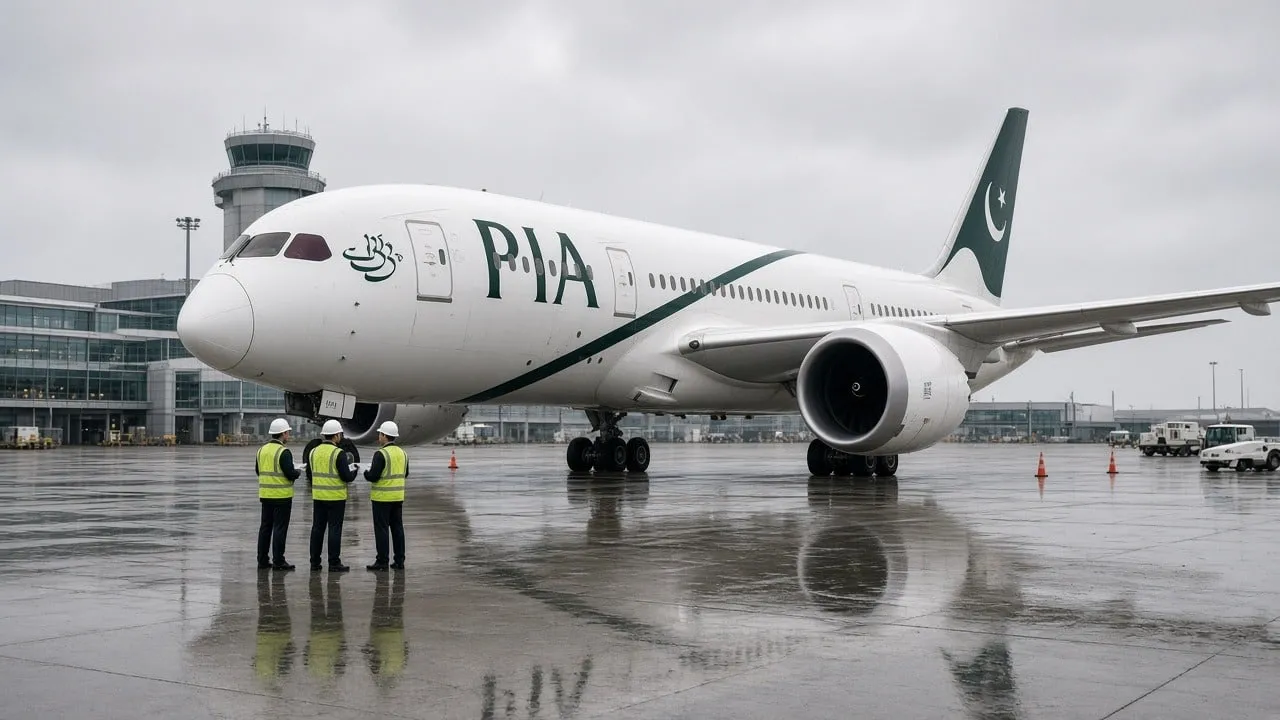
Pakistan International Airlines Fleet Status Examined by Parliamentary Committee
The National Assembly Standing Committee on Privatization has raised serious concerns over Pakistan International Airlines, commonly known as PIA, and its current operational capacity. Officials revealed during a recent parliamentary briefing that 16 aircraft in the national carrier fleet are currently grounded. Meanwhile, the airline manages its active routes using only 17 to 18 planes, meaning nearly half of the available fleet sits idle.
This stark imbalance highlights persistent operational hurdles within the state-owned enterprise. Lawmakers gathered to scrutinize the performance metrics of the airline, questioning how service delivery is maintained despite substantial fleet constraints. The committee also probed the financial history of the carrier, demanding clarity on tax benefits and operational expenditures.
Parliamentary oversight plays a critical role in monitoring public sector enterprises in Pakistan. Committees within the National Assembly possess the authority to summon government officials, request audit reports, and demand explanations for administrative failures. The session on PIA underscored the mounting pressure on aviation authorities to turn around the fortunes of the beleaguered national airline.
Background of Pakistan International Airlines and Privatization Efforts
Pakistan International Airlines has a long and complex history as the country's flagship carrier. Established decades ago, the airline expanded its global network significantly during the mid-to-late twentieth century, connecting major hubs across Asia, Europe, and North America. However, decades of political interference, overstaffing, and financial mismanagement eroded its profitability and reputation.
In recent years, successive governments have pursued the privatization of PIA to staunch continuous financial losses that burden the national exchequer. Selling off state-owned enterprises is often prescribed by international financial institutions as a remedy for fiscal deficits. Yet, finding viable buyers and navigating labor union opposition has complicated the disinvestment process for the national carrier.
The Privatization Commission has worked to restructure the airline's liabilities and prepare its assets for a transparent transaction. Despite these efforts, legacy debt and regulatory hurdles have slowed down the comprehensive handover of management control to private entities.
Aircraft Age and Fleet Modernization Plans
During the committee briefing, officials provided details regarding the average age of the airline's aircraft. Historically, PIA's fleet suffered from advanced age, with planes averaging 21 to 22 years old. Operating older equipment increases maintenance costs and heightens the risk of unexpected technical delays.
To address these structural deficiencies, the airline has taken steps to acquire newer additions. Officials reported that the airline has received one Boeing Dreamliner, with another expected to join the fleet in January. These two newer aircraft are between seven and eight years old, offering better fuel efficiency and passenger comfort compared to older legacy models.
Efforts are also underway to restore some of the grounded planes to active service. Technicians are carrying out repairs where suitable engines are available, though supply chain bottlenecks and funding constraints often delay these mechanical overhauls.
Flight Operations and International Route Restorations
Despite the severe shortage of operational aircraft, PIA has pushed forward with restoring key international routes. Officials informed the committee that London flights have successfully resumed on a daily basis. Furthermore, services to Manchester and Birmingham are expected to start soon, expanding the carrier's footprint in the United Kingdom.
Looking further ahead, Karachi to London flights are officially scheduled to begin in March 2027. These long-haul routes represent vital revenue streams for the airline, catering to the large diaspora and business travelers flying between Pakistan and Europe.
In terms of onboard service, the Secretary of the Privatization Commission noted that passengers traveling on London flights are being served meals. He highlighted that travelers responded positively to the biryani and pulao offered onboard, reflecting attempts to improve the overall passenger experience.
Committee Questions Service Quality and Tax Relief
Lawmakers during the session scrutinized the discrepancy between the airline's service standards and the financial reliefs granted to it. Committee member Sahar Kamran questioned PIA's service standards despite the tax relief available to the airline. She asserted that private airlines were providing better services and operating flights on time, while PIA's performance remained unsatisfactory.
Kamran also expressed concern that the committee had yet to receive the required report on the national carrier, hindering effective legislative oversight. In response, the Secretary of the Privatization Commission clarified that PIA had received a sales tax exemption only on the purchase of new aircraft. He emphasized that the airline had not been granted any other tax exemptions following its privatization proceedings.
Tax exemptions for commercial airlines are a contentious subject in aviation policy. Proponents argue that waivers reduce capital expenditure burdens for fleet expansion, while critics contend that state support creates an uneven playing field for competing private carriers.
Broader Parliamentary Concerns Over Missing Responses
The committee session extended beyond aviation matters to address wider administrative non-compliance. Lawmakers expressed serious concerns over several ministries' failure to respond to parliamentary questions and provide requested information. Farooq Sattar pointed out that some ministries had submitted no answers, with the words awaiting response appearing against the relevant questions.
Sahar Kamran added that documents relating to matters under discussion had only been provided the previous evening, leaving members little time for proper review. Kamran further stated that Parliament and its committees had effectively become inactive, pointing out that the meeting lacked the required quorum and no ruling coalition member was present.
Other parliamentarians voiced similar frustrations regarding procedural breakdowns. Natasha Daultana objected to holding the meeting informally, while Sattar noted that members were not even participating through Zoom and the committee could not proceed under those circumstances, illustrating deep institutional friction between lawmakers and executive ministries.