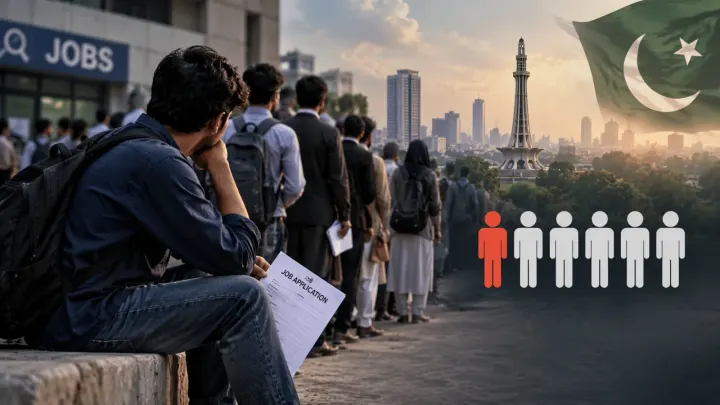
A recent economic report from the World Bank reveals that Pakistan saw its poverty rate climb from 22 percent to 29 percent because employment generation failed to keep pace with the expanding labor force.
Household incomes faced severe pressure due to climbing prices alongside weak economic activity and sluggish productivity gains, the document points out.
Since 2018, one out of every six individuals entering the Pakistani labor force stayed jobless, the study noted. About 3.6 million people attain working age annually in the nation, increasing the burden on the economy to supply adequate employment.
Millions of Jobs Created, but Poverty Still Rises
In 2024, the unemployment rate in Pakistan reached 7 percent, with young individuals and women holding an unbalanced share of jobless positions.
Even though the nation generated 17.7 million jobs starting in 2018, the majority centered within low-wage and low-productivity industries, which restricted their effect on living standards and household earnings.
The World Bank blamed the seven percentage point poverty increase on severe inflation and slow economic expansion. Increasing living expenses created extra hurdles for families, while small productivity improvements limited chances for employees to secure better wages.
Pakistan's Labor Productivity Remains Weak
Between 2014 and 2024, the growth of labor productivity averaged only 0.4 percent each year, the publication stated. This poor result signals a continuous difficulty in generating positions that both absorb new staff members and provide higher pay and productive work.
The conclusions point toward an urgent requirement for Pakistan to speed up steady economic expansion, boost labor productivity, and increase availability for better quality positions.
Without improved earning potential and stronger work prospects, the nation will encounter persistent difficulties regarding poverty reduction and standard of living enhancements.