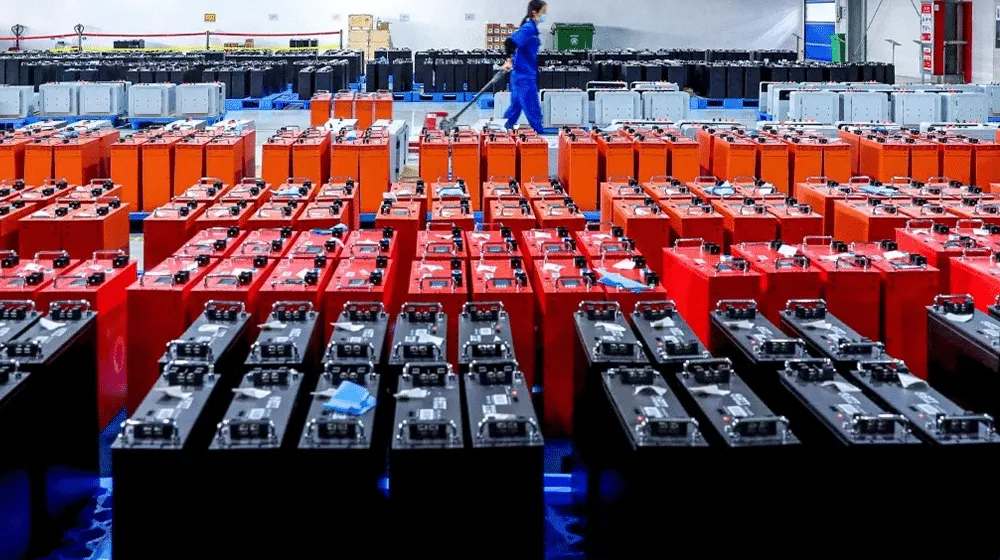
Pakistan brought in more than 4.5 gigawatts of battery storage hardware during the initial six months of 2026, reaching close to half of the nation's total historical imports of 9.5GW, according to a Pakistan Solar Association spokesperson.
This fast rise in battery usage, pushed by residential and industrial consumers wanting lower electricity expenses, came up during a parliamentary dialogue hosted by the Parliamentary Forum on Energy & Economy.
Convener MNA Sher Ali Arbab stated that Pakistan requires long-term energy strategy, noting that battery storage will help boost power sector efficiency across the coming twenty years.
He mentioned that costly power generation capacity stayed underused in daytime hours, while power needs from electric vehicles and data centres kept growing. Arbab asked for a clear legislative framework built via cross-party agreement.
Co-convener MNA Dr Nafisa Shah cautioned against unmonitored imports of low-quality batteries, emphasizing the requirement for safety rules, testing labs, and recycling plans. She stated that energy policy must balance grid reliability with public welfare and guarantee that clean energy advantages reach poor families.
Battery Storage Could Reshape Power Sector
Moderator Usama Mela pointed out the expected effects of battery energy storage systems on power distribution, cautioning that extra users might abandon the national grid.
He stated that an uncontrolled movement away from the grid could increase monetary strain on electricity rates.
MNA Chaudhry Mubeen Arif Jutt and MNA Asad Alam Niazi also voiced worries about industrial funds shifting away from manufacturing machinery and into energy setups.
Jutt stated that factory owners were spending heavily on captive solar and battery storage to gain cheap electricity and stay competitive against overseas competitors. He cautioned that poor market-based purchasing setups could drive up expenses for buyers unable to buy storage equipment.
Battery Taxes Push Up Costs
Regarding provincial issues under the 18th Amendment, Sanaullah Baloch and Phullain urged a more local policy approach.
They stated that Balochistan mineral assets, such as potential lithium reserves, could back domestic battery production and jobs. They also urged provincial talks concerning mineral mining and related work.
Pakistan Solar Association Vice Chairperson Engr Chaudhry Uzair raised worries regarding the tax load on battery storage hardware, stating that total taxes and customs fees reached 35 percent to 40 percent.
He added that a standard 5-kilowatt-hour battery cost above Rs. 250,000, restricting access for lower-income homes.
Syed Faizan Shah, adviser to the Power Division, stated the division will launch competitive bids inside 15 days for four pilot battery energy storage initiatives, each sized at 10 megawatt-hours.
The initiatives will be built across the Lahore, Multan, Islamabad, and Peshawar electricity distribution companies.
Shah additionally stated that the National Electric Power Regulatory Authority was naming battery storage a regulated asset. The change will permit distribution companies to reduce strain on burdened transformers more cheaply than constructing fresh grid stations.
Lahore Electric Supply Company Chairman Amir Zia stated that distribution transformers dealt with reverse power flows from rooftop solar setups in the day, followed by steep demand jumps at night.
He stated that battery storage could assist in saving extra daytime electricity for use in peak night hours.
The discussion ended with attendees agreeing that utility-scale and distributed battery storage setups are growing increasingly vital for the power sector of Pakistan.