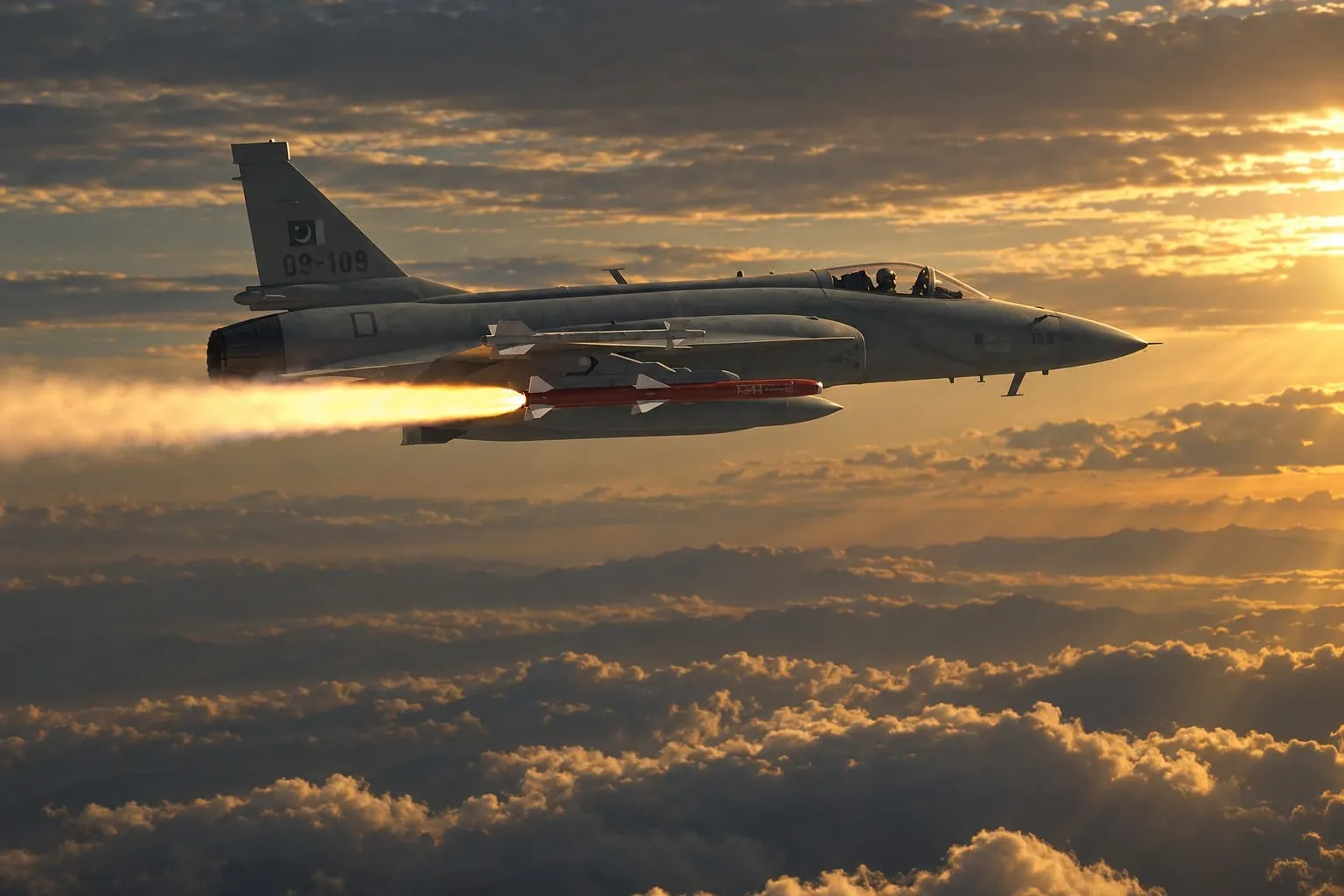
Pakistan Completes First Flight Test of Indigenous Fa az Air-to-Air Missile
Pakistan has successfully flight-tested Fa'az, its first locally developed air-to-air missile, the Inter-Services Public Relations said on Tuesday. The military's media wing described the test as an important advance for the country's aerospace and defence capabilities, highlighting a shift toward homegrown military technology.
The successful trial of the Fa'az missile marks a departure from traditional foreign arms procurement models, establishing a precedent for national technological autonomy in the defense sector. Observers and military analysts note that designing and testing complex guided munitions domestically requires a sophisticated industrial base, advanced metallurgy, and specialized software engineering capabilities.
How the Fa az Guidance System Enhances Aerial Combat
According to ISPR, Fa'az uses an advanced terminal guidance system that enables it to engage enemy aerial targets at longer ranges. The military said the weapon would give the Pakistan Air Force greater flexibility in its operations while adding to the country's defence capabilities.
Terminal guidance refers to the final phase of a missile flight where the onboard seeker locks onto a target and makes precise course corrections to ensure a direct hit or a lethal proximity detonation. By incorporating this technology into the Fa'az system, domestic engineers have provided the armed forces with a tactical asset capable of addressing modern aerial threats without relying entirely on foreign suppliers.
Domestic Defense Industry Achieves New Milestones in Self-Reliance
ISPR also presented the successful flight as evidence of the domestic defence industry's technical progress, innovation and growing self-reliance. Over recent years, national defense institutions have focused heavily on reducing import dependencies for essential military hardware.
This strategic push involves collaboration between military research laboratories, public sector manufacturing plants, and academic engineering departments. Developing an air-to-air missile demands rigorous aerodynamic testing, thermal resilience, and complex telemetry systems, all of which reflect the expanding scope of domestic defense engineering.
Military Leadership and State Officials Congratulate the Engineering Team
Senior Pakistan Armed Forces officers observed the test alongside the scientists and engineers who worked on the missile system. Following the successful flight, congratulations were extended to the development team by:
- The president and prime minister
- The chief of army staff and chief of defence forces
- The services chiefs
Public endorsement from the highest levels of government underscores the strategic priority assigned to indigenous defense production. The recognition serves to validate the multi-year research and development efforts undertaken by national scientists who conceptualized and built the missile system.
Strategic Implications for Regional Defense and Air Operations
The introduction of the Fa'az missile into the inventory of the Pakistan Air Force alters tactical calculations for aerial defense. Air-to-air munitions are critical for establishing air superiority, protecting airspace, and deterring potential incursions by hostile aircraft.
With local manufacturing of such advanced weaponry, the armed forces secure an uninterrupted supply chain during periods of geopolitical tension. This capability insulates national security operations from international embargoes, supply chain disruptions, or external diplomatic pressures that often accompany foreign military purchases.
Future Outlook for National Aerospace and Missile Programs
Following this successful flight test, the Fa'az program will likely move toward operational evaluation, integration with fighter aircraft, and eventual mass production. Defense planners will monitor telemetry data gathered during the trial to refine software algorithms and propulsion parameters.
The milestone achieved with Fa'az paves the way for further domestic projects in missile technology, radar systems, and avionics. As engineers apply lessons learned from this development cycle, the country edges closer to complete self-sufficiency in conventional aerospace engineering.