Pakistani Family Secures Mozilla Grant for Infinite Raag
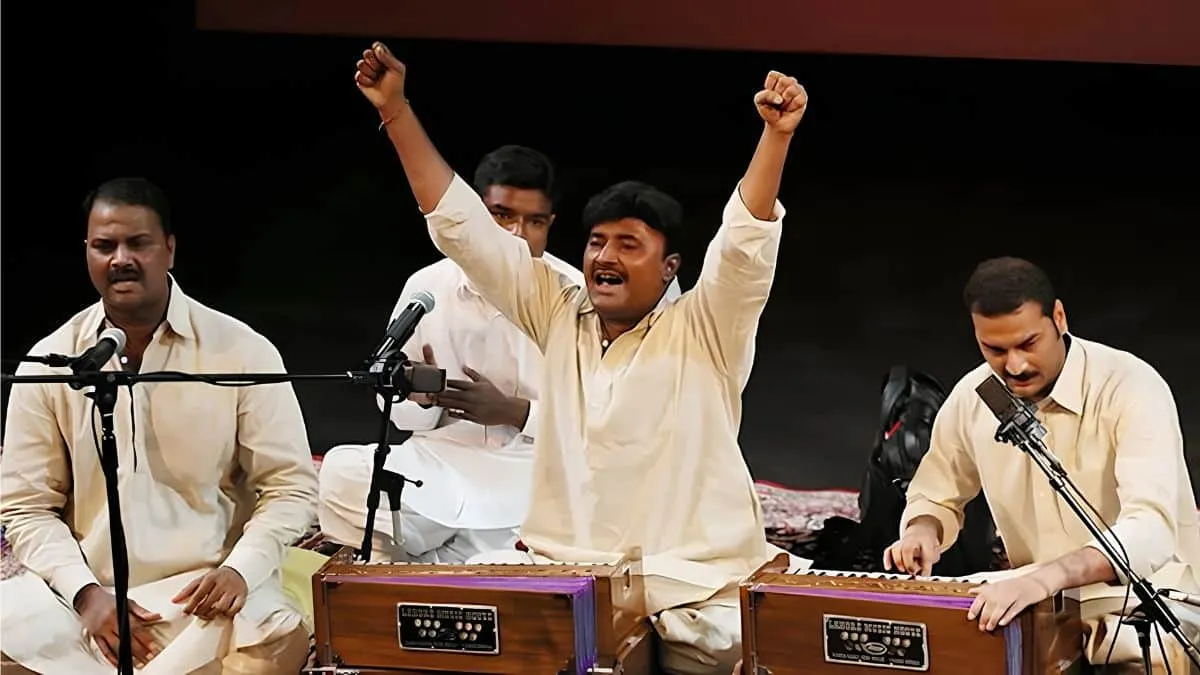
Pakistan's Saami Family has secured funding and technical support from the US-based Mozilla Foundation for Infinite Raag, a project to document and study its 800-year-old musical heritage. This international recognition brings crucial support to a lineage that has preserved classical vocal arts across centuries through oral transmission alone. Rauf Saami of the Saami Brothers leads the initiative under the guidance of his father, Ustad Naseeruddin Saami. The family practices both qawwali and khayal, two pillars of the classical and devotional vocal traditions of South Asia.
The project will preserve the family's singing knowledge while examining its precise pitch variations, complex melodic movements and depth of sound. By combining modern data capture techniques with ancient pedagogical methods, the initiative bridges the gap between historical preservation and contemporary technology. The family is working with the Centre for Cultural Vibrancy, a nonprofit that supports traditional artists and cross-cultural learning. Mozilla selected the Saamis among 20 inaugural recipients of its Artists Make Technology grants.
Understanding the Qawwal Bacha Gharana and Historical Roots
The family belongs to the Qawwal Bacha Gharana, a lineage dating back more than 800 years and traditionally attributed to Persian poet Amir Khusrow. This historic school of music emerged in the Delhi Sultanate era and laid the foundational principles for both qawwali and classical khayal singing. Generations of practitioners within this gharana have passed down intricate vocal techniques, rhythmic cycles, and spiritual poetry through strict family lines. Maintaining this unbroken chain of transmission requires immense discipline, daily vocal training, and immersion in the philosophical underpinnings of sur, or melody.
Many regard Ustad Naseeruddin as one of the craft's few remaining old masters. The Aga Khan Music Awards recognized his work last year, when he described his practice as prayer through breath. His position as a custodian of this ancient knowledge makes the documentation efforts vital for cultural historians, ethnomusicologists, and lovers of traditional South Asian music worldwide.
How the Infinite Raag Project Uses Technology
Infinite Raag will combine sound recordings and biometric data through an artist-owned recording and analysis system. Researchers will capture hours-long vocal performances by Ustad Naseeruddin and his principal students in high fidelity. This technical infrastructure ensures that the nuances of the master's voice and the responses of learners are documented permanently for future study and archival protection.
The system will synchronize audio, biometric sensors and a microtonal pitch tracker. Unlike the 12-tone framework commonly used in Western music study, it will track finer pitch differences. Ustad Naseeruddin is credited with using a 49-note system. This microtonal complexity allows performers to hit micro-intervals that evoke specific emotional and spiritual states, known as rasas, which standard musical notation often fails to capture or measure.
Analyzing Musical Coherence and Performer Physiology
Artificial intelligence tools will help map moments of deep musical coherence and transcendence during performances. Meanwhile, the project will examine how khayal's demanding training and practice affect performers' bodies. Tracking physiological responses alongside vocal output provides a scientific lens into the physical toll and meditative benefits of sustained classical vocal execution.
Rauf said his father had devoted his life to finding truth through sur, or melody. The project aims to preserve that accumulated knowledge for future generations. By measuring the physical and acoustic properties of the voice, the initiative transforms ephemeral oral traditions into verifiable data without stripping away their spiritual essence.
Protecting Cultural Heritage from Exploitative Practices
Rauf also said Infinite Raag would challenge exploitative practices while supporting artists' control over their cultural heritage, preservation and exploration of transcendence. In an era where digital archives and machine learning models often absorb traditional art without consent or compensation, the artist-owned framework of this grant guarantees that the Saami family retains full ownership of their vocal data and creative output.
This autonomy is essential for traditional artists who watch their ancestral arts commercialized or misinterpreted by outside entities. By using the Mozilla Foundation grant, the family sets a precedent for how hereditary musicians can leverage technical assistance to safeguard their intellectual property on their own terms.
The Broader Impact on Traditional Artists in Pakistan
The success of the Saami family highlights the global relevance of Pakistan's classical music heritage. While popular culture and commercial media dominate modern entertainment markets, master practitioners of ancient traditions struggle to find institutional funding within their home regions. International grants bridge this gap, allowing master artists to focus on transmission rather than financial survival.
Students and young practitioners associated with the gharana stand to benefit directly from the structured documentation of Ustad Naseeruddin's teaching methods. Future musicians will have access to detailed pitch analyses and pedagogical records that clarify the exact mechanics of the 49-note system, ensuring that the intricacies of the lineage survive long into the future.