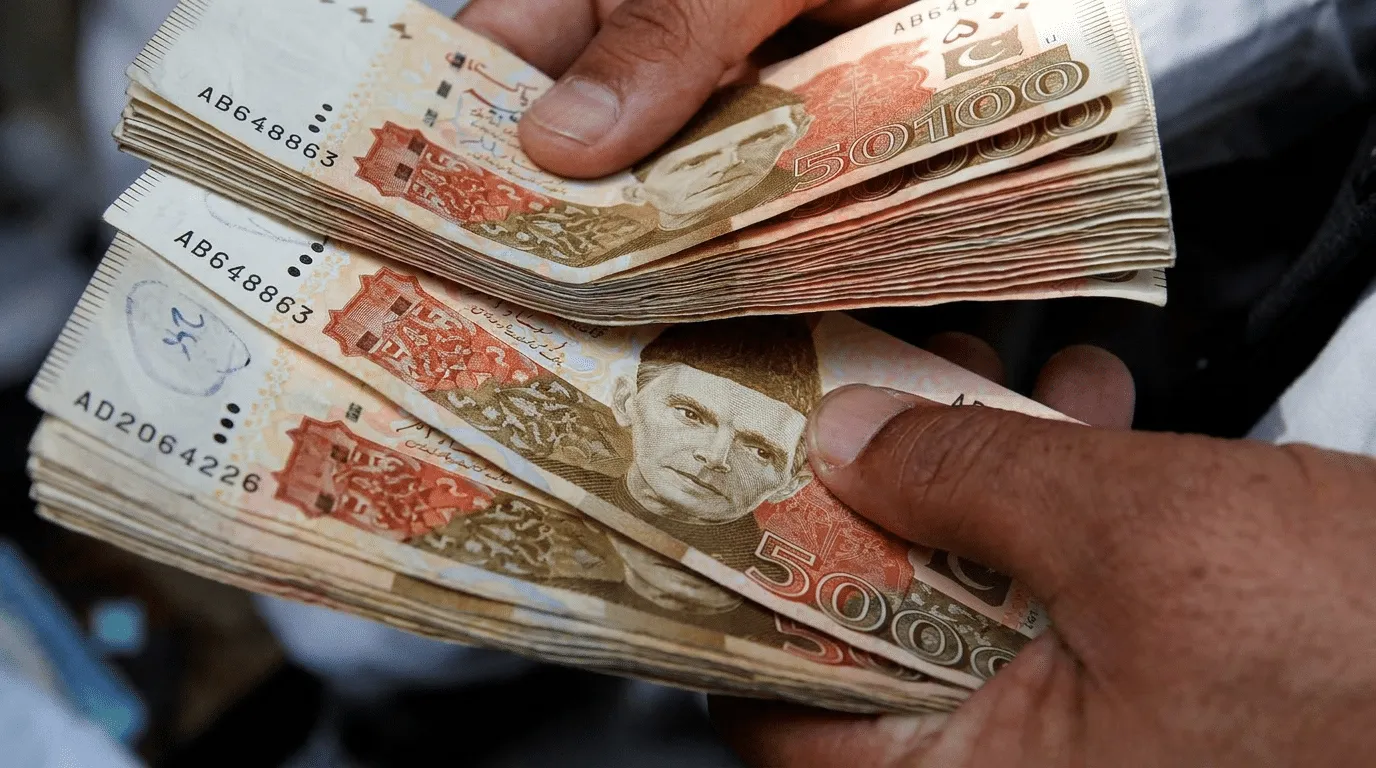
An individual in Pakistan requires an income of roughly Rs. 440,000 monthly to reach the nation's top 1 percent of earners, based on recent figures from the World Inequality Database, known as WID.
Corresponding metrics indicate that roughly Rs. 121,000 monthly places an individual within the top 10 percent, surpassing 90 percent of adults in Pakistan. Approximately Rs. 189,000 monthly suffices to reach the top 5 percent.
These numbers stem from the 2024 income figures provided by WID, calculated using 2025 rates.
How Much You Need to Earn to Be in Each Group
WID calculates the annual entry threshold for the top 10 percent at Rs. 1.46 million, translating to roughly Rs. 121,443 monthly. For the top 5 percent, the annual requirement is Rs. 2.26 million, or approximately Rs. 188,511 monthly.
Entry into the top 1 percent begins at Rs. 5.28 million annually, which equals about Rs. 439,852 monthly. Reaching the top 0.1 percent demands roughly Rs. 23.2 million annually, or about Rs. 1.93 million monthly.
What the Richest Actually Earn
These thresholds merely indicate the starting point for each bracket. Average earnings within these segments are significantly higher.
The top 10 percent pull in an average of approximately Rs. 3.63 million annually, or about Rs. 302,000 monthly.
Individuals in the top 1 percent average Rs. 14.1 million annually, or about Rs. 1.18 million monthly. By contrast, the typical adult in Pakistan brings in about Rs. 70,600 monthly.
Top Earners Hold Most Income and Wealth
Data from WID indicates that the top 10 percent collect 42.8 percent of the national income in Pakistan. The top 1 percent by themselves capture 16.7 percent, while the lower half of residents takes home merely 17.3 percent.
Asset distribution is even more unequal. The wealthiest 10 percent possess 58.5 percent of all personal wealth, and the top 1 percent control 24 percent.
ProPakistani previously noted that the top 10 percent held 59 percent of the nation's wealth. A comparable WID-based analysis recently indicated that the richest 10 percent in India experience lower living standards than the most impoverished citizens in wealthy nations.
How to Read These Numbers
WID statistics rely on pre-tax national income calculated per adult.
This metric encompasses wages alongside earnings derived from businesses, real estate, and additional assets.
Regarding married couples, WID divides household earnings evenly between both spouses, meaning these statistics do not serve as direct salary comparisons.