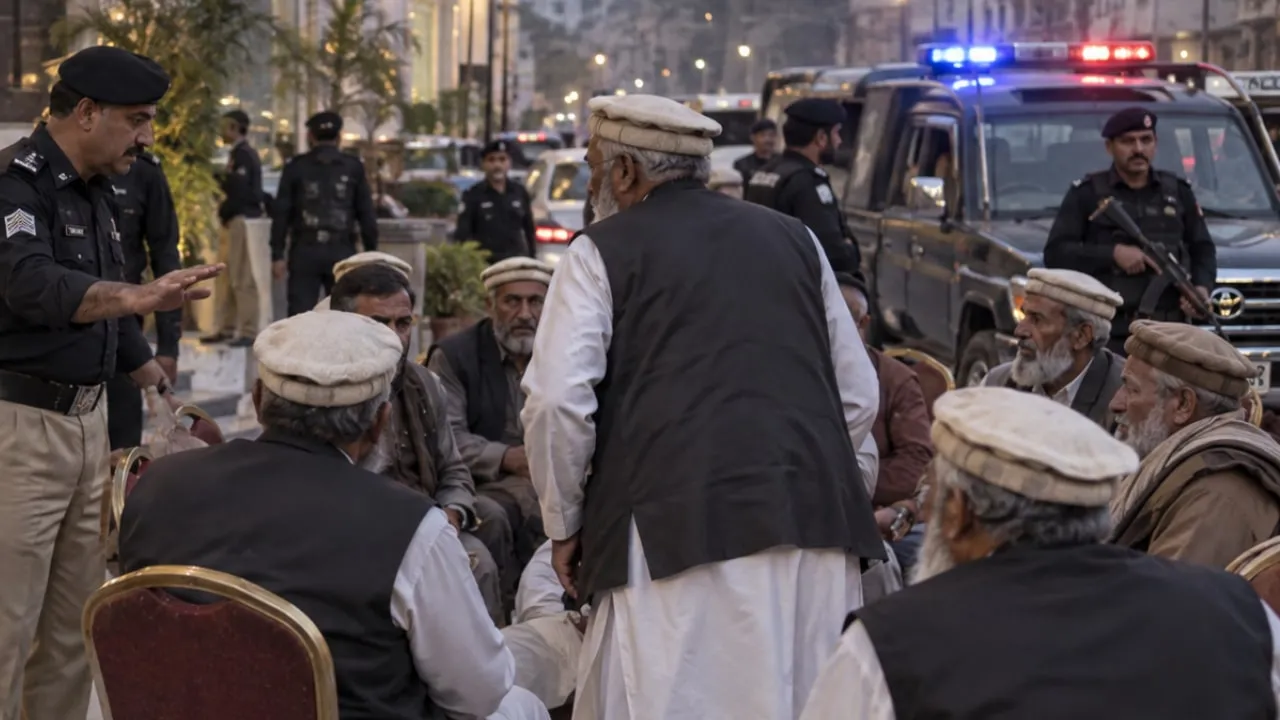
Peshawar Police Impose Strict Ban on Private Jirgas
Peshawar police have officially imposed a complete ban on private jirgas across the city, warning of strict action against those organising such gatherings at hotels and wedding halls. Capital City Police Officer (CCPO) Mian Saeed announced that private jirgas would not be tolerated in the city, and strict legal action would be taken against organisers. He said hotels and wedding halls found hosting private jirgas would also face action, adding that the premises concerned would be sealed if such gatherings were held there.
According to the CCPO, private jirgas held in the city often involved the display of weapons, raising security concerns. Police said the decision was taken in the wake of a recent firing incident during a private jirga at a hotel, in which two people were killed. This decisive action by law enforcement highlights growing concerns over public safety and the unregulated nature of informal dispute resolution sessions held within urban commercial spaces.
Understanding the Jirga System in Local Communities
The jirga system is a traditional dispute-resolution mechanism in which tribal elders and community leaders gather to settle civil, criminal, and communal disputes through mutual consultation and consensus. For generations, this customary practice has functioned alongside the formal judicial apparatus, particularly in Khyber Pakhtunkhwa and tribal districts, offering a rapid method for addressing grievances without prolonged court trials. Participants typically include respected elders, landowners, and figures of local influence who hear arguments from both sides before issuing a verdict.
However, some jirga decisions have attracted criticism over controversial rulings and practices that may violate the law and individual rights. While traditional sessions historically aimed at restoring peace between feuding families, the shift of these gatherings into urban centers like hotels and wedding halls has introduced new risks. The absence of formal oversight in private commercial venues often strips away the traditional accountability associated with village-level assemblies, sometimes leading to volatile confrontations rather than peaceful resolutions.
Security Risks and the Catalyst for the Ban
The immediate catalyst for the new police directive was a violent escalation during a gathering held inside a local hospitality venue. Police stated that the decision was taken in the wake of a recent firing incident during a private jirga at a hotel, in which two people were killed. Urban areas are governed by strict municipal and national laws that prohibit the unauthorized assembly of armed groups and private tribunals operating outside the constitutional framework.
Authorities noted that private jirgas held in the city often involved the display of weapons, raising security concerns for regular citizens and patrons of hotels and wedding halls. The brandishing of firearms during emotionally charged dispute settlements creates an immediate hazard for the public. By moving the ban beyond the organizers to include the venues themselves, police aim to cut off the physical spaces where these high-risk meetings take place.
Enforcement Measures and Penalties for Venues
The enforcement strategy outlined by Capital City Police Officer Mian Saeed places direct responsibility on the management of commercial properties. Hotels and wedding halls found hosting private jirgas would also face action, according to the CCPO, who added that the premises concerned would be sealed if such gatherings were held there. This measure threatens the business operations of venues that rent out halls for unauthorized assemblies, compelling owners to rigorously screen bookings.
Police patrols and intelligence units are tasked with monitoring commercial spaces to ensure compliance with the new order. Organizers who attempt to bypass the prohibition by holding clandestine meetings risk immediate arrest and prosecution under existing legal provisions. The explicit warning serves as a deterrent against attempts to relocate banned assemblies to alternative indoor locations across the municipal limits of Peshawar.
Broader Impact on Legal Order and Dispute Resolution
The prohibition of private jirgas in urban centers underscores the primacy of state courts and statutory law in maintaining public order. While customary dispute resolution holds deep cultural roots, the state apparatus is mandated to ensure that all legal proceedings adhere to fundamental rights and due process. Allowing private entities to arbitrate criminal and civil disputes with armed attendants undermines the authority of law enforcement agencies.
Citizens seeking resolutions to conflicts are now directed exclusively toward formal legal channels, such as police stations, courts, and officially sanctioned peace committees that operate under government oversight. The elimination of unauthorized urban tribunals is expected to reduce incidents of violence linked to personal vendettas and disputed claims. Local businesses, community members, and law enforcement stakeholders will continue to observe how strictly these new protocols are maintained in the coming weeks.





