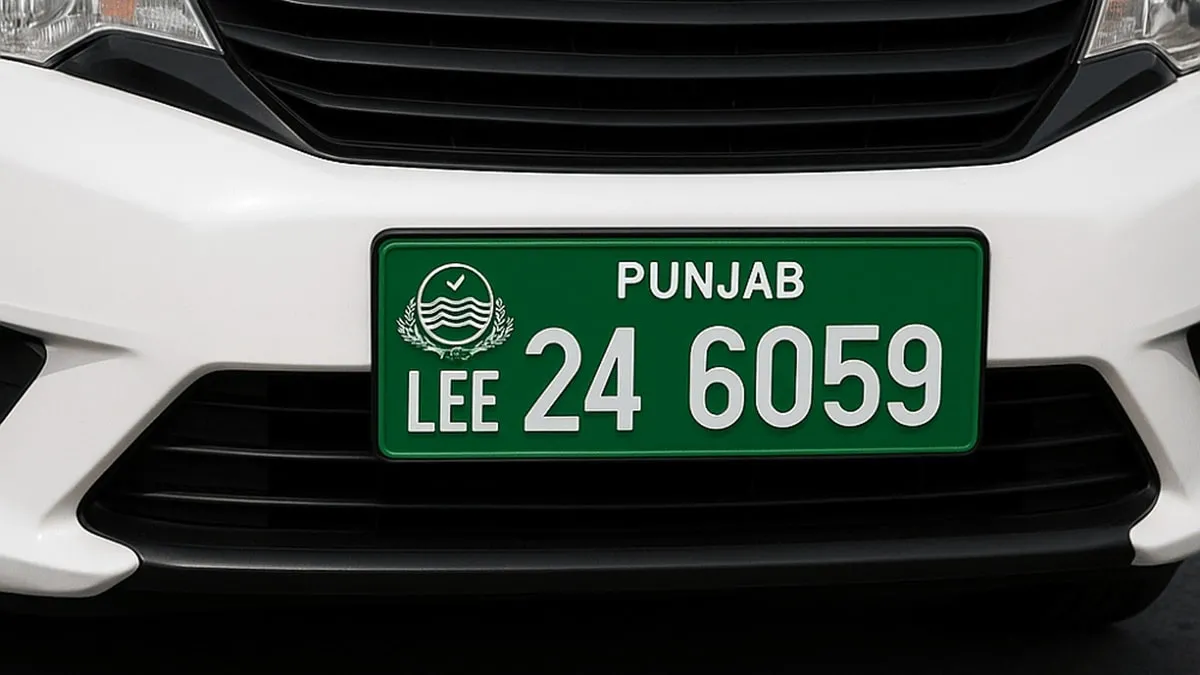
Punjab's Safe Cities Authority (PSCA) announced a city-wide crackdown on drivers and motorcyclists who hide or alter their vehicle number plates, using AI-driven cameras to identify violations and forwarding cases to police for prosecution.
The move comes after PSCA released images of cars and motorcycles caught covering their plates with hands, cloth, tape and other objects, a tactic that undermines the city's traffic-monitoring system.
Why the Authority Is Targeting Hidden Number Plates
Concealing a number plate is more than a minor infraction. Under the Motor Vehicles Act, a visible registration number is required for law-enforcement identification, toll collection and accident investigation. When plates are hidden, authorities lose a critical tool for tracking violations such as speeding, red-light crossing and reckless driving.
PSCA officials say the practice also fuels dangerous road behaviour. "Concealing a number plate is not merely a traffic violation but a deliberate attempt to evade the law," a PSCA spokesperson said, adding that such evasion can lead to serious accidents and loss of life.
How AI Technology Detects Covered Plates
PSCA's surveillance network integrates advanced artificial intelligence that analyses video frames in real time. Even when a plate is partially obscured, the system can reconstruct the likely characters by comparing the visible portion with a database of registered numbers.
According to the spokesperson, the AI can continue identifying vehicles and motorcycles even when their number plates are hidden. This capability reduces the chance that a driver can escape detection by simply covering the plate for a few seconds.
Enforcement Process and Legal Consequences
When the AI flags a vehicle, the camera feed is reviewed by a human operator to confirm the violation. Once confirmed, an alert is sent to the relevant police department. Officers then issue a notice, impose a fine, or, in repeated cases, seize the vehicle.
The authority has warned that no leniency will be shown to those attempting to deceive Safe City cameras. Legal action follows the standard traffic-violation procedures set out in state regulations, which may include penalties ranging from Rs. 500 to Rs. 5,000 and possible court proceedings for repeat offenders.
Impact on Motorists and the Wider Community
Motorists across Punjab are being urged to ensure their plates are properly displayed and clearly visible. The crackdown targets both private car owners and commercial riders, including those who use two-wheelers for delivery services.
For businesses that rely on a fleet of vehicles, non-compliance could mean fines for multiple drivers and potential disruption to operations. For everyday commuters, the enforcement aims to create a safer road environment by reducing the number of untraceable violators.
Historical Context of Number-Plate Enforcement in Punjab
Punjab has long used a network of traffic cameras to monitor congestion and enforce rules. Earlier initiatives focused on speed detection and red-light violations. However, the practice of covering plates grew as drivers learned that a quick hand-over could evade a camera snapshot.
In 2020, the state introduced a digital registration system that linked plate numbers to a central database, improving the ability to track offenders. The current AI-driven approach builds on that foundation, adding a layer of visual analysis that can work even when the plate is not fully visible.
What Drivers Should Do Now
PSCA's public awareness campaign includes distributing the released images through social media, local news outlets and roadside billboards. Motorists are advised to:
- Check that the number plate is firmly attached and unobstructed.
- Remove any tape, cloth or stickers that could hide characters.
- Report any camera-related malfunction to the nearest traffic police office.
Compliance not only avoids fines but also contributes to a safer traffic ecosystem.
What to Watch for Next
The authority will continue to monitor violations and update its AI models as new concealment methods emerge. PSCA has indicated that future updates may include automatic fine issuance through a mobile app, though no timeline has been set.
Citizens are encouraged to stay informed through PSCA's official channels, as additional guidelines or penalty structures could be announced in the coming weeks.
By tightening enforcement on hidden number plates, Punjab hopes to deter evasive tactics, improve traffic-law compliance and ultimately reduce road-related injuries and fatalities.





