Petrol Price in Pakistan Today 26 November 2026
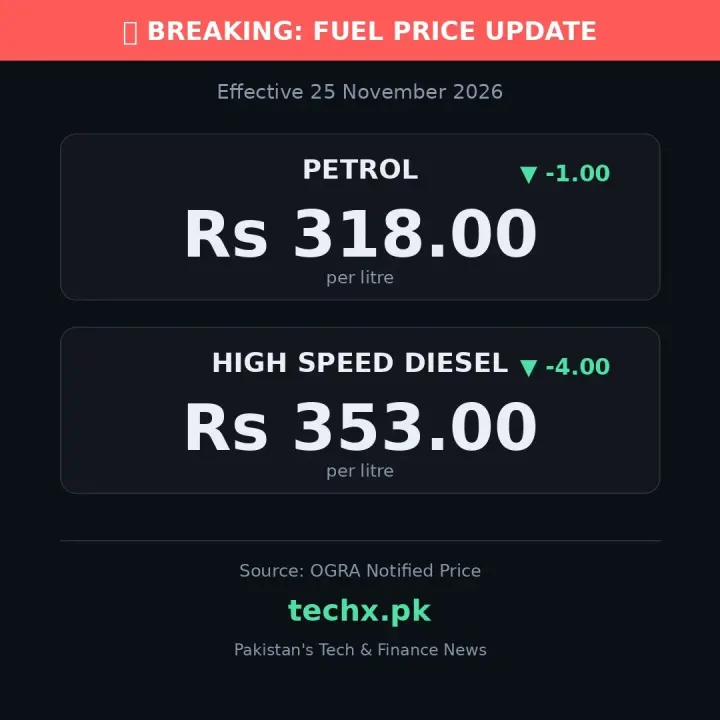
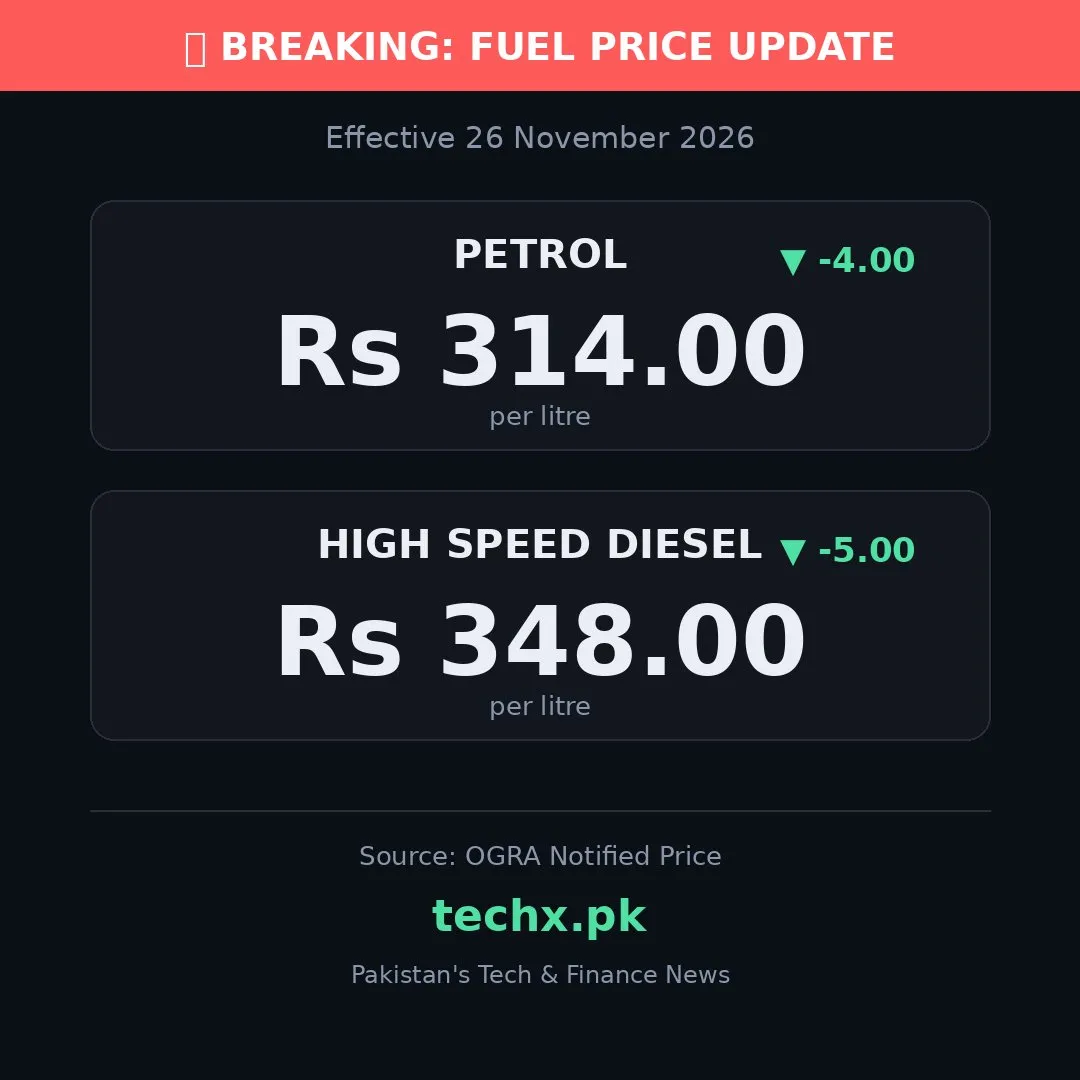
The petrol price in Pakistan today has been cut by Rs 4 per litre, effective 26 November 2026. High Speed Diesel also gets relief, falling by Rs 5 per litre under the latest OGRA fuel prices notification. This reduction brings a welcome financial break to motorists, transport operators, and households across the country who have faced high energy and fuel expenses over recent months. The adjustments apply uniformly across all provinces, ensuring that consumers at every fuel station pay the updated rates.
Government authorities and regulatory bodies implement these fortnightly revisions to align local rates with international market realities. As global energy benchmarks fluctuate, domestic prices respond accordingly to protect consumers when trends turn favorable. The announcement follows weeks of market observation by the Oil and Gas Regulatory Authority, which computes the final rates based on a strict formula involving import costs, taxes, and exchange rates.
Citizens across major urban centers and rural districts alike experience immediate relief at the pumps as filling stations adopt the new pricing schedule. Because petroleum products touch every single facet of the national economy, even a modest downward adjustment creates ripples of relief for wage earners and commercial enterprises. State machinery oversees the transition to ensure compliance, preventing any station from overcharging customers who line up to refuel.
New Petrol and Diesel Prices in Pakistan
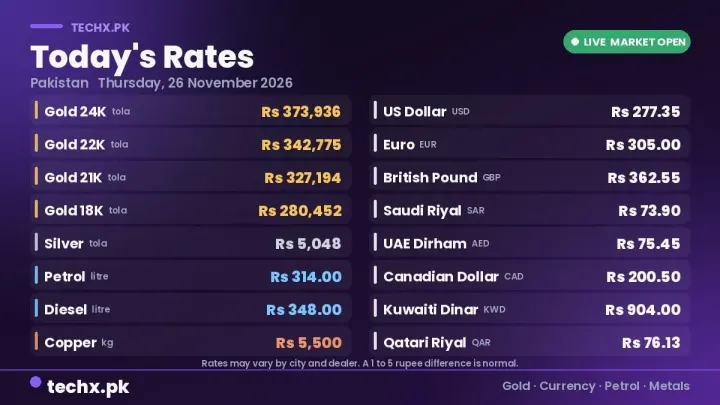
The government has announced the new petrol price and diesel price in Pakistan for the fortnight starting 26 November 2026. Petrol, commonly referred to as Super, is now priced at Rs 314.00 per litre following the downward revision of Rs 4.00. High Speed Diesel, which serves as the backbone of heavy transport and agriculture, is now set at Rs 348.00 per litre after dropping by Rs 5.00.
These revised OGRA fuel prices are effective from 26 November 2026 and apply across all provinces of Pakistan. Filling stations are required by law to display the new rates prominently and adjust their dispensing pumps to reflect the exact figures. Local district administrations and regulatory inspectors typically monitor pumps to ensure compliance with the official notification.
Motorists visiting fuel stations notice the updated figures on mechanical and digital boards immediately upon arrival. The drop provides tangible relief for daily commuters who rely on motorcycles and cars to reach workplaces and educational institutions. Service station attendants update their pump meters overnight so that early morning drivers on 26 November pay the exact revised rates.
Why Did Fuel Prices Change?
OGRA reviews fuel prices on a fortnightly basis, taking into account global crude oil rates and the Pakistani rupee exchange rate against the US dollar. When international oil prices soften or the rupee holds steady, consumers benefit through lower pump prices. This latest round of cuts reflects a more favourable position on both fronts, allowing the government to pass savings directly to the public through reduced petrol and diesel prices in Pakistan.
The pricing mechanism relies heavily on international benchmarks such as Brent crude and refined product quotes in the Arabian Gulf. When trading values drop overseas, the landed cost of imported petroleum products decreases. At the same time, stability in the foreign exchange market ensures that importers do not face extra conversion penalties, keeping the final retail math in favor of the domestic consumer.
Global market volatility dictates that domestic rates cannot remain static for long periods. Analysts track supply quotas agreed upon by international oil cartels alongside industrial demand from major Asian and Western economies. When those external factors tilt toward oversupply, international prices soften, creating the fiscal space required for regulatory authorities to announce downward revisions.
Understanding the Role of OGRA
The Oil and Gas Regulatory Authority functions as the statutory body tasked with overseeing the midstream and downstream petroleum sector in the country. Established under federal legislation, the agency monitors compliance, determines tariffs, and calculates fuel pricing adjustments every fifteen days. The calculations are submitted to the federal government for formal approval before public release.
The fortnightly schedule ensures that changes in global oil markets reach local buyers without excessive delay. While historical pricing models often involved monthly reviews, the shorter two-week window allows prices to track international highs and lows much faster. This transparency helps maintain market equilibrium between oil marketing companies, dealers, and end users.
The regulatory framework also mandates strict quality checks on imported and locally refined fuels sold at retail outlets. Inspectors collect random samples from various districts to verify that octane ratings and diesel purity match legal standards. This dual focus on pricing accuracy and product quality protects consumer vehicles from damage caused by substandard mixtures.
What It Means for You
For everyday Pakistanis, cheaper petrol and diesel directly lowers the cost of commuting, rickshaw and taxi fares, and goods transport across the country. A Rs 5 drop in diesel price in Pakistan is particularly significant because diesel powers trucks, buses, and agricultural machinery, meaning the relief can filter through to food and freight costs. If you fill a 40-litre tank, you will save Rs 160 on petrol alone starting 26 November 2026, which adds up quickly over a month of daily commutes.
Small business owners who rely on delivery vans and standby generators also feel the positive effects of these reductions. Lower operating expenses can ease profit margins for retail shops, manufacturing units, and service providers who depend on continuous logistics. While a single fortnightly adjustment may seem modest, cumulative savings over several review cycles help stabilize household budgets against broader inflation.
Households managing tight monthly expenditures find that even minor reductions in transport overheads ease the pressure of buying daily essentials. Delivery riders operating motorcycles for food and parcel services retain a larger share of their daily earnings. These incremental savings provide a psychological and financial cushion for families navigating complex economic environments.
Impact on Public Transport and Freight
Transportation costs dictate the pricing structure of almost all consumer goods in the domestic market. When diesel expenses decrease, fleet operators face lower overheads for moving fruits, vegetables, and manufactured items from production hubs to urban retail centers. Commuters who use public buses and minibuses daily also look toward transport associations to adjust fares downwards in response to cheaper fuel.
Provincial governments often engage with transport unions whenever fuel rates drop significantly to ensure that the financial relief reaches ordinary passengers. Although public transport fares do not always fall immediately, sustained decreases in diesel prices create strong public and administrative pressure for fare rationalization. Authorities urge citizens to report any overcharging by public transport operators at designated helpline numbers.
Agricultural producers shipping seasonal harvests to wholesale markets benefit directly from reduced freight expenses. Lower diesel outlays for tractors ploughing fields and trucks hauling produce to urban centers help suppress food price escalation. This dynamic connects energy market adjustments directly to the dining tables of urban and rural citizens alike.
Looking Ahead at Future Fuel Reviews
The next fortnightly review is scheduled to take place in mid-December, at which point regulatory authorities will re-examine global market trends. Observers note that international oil prices remain volatile due to geopolitical shifts, supply chain adjustments, and changing demand forecasts from major global economies. Consumers are advised to monitor official announcements from the petroleum division for future updates on fuel rates.
Maintaining stability in the domestic energy sector requires a delicate balance between fiscal revenue needs and consumer relief. Taxes such as the petroleum levy and general sales tax form a vital component of government non-tax revenue, which is why rate cuts depend heavily on external market headroom. As market conditions evolve, the government will continue its fortnightly assessments to determine whether further relief is possible.
Long-term energy planning involves diversifying import sources and enhancing local exploration to insulate consumers from international price shocks. Until domestic production scales up significantly, fortnightly reviews remain the primary mechanism for managing retail fuel costs. Citizens and business owners will continue watching international benchmark movements closely as the middle of December approaches.