Petrol and Diesel Price Update for Today
The Federal Government has officially transitioned to a strategy of adjusting petrol and diesel prices daily. Effective July 17, 2026, the Oil and Gas Regulatory Authority has started revising the ex-depot prices of petroleum products, including petrol and diesel, every 24 hours. The government implemented this drastic measure to shield the local economy from extreme market volatility.
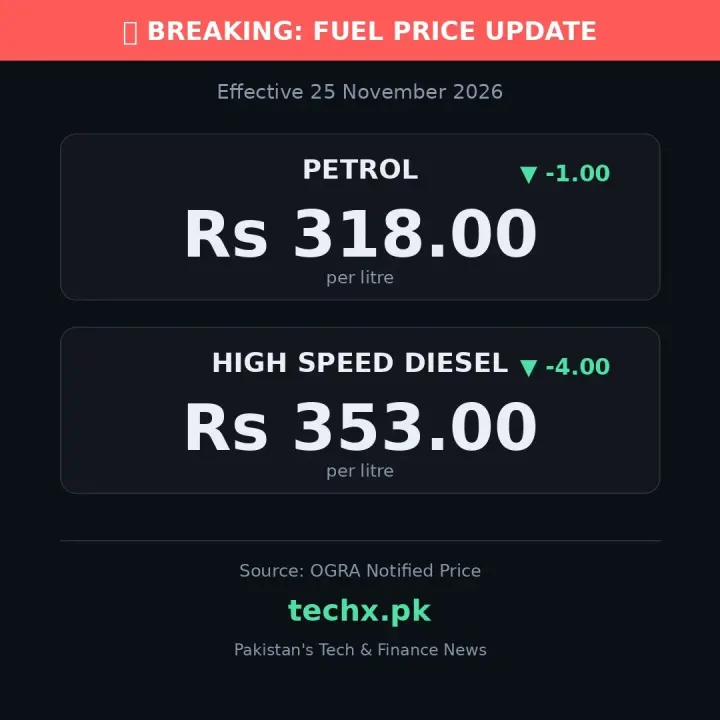
The newly revised prices show a downward trend for consumers. The regulatory authority has announced a decrease in the price of Motor Spirit, commonly known as petrol. Meanwhile, the price of High Speed Diesel has also seen a significant decrease.
How Fuel Prices Changed Today
Consumers across the country are closely monitoring pump rates as the new daily pricing mechanism takes effect. For Motor Spirit, the previous price recorded on 24/10/2026 was Rs. 319.00 per litre. Following the latest revision on 25/10/2026, the price dropped to Rs. 318.00 per litre, marking a decrease of Rs. 1.00.
High Speed Diesel experienced an even larger reduction during the same period. The previous price stood at Rs. 357.00 per litre on 24/10/2026. The revised price for 25/10/2026 dropped to Rs. 353.00 per litre, reflecting a difference of minus Rs. 4.00.
Rules Governing Weekend and Holiday Fuel Prices
While the pricing authority updates figures every 24 hours to match international shifts, specific rules apply to weekends. These daily adjustments will remain unchanged during weekends, covering both Saturdays and Sundays. The same rule applies to official public holidays.
This weekend freeze prevents market confusion and gives transport operators and retail stations stable rates during periods when commercial banks and administrative offices remain closed. Consumers planning long journeys over the weekend can rely on these steady figures until weekday trading resumes.
Global Energy Crisis and the Strait of Hormuz Blockade
This pricing shift directly results from the largest disruption to the world energy supply since the 1970s. The 2026 US-Israel war on Iran triggered a massive global fuel crisis. In late February, Iran blocked shipping traffic through the Strait of Hormuz. This critical maritime chokepoint previously handled about 25% of the world seaborne oil trade. The United States retaliated with an extensive naval blockade on Iranian ports.
A temporary ceasefire briefly restored hope in June. However, the truce completely collapsed on July 8 following renewed strikes on commercial vessels. Iran immediately closed the strait again. The US military subsequently launched consecutive rounds of airstrikes to force it open. These relentless crossfires and blockades continue to strangle global oil shipments, forcing regulatory bodies worldwide to react swiftly.
Background on Regulatory Authority Adjustments
Historically, petroleum pricing in the country followed a fortnightly or monthly review cycle. Officials announced rates that stayed fixed for weeks at a time, protecting citizens from minor fluctuations but leaving the national exchequer vulnerable during massive international shocks. The severe magnitude of the ongoing conflict in the Middle East rendered traditional fortnightly reviews obsolete, prompting the government to adopt daily revisions.
The Oil and Gas Regulatory Authority monitors international benchmark crude values, shipping insurance costs, and currency exchange rates continuously. By translating these metrics into daily domestic adjustments, the agency attempts to prevent massive, sudden price shocks that traditionally accompanied bi-weekly announcements. This high-frequency pricing model mirrors approaches taken by other energy-importing nations facing severe supply chain fractures.
Impact on Local Businesses and Consumers
The daily adjustment mechanism creates a new operational reality for transport companies, logistics providers, and everyday commuters. Fleet operators must adjust their operational budgets dynamically, as fuel costs represent a major portion of their daily expenses. Public transport providers face tight margins when prices fluctuate daily, requiring careful monitoring of official announcements before setting passenger fares.
Private vehicle owners experience both the benefits and unpredictability of the new system. While recent revisions show a downward trend, the constant movement of rates demands closer attention to daily news bulletins. Small businesses relying on diesel generators for backup power during grid instability must also factor these fluctuating fuel expenses into their daily cost calculations.
What to Watch For in Petroleum Pricing
Market analysts advise citizens and industry stakeholders to monitor international crude oil benchmarks and geopolitical developments in the Middle East for future price directions. Any escalation in the Strait of Hormuz or changes in the US naval blockade will directly influence the daily numbers issued by the regulatory authority. Consumers should check official updates every morning, keeping in mind that rates stay locked throughout weekends and designated public holidays.