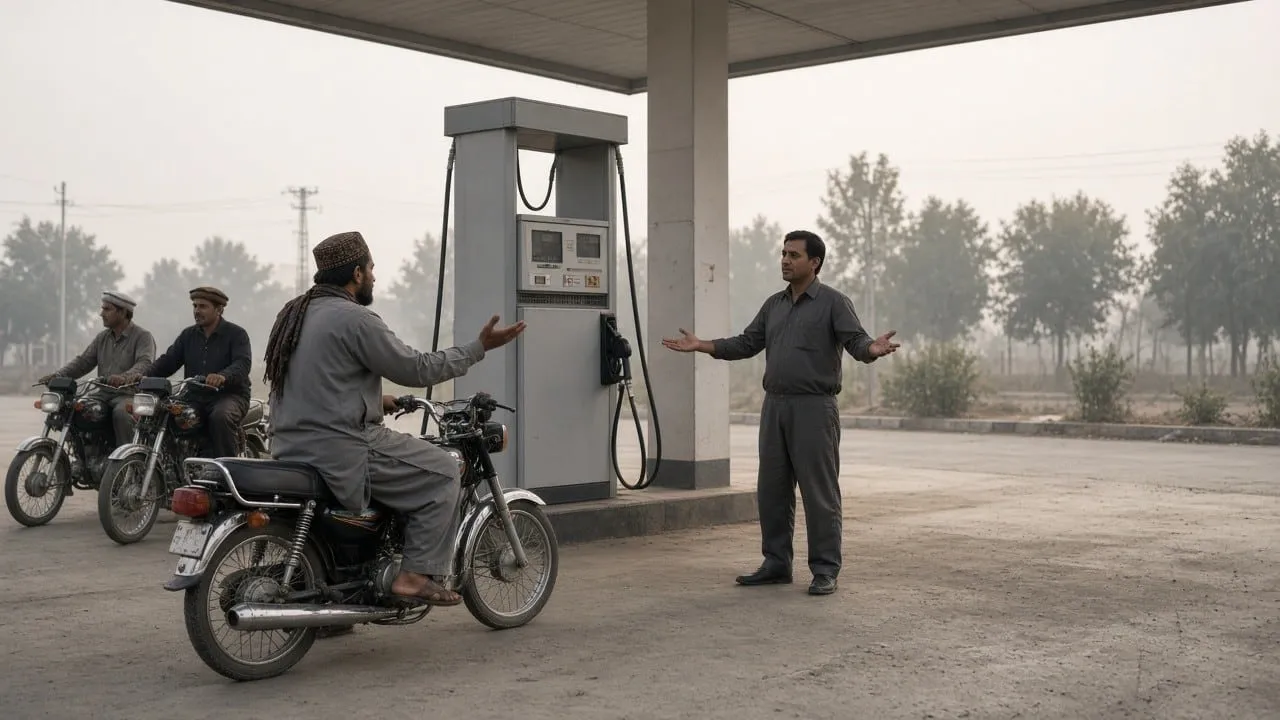
Petrol pumps in Rawalpindi and Islamabad have stopped giving motorists the Prime Minister's petrol subsidy following the recent cut in fuel prices.
Instead of selling petrol at the subsidised rate, pump owners and managers began charging motorists and motorcyclists the full price. Because of daily changes in fuel prices, many stations stopped supplying petrol altogether.
Why the Subsidy Stopped at the Pump
The immediate trigger was the government's decision to lower the retail price of fuel across the country. When the announced price fell, the calculation used to determine the subsidy amount - Rs. 100 per litre for a limited monthly quota - no longer matched the market price at many outlets. Pump owners reported that the discrepancy forced them to either sell at a loss or halt sales.
According to the All Pakistan Petrol Pump Owners Association, the daily volatility in fuel pricing makes it difficult for small retailers to absorb the subsidy without clear guidance from the government. The association says that without a revised subsidy formula, many owners chose to suspend sales rather than risk financial loss.
Four Days of Disputes at Pumps
The subsidy has not been applied for the past four days. This has led to growing arguments, disputes, and altercations between citizens and pump owners.
Pump owners claim their association told them to stop selling petrol at the subsidised rate.
Motorists, many of whom rely on the monthly quota for daily commuting, reported being charged the full market price, which in some cases exceeded the subsidised amount by Rs. 30 to Rs. 50 per litre. The sudden price hike sparked confrontations, with several reports of verbal altercations and a few instances of physical scuffles at busy intersections in both cities.
Association Denies Giving Any Order
Nauman Butt, Vice Chairman of the All Pakistan Petrol Pump Owners Association, rejected the claim. He said the government has not withdrawn the subsidy scheme, and the association has not told any pump owner to stop implementing it.
Butt emphasized that the association continues to support the subsidy and is seeking clarification from the Ministry of Energy on how to apply the relief after the price cut. He added that any decision to suspend the subsidy would come directly from the federal government, not from the association.
What the Subsidy Scheme Offers
The government launched the targeted scheme in September, when PM Shehbaz Sharif announced Rs. 100 per litre relief on a limited monthly quantity of petrol for motorcycles, rickshaws, and cars up to 800cc.
Under the scheme, eligible vehicles receive a monthly allocation of 5 litres for motorcycles, 10 litres for rickshaws, and 15 litres for cars up to 800cc. The relief is credited at the point of sale, meaning the pump must deduct Rs. 100 from the listed price for each litre dispensed within the quota.
Earlier this month, the prime minister ordered action against petrol pumps that fail to pass on relief to consumers. He also said the subsidy programme will continue until at least the end of December.
How the Subsidy Is Administered
The subsidy is administered through the Oil and Gas Regulatory Authority (OGRA) in coordination with the Ministry of Energy. Pump owners register their outlets with OGRA, receive a unique subsidy code, and submit daily sales data through an online portal. The system automatically calculates the amount to be deducted based on the announced Rs. 100 per litre figure.
If a pump fails to apply the discount, OGRA can impose fines, suspend the outlet's licence, or refer the case to the Federal Investigation Agency. The prime minister's recent directive reinforces these enforcement mechanisms, signalling that non-compliance will be met with strict penalties.
Impact on Commuters and Small Businesses
For daily commuters, especially those using motorcycles and rickshaws, the subsidy represents a modest but vital reduction in transport costs. A typical rider who uses the full 5-litre monthly allowance saves Rs. 500, which can be significant for low-income households.
Small transport operators, such as rickshaw owners, also depend on the relief to keep fares affordable. The sudden loss of the subsidy could force them to raise fares, potentially reducing passenger numbers and affecting livelihoods.
Fuel-dependent businesses, including delivery services and small logistics firms, have reported that the uncertainty at pumps is disrupting operations. Some have begun to stock fuel in advance, while others are exploring alternative routes to avoid the affected stations.
What Comes Next: Government Response and Timeline
The Ministry of Energy has not issued an official statement clarifying whether the subsidy formula will be adjusted to reflect the new retail price. Analysts expect a technical note to be released within the next week, outlining the revised calculation method.
In the meantime, the prime minister's promise that the programme will run until at least the end of December suggests that the subsidy will not be withdrawn entirely. However, the exact mechanism for continuing the relief amid fluctuating market prices remains unclear.
Stakeholders are watching for a joint press conference by the Prime Minister's Office and OGRA, which is likely to address the following points:
- Confirmation of the subsidy's continuation.
- Revised pricing formula or a new ceiling for the monthly quota.
- Enforcement actions against non-compliant pumps.
- Potential compensation for stations that suffered losses during the transition.
Practical Takeaways for Motorists
Motorists in Rawalpindi and Islamabad should verify whether a pump is applying the Rs. 100 per litre discount before refuelling. The discount is usually displayed on a board at the pump or can be confirmed by asking the attendant to show the subsidy code on the OGRA portal.
Consumers who believe they have been overcharged can file a complaint with OGRA through its online grievance portal. The authority typically responds within 48 hours and may order a refund if the complaint is substantiated.
For those who rely on the monthly quota, it is advisable to monitor the remaining allowance via the mobile app provided by the Ministry of Energy. The app updates the balance in real time and alerts users when they are close to exhausting their limit.
Broader Context: Fuel Subsidies in Pakistan
Pakistan has a long history of fuel subsidies aimed at cushioning the impact of global oil price shocks on low-income consumers. Previous schemes have targeted diesel for agricultural use, kerosene for heating, and LPG for households.
Critics argue that blanket subsidies strain the national budget, while supporters contend that targeted relief, like the current Rs. 100 per litre scheme, is a more fiscally responsible way to assist the most vulnerable road users.
The current dispute highlights the challenges of implementing a targeted subsidy in a market where prices change daily and enforcement relies on a network of thousands of small retail outlets.
What to Watch For
Observers recommend monitoring three key indicators over the next fortnight:
- Official clarification from the Ministry of Energy on the subsidy calculation.
- Any new directives from OGRA regarding compliance deadlines.
- Reports of further altercations at pumps, which could signal escalating public frustration.
These signals will help determine whether the subsidy will resume smoothly or if further policy adjustments are required.





