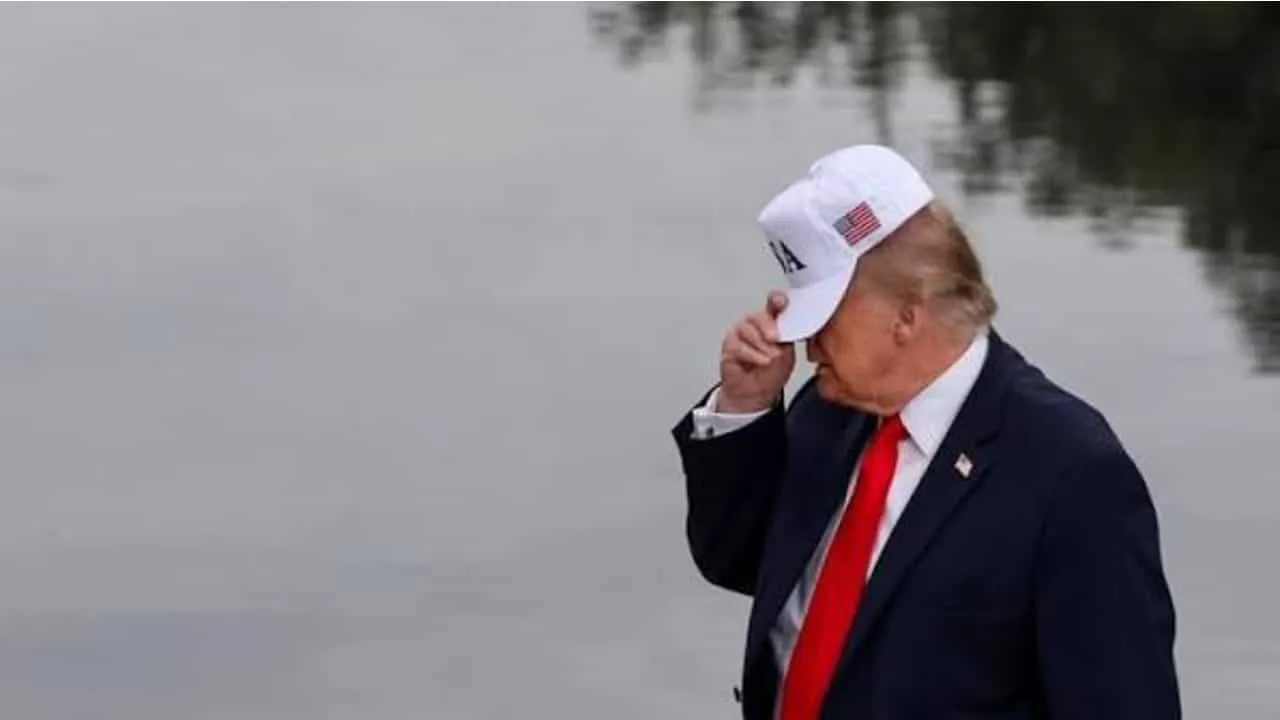
US President Donald Trump said the US-Israel war on Iran is "effectively over" militarily and that further strikes against Tehran "doesn't seem to be a very necessary thing" at this point.
Trump made the remarks on Monday during a surprise appearance in the White House briefing room, shortly after meeting Qatar's Prime Minister Sheikh Mohammed bin Abdulrahman bin Jassim Al Thani, Al Jazeera reported.
"Iran militarily is effectively over. We're just keeping it the status quo," Trump told reporters. He also said Iran had been "decapitated."
What the President Said About New Military Action
Trump said he saw "positive momentum" and a "good chance" that the war could end. "They're talking to us, and they're talking very politely, and we'll see what happens," he said.
He added that while the immediate need for more strikes was low, the United States remains "locked and loaded, ready to go for any reason that changes." The statement is the clearest indication yet that the administration is pulling back from the threat of renewed attacks after the US midterm elections.
Qatar and other Gulf states have urged Washington not to restart fighting, a diplomatic pressure that appears to be influencing the President's public stance.
Why the Naval Blockade Remains
Trump gave no indication that the thousands of US troops deployed in the waters off Iran will be withdrawn. He reaffirmed that the naval blockade, aimed at preventing Iranian oil from reaching global markets, will continue. "We're keeping it going. We have the greatest military blockade ever," he said.
The blockade is part of a broader strategy to limit Iran's revenue streams while diplomatic negotiations continue. Maintaining the presence of US warships also signals to regional actors that the United States remains ready to enforce its red lines.
Iran's Preconditions for Nuclear Talks
Tehran has outlined several conditions that must be met before it will engage in nuclear negotiations. These include ending the US blockade of its ports, lifting sanctions, unfreezing Iranian assets, paying compensation for war damage, and ending hostilities across the region, including Israeli operations in Lebanon.
Trump has repeatedly claimed that a peace deal with Iran is close. In a CNN interview on Sunday, he said that if talks progress and Iran signs a "strong agreement," it is "highly unlikely" the US would need to resume strikes. He also noted that the US has identified 38 bridges and other infrastructure targets that could be hit if fighting restarts.
Background: How the Conflict Started
The war began on February 28 with coordinated US-Israeli strikes on Iranian facilities. The attacks were framed as retaliation for alleged Iranian involvement in attacks on US interests in the region. Since then, both sides have exchanged missile launches, cyber attacks, and proxy engagements across the Middle East.
Prior to the February strikes, tensions had risen over Iran's nuclear program, its support for militias in Iraq, Syria, and Lebanon, and its alleged involvement in attacks on shipping in the Strait of Hormuz. The United States and Israel have long viewed Iran's nuclear ambitions as a direct threat to regional stability and to US national security.
Explainer: What Is a Naval Blockade and How Does It Work?
A naval blockade is an international security measure that prevents vessels from entering or leaving a designated maritime area. Under international law, a blockade must be declared, announced, and enforced impartially. The US blockade of Iranian ports is intended to stop oil exports that could fund Iran's military and nuclear programs.
US warships patrol the Gulf of Oman and the Strait of Hormuz, intercepting tankers suspected of carrying Iranian crude. Vessels that attempt to breach the blockade can be boarded, inspected, and, if deemed in violation, redirected or detained. The operation involves coordination with allied navies, satellite surveillance, and intelligence from regional partners.
Impact on Regional Economies and Global Oil Markets
The continued blockade has tangible effects on oil prices. By limiting Iranian oil exports, supply is reduced, which can push global benchmark prices higher. Countries that rely on Iranian crude, such as India and China, must source alternative supplies, often at a premium.
Regional economies that depend on maritime trade through the Strait of Hormuz also feel the pressure. Shipping companies may reroute vessels around the Cape of Good Hope, increasing transit times and costs. Gulf states, while supportive of the US stance against Iran, must balance their own economic interests tied to oil exports and trade flows.
What Comes Next: Diplomatic Paths and Military Options
While Trump has said no new strikes are needed now, he left open the possibility of future action if circumstances change. The administration's next steps are likely to focus on diplomatic engagement, especially with Qatar's mediation role and the broader Gulf coalition.
Key upcoming milestones include:
- Continued negotiations on Iran's nuclear program, potentially under the framework of the Joint Comprehensive Plan of Action (JCPOA) or a new agreement.
- Further discussions with Qatar and other Gulf states about the duration and scope of the naval blockade.
- Monitoring of Iranian proxy activities in Lebanon, Syria, and Iraq, which could trigger a reassessment of the "locked and loaded" stance.
- Evaluation of the identified 38 bridge targets and other infrastructure that the US has earmarked for potential strikes.
Observers will watch for any shift in Iranian rhetoric, especially regarding the conditions Tehran has set for talks. A change in Iranian posture could either accelerate a diplomatic resolution or provoke a recalibration of US military readiness.
Practical Takeaways for Readers
For businesses that import oil, the blockade means monitoring price fluctuations and supply chain adjustments. Travelers to the Gulf region should stay informed about any changes in security advisories, as the US presence in the waters could affect maritime travel. Citizens concerned about the broader geopolitical climate can note that the President's statement reflects a preference for diplomatic resolution while retaining a strong military deterrent.
In summary, President Trump's declaration that the war is "effectively over" signals a shift toward diplomatic engagement, but the US maintains a robust naval presence and a list of potential strike targets, keeping pressure on Tehran while leaving the door open for future action.