Prime Minister Fuel Subsidy Payouts Reach Rs. 52 Billion
The government has disbursed more than Rs. 52 billion under the Prime Minister's targeted fuel subsidy scheme, according to official figures released on Sunday. The initiative has successfully reached 18.4 million individual beneficiaries, providing direct financial relief amid volatile global energy markets. Prime Minister Shehbaz Sharif expressed satisfaction with the progress of the program after the total number of subsidy tokens used crossed the 100 million mark.
This massive public relief effort was initiated to shield vulnerable citizens from surging energy costs. The program scale reflects both the extent of the economic challenge and the volume of citizens requiring state assistance for basic transportation needs. Officials report that participation rates continue to accelerate as more households learn about the application process and secure their benefits.
Rapid Daily Registrations and Scheme Expansion
According to the Prime Minister, an average of 150,000 new users are registering for the scheme every day. He called this steady influx a clear sign of public trust in the government relief measures designed to combat rising living costs. The daily registration figures highlight a strong public demand for state intervention in consumer fuel pricing.
The numbers have climbed quickly in recent weeks. Earlier this month, when the Prime Minister extended the fuel subsidy till December, spending stood at about Rs. 28 billion and around 15 million people had directly benefited. Within a short span, the program expanded by millions of users and tens of billions of rupees in disbursements, showing rapid administrative scaling.
Who Qualifies for the Targeted Fuel Subsidy
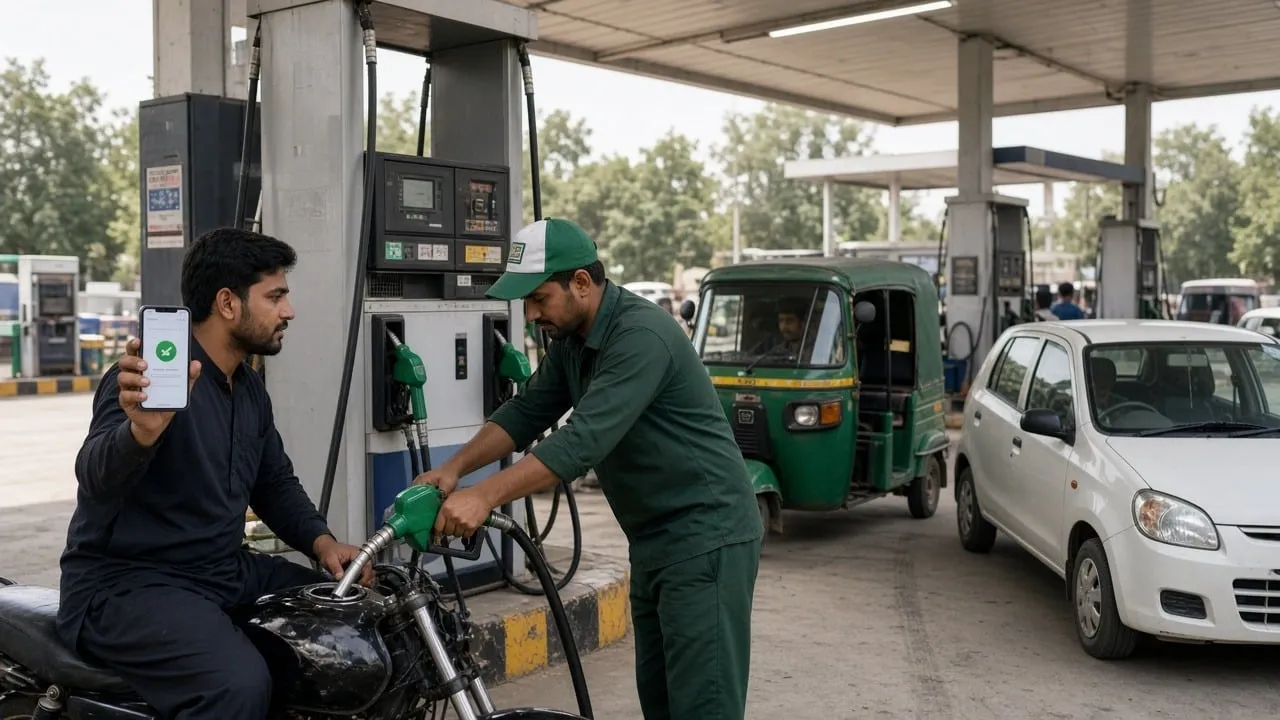
The government launched the scheme in September to stop rising oil prices, driven by the situation in the Middle East, from being passed on to the public. It offers relief to owners of motorcycles, chingchi rickshaws, and cars of up to 800cc. The Prime Minister noted that this vehicle selection provides direct support to working-class and low-income families who rely on small-engine transport for daily commuting and livelihoods.
Targeting specific vehicle classes ensures that public funds reach citizens who feel the pinch of inflation most acutely. Larger vehicle owners do not qualify for the subsidy, which preserves state resources for those who depend on motorcycles and compact cars for work and family transportation.
Inter-Ministerial Cooperation and Administrative Coordination
Running a subsidy program of this scale requires extensive coordination across various government branches. The Prime Minister credited the Ministry of Information Technology, the Finance Ministry, the Petroleum Ministry, the Ministry of Information and Broadcasting, and other departments for working together to run the scheme. This collaborative approach combines financial management, digital infrastructure, and public communication.
Digital registration platforms handled by the information technology sector allow millions of citizens to sign up efficiently. Meanwhile, the finance and petroleum divisions manage fund allocation and supply chain liaison with fuel stations, ensuring that the subsidy reaches the end user at the pump without administrative bottlenecks.
Addressing Implementation Challenges and Tighter Monitoring
Despite widespread uptake, the program has faced hiccups on the ground. Earlier this month, petrol pumps in the twin cities stopped giving the subsidy after a cut in fuel prices, leading to disputes with motorists. Such friction points demonstrate the logistical difficulties of synchronizing dynamic market fuel prices with fixed state subsidy mechanisms.
In response to operational challenges, Shehbaz Sharif directed the relevant authorities to ensure transparency and effective monitoring while implementing the scheme. He also instructed officials to provide more facilities to beneficiaries so that as many eligible people as possible can benefit without facing unnecessary hurdles. The government maintains that it is using all available resources to protect the public from the impact of inflation.