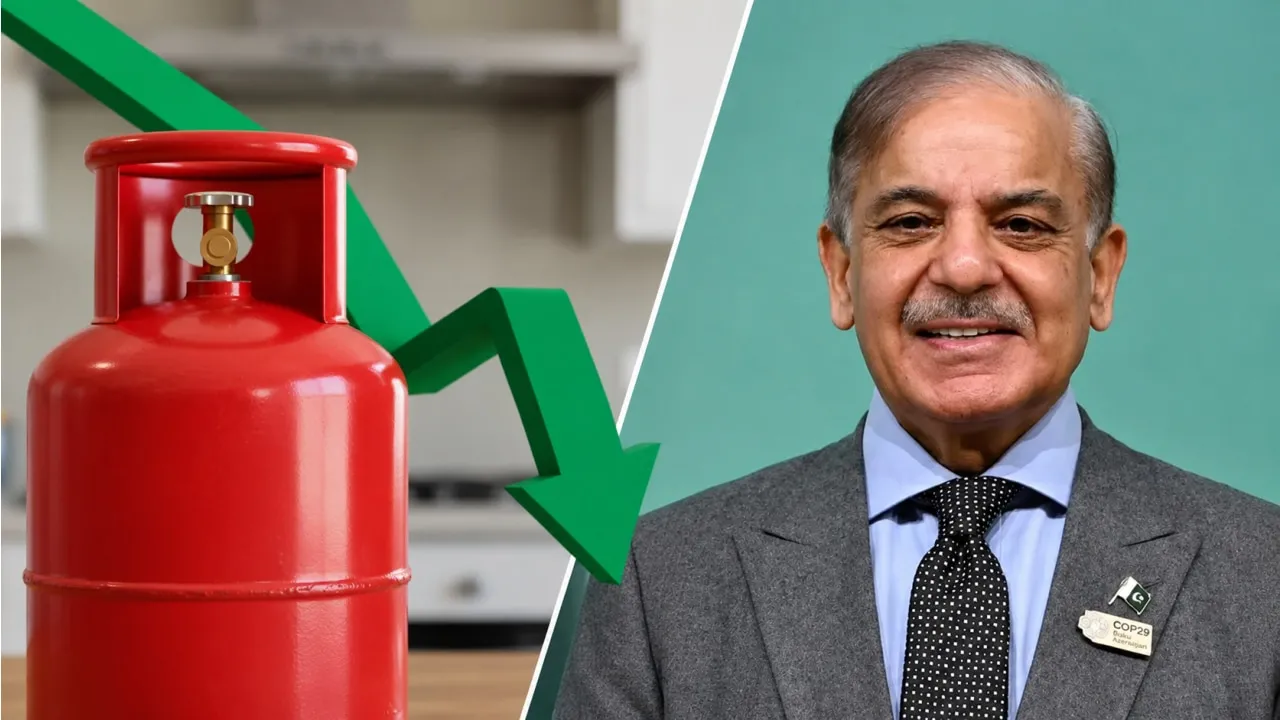
Prime Minister Shehbaz Sharif refused to endorse a proposal for auctioning liquefied petroleum gas coming from state enterprises, stating that a proper legal framework and comprehensive policy must be established first.
Had the auctions gone ahead, domestic LPG prices could have climbed by a minimum of 15 percent, which translates to an increase of roughly Rs. 900 for an 11.8-kilogram cylinder.
Because the prime minister turned down the interim steps brought forward by the Petroleum Division, the outcomes of the August 10 simultaneous bids conducted by three large public-sector LPG producers will be discarded.
The rejected framework would have tied local LPG producer prices to import parity while boosting the profit margins for distributors and marketing companies. This change was calculated at Rs. 77,000 per ton, matching the Rs. 900 hike per household cylinder.
This decision arrives while buyers deal with costly LPG due to tight supplies, as an 11.8-kilogram cylinder currently costs near Rs. 5,000, exceeding the Oil and Gas Regulatory Authority maximum price limit of Rs. 3,296.
Industry representatives pointed to restricted imports via the Taftan border and logjams leaving over 25,000 tons of LPG stranded at Rahimdan near Gwadar as reasons for the shortage. They noted that terminal wait times at Gwadar stretched to roughly a month, driving transport expenses up from $100 to $400 per ton.
Inbound shipments suffered further setbacks when the Strait of Hormuz shut down, shifting focus to Oman as a primary alternative provider. Based on letters mentioned by Dawn, the Foreign Office reached out to Oman state firm OQ Trading following a Petroleum Division appeal to lock in LPG shipments, though insiders reported those supplies later went to a sole private buyer.
Insiders also mentioned that both Port Qasim LPG facilities ran at maximum storage capacity, casting doubt on the true scale of the deficit and regulatory oversight effectiveness, alongside weak rule enforcement and slow responses to supply bottlenecks.
The planned setup would have required Oil and Gas Development Company Limited, Pakistan Petroleum Limited, Pak-Arab Refinery Company, and Government Holdings (Private) Limited to provide uniform five-ton daily lots on a trial run, ending the current quota system.
Current industry participants also launched legal challenges against the auction scheme, maintaining that existing regulations and rules lack provisions for such a system. The Petroleum Division and related state bodies reportedly consulted the Attorney General for Pakistan regarding these legal battles.
Total yearly consumption of LPG in Pakistan falls between 1.4 million and 2 million tons, with imports accounting for over half of that total.