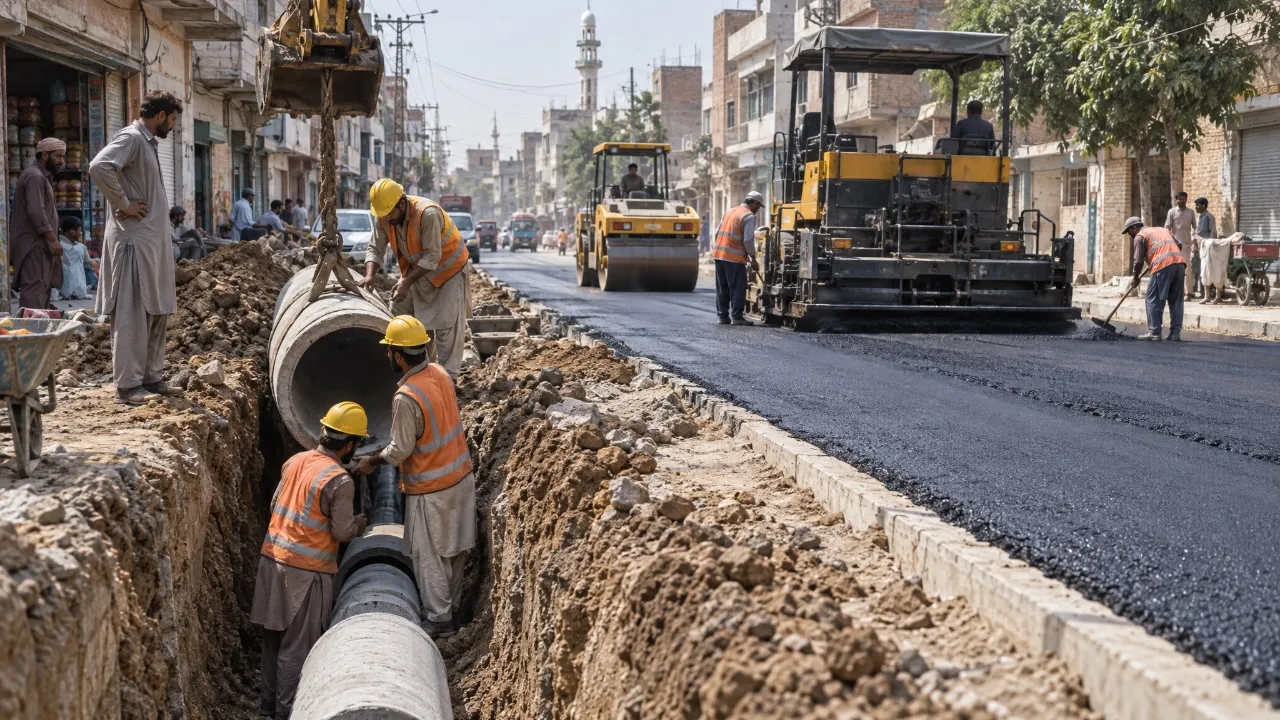
Punjab Allocates Rs. 75.99 Billion for Sewerage and Streets in 13 Cities
The largest share of Punjab's Rs126.7 billion development package, Rs75.987 billion, is earmarked to improve sewerage and drainage systems and pave streets across 13 cities. This substantial financial commitment targets municipalities that have historically seen less infrastructure investment compared to major urban centers like Lahore or Faisalabad. By focusing on fundamental civic amenities, the provincial administration aims to transform the living conditions of residents in these selected areas.
The work will be carried out in Mailsi, Abdul Hakeem, Ferozewala, Daska, Mandranwala, Jamkay Cheema, Kamoke, Kot Abdul Malik, Muridke, Alipur Chatha, Hazro, Renala Khurd and Mian Channu. Each of these locations faces severe challenges regarding wastewater management, stagnant rainwater during monsoon seasons, and deteriorated road surfaces that impede daily commerce and mobility.
Understanding the Punjab Development Programme
The allocation was approved under the Punjab Development Programme, marking a major push to upgrade basic urban facilities in smaller cities rather than concentrating funds in major metropolitan centres. Provincial development programmes typically function by pooling state resources to fund public sector projects that local municipal corporations cannot afford through their own tax collection. Urban planning experts often point out that smaller urban hubs in Pakistan experience rapid population growth without corresponding upgrades to underground utilities.
Infrastructure development in regions outside the primary provincial capitals requires careful administrative coordination between local government bodies and provincial engineering departments. The Punjab Development Programme provides a structured framework for disbursing funds, monitoring project milestones, and ensuring that contractors complete public works according to established engineering specifications. This process helps prevent delays and mismanagement in municipal construction efforts.
Which Cities Are Included in the Development Package?
Thirteen distinct municipal areas across the province are due to receive funding from the Rs75.987 billion allocation. The chosen localities span various districts, reflecting a broad geographic distribution rather than a concentrated regional focus. Residents in these towns have long advocated for better municipal services, particularly concerning sanitation and road networks.
The complete list of beneficiary cities includes:
- Mailsi
- Abdul Hakeem
- Ferozewala
- Daska
- Mandranwala
- Jamkay Cheema
- Kamoke
- Kot Abdul Malik
- Muridke
- Alipur Chatha
- Hazro
- Renala Khurd
- Mian Channu
Addressing Chronic Sewerage and Drainage Deficits
Poor sewerage and drainage systems represent one of the most pressing public health hazards in secondary cities across Punjab. Open drains, overflowing sewage lines, and lack of proper stormwater management contribute to the spread of waterborne diseases and cause severe property damage during heavy rains. Stagnant water also creates breeding grounds for mosquitoes, raising the incidence of malaria and dengue fever in affected communities.
Investing heavily in underground piping, pumping stations, and modern drainage networks allows municipalities to manage wastewater safely and efficiently. Improved sanitation infrastructure directly correlates with better public health outcomes, lower medical expenses for households, and cleaner local environments. Engineers will need to design systems that can handle projected population growth for decades to come.
Upgrading Street Infrastructure and Paving
Alongside subsurface utilities, street paving forms a core component of the multi-billion rupee initiative. Unpaved or broken roads generate excessive dust, damage local transport vehicles, and become impassable mud tracks during wet weather. Paving streets facilitates smoother transportation for school children, emergency vehicles, local merchants, and daily commuters.
When authorities dig up streets to lay new sewerage lines, rebuilding the road surface afterward is a mandatory step that restores urban aesthetics and functionality. Coordinated execution between drainage contractors and road-paving teams ensures that streets are not repeatedly excavated, minimizing disruption to local businesses and residents. Better roads also stimulate local economic activity by improving market access for small traders and agricultural producers.
Economic Impact on Smaller Urban Centers
Directing substantial development funds toward smaller cities helps balance regional economic growth and reduce demographic pressure on major metropolises. When secondary cities offer reliable utilities, paved roads, and clean environments, they attract local investment and retain working-age populations who might otherwise migrate to overcrowded provincial capitals. Small business owners benefit from reduced logistical hurdles and improved customer access.
Furthermore, large-scale civil works create temporary and permanent employment opportunities for local laborers, construction material suppliers, and technical personnel. Injection of development funds into regional economies stimulates demand for local goods and services. Municipal authorities will need to ensure transparent procurement and rigorous oversight to maximize the public benefit of every rupee spent.





