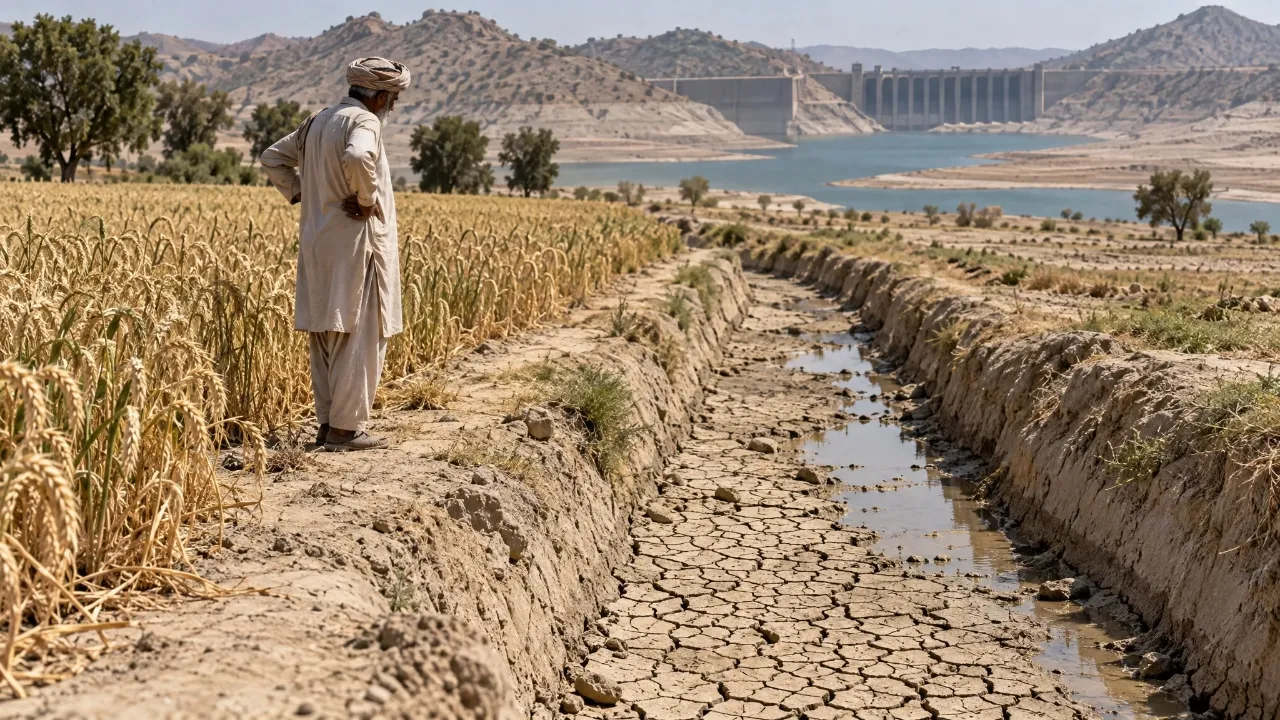
Punjab and Sindh Face Severe Water Shortage During Rabi Season
Punjab and Sindh are facing a projected 22 per cent irrigation-water shortfall during the ongoing Rabi season, raising concerns over the availability of water for wheat and other winter crops as the country's three major reservoirs currently hold a combined 6.167 million acre-feet of usable water.
This tight supply situation creates immediate challenges for the agricultural sector in the two provinces, where timely irrigation dictates the success of winter harvests. Farmers must manage tight canal allocations while preparing fields for staple crops that require precise moisture levels during early growth stages.
Understanding the Rabi Season and Crop Cycles
The Rabi season runs from October 1, 2026, to March 31, 2027, marking the cooler winter planting period across the region. Farmers typically sow seeds in autumn and harvest the mature crops during the spring months of the following year. Wheat serves as the principal Rabi crop, anchoring domestic food security and rural incomes across the affected provinces.
Aside from wheat, the seasonal cycle supports a diverse range of agricultural products essential for local markets and consumption. These secondary winter items include tobacco, barley, mustard, gram, lentils, potatoes, onions and tomatoes. Each of these varieties depends on steady moisture delivery through public irrigation infrastructure.
The Indus River System Authority Approval and Water Allocations
The Indus River System Authority (IRSA) has approved a 22 per cent water shortage for the Rabi season, running from October 1, 2026, to March 31, 2027, based on anticipated river inflows of 21.268 million acre-feet. This regulatory body manages the distribution of river waters among the provinces according to historical sharing accords and seasonal availability assessments.
The authority has estimated provincial water withdrawals at 29.183 million acre-feet, leaving farmers in the two major agricultural provinces facing constraints during a critical period for winter crop cultivation. The gap between expected inflows and estimated withdrawals forces administrators to apply proportional cuts to canal water supplies distributed to local farming communities.
Wheat and Winter Crops at Risk
The projected shortage could affect wheat, the country's principal Rabi crop, as well as tobacco, barley, mustard, gram, lentils, potatoes, onions and tomatoes. When irrigation canals fail to deliver expected volumes, plants experience moisture stress that stunts vegetative growth and reduces the final grain or vegetable count per acre.
The availability of timely irrigation is particularly important for wheat cultivation, as water shortages during critical stages of crop development can affect plant growth and ultimately reduce yields. Agricultural extension workers advise that moisture deficits during the crown root initiation and tillering stages inflict permanent damage on potential harvest outputs.
Current Levels at Major Water Reservoirs
According to the latest figures released by the Water and Power Development Authority (WAPDA), the combined usable water storage in the Tarbela, Mangla and Chashma reservoirs stands at 6.167 million acre-feet. These massive civil engineering works store monsoon surpluses to feed the canal networks during the dry winter months.
At Tarbela, the water level stands at 1,488.93 feet, with a storage volume of 2.456 million acre-feet. The Indus River inflow at the site is recorded at 25,600 cusecs, against an outflow of 45,000 cusecs.
At Mangla, the water level is 1,186.90 feet, with a storage volume of 3.462 million acre-feet. The Jhelum River's inflow stands at 3,800 cusecs, against an outflow of 33,000 cusecs.
The Chashma Reservoir has a water level of 647.80 feet, with 249,000 acre-feet of water in storage. At Chashma Barrage, the Indus River's inflow is recorded at 113,200 cusecs, while the outflow stands at 54,000 cusecs.
At Head Marala, the Chenab River's inflow is recorded at 7,400 cusecs, against an outflow of 2,000 cusecs. At Nowshera, the Kabul River's inflow and outflow are both recorded at 8,200 cusecs.
Agricultural Outlook and Economic Pressures on Farmers
The projected water shortage has raised concerns about the country's agricultural outlook, particularly as wheat sowing progresses across Punjab and Sindh. Rural communities rely heavily on predictable canal rotations to schedule plowing, seeding, and fertilizer applications.
Any constraints on irrigation supplies could increase farmers' dependence on groundwater, push up pumping costs and affect crop yields, particularly in areas heavily reliant on canal irrigation. Operating diesel or electric tubewells increases production expenses significantly for smallholders who already face steep inflation in fuel and fertilizer markets.
According to the Food Security Outlook issued by FEWS NET for October 2026 to May 2027, the national Rabi wheat harvest is expected to remain around average despite expectations of average to above-average winter rainfall. Meteorological forecasts suggest precipitation patterns might offer partial relief in rain-fed zones, though irrigated tracts remain at the mercy of river flows.
Persistent irrigation shortages, below-average groundwater availability and high agricultural input and fuel costs are expected to constrain production, particularly in Punjab and Sindh. These compounding cost factors threaten farm profit margins and maintain upward pressure on staple food prices for urban and rural consumers alike.





