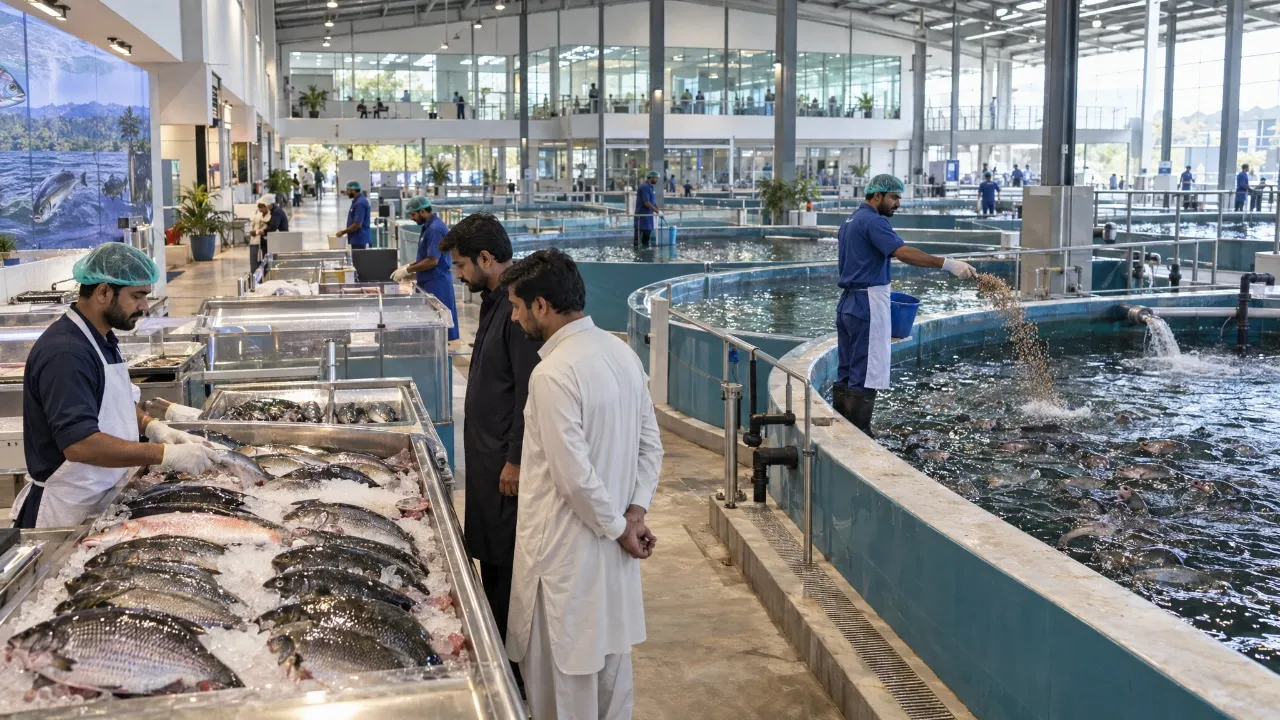
Punjab Approves Rs3.979 Billion for Aquaculture Malls
The government of Punjab has officially approved an allocation of Rs3.979 billion to establish a network of aquaculture malls across the province. This funding forms a core component of a broader infrastructure and development push aimed at modernizing traditional industries and strengthening the regional economy through targeted state investments.
Officials confirmed that this financing is part of a larger package of 11 development projects. The total value of these approved projects stands at Rs126.668 billion, reflecting a massive financial commitment to public sector advancement. The green light for these initiatives was granted by the Provincial Development Working Party during a meeting held on Friday.
Understanding the Provincial Development Working Party
The Provincial Development Working Party functions as the primary planning and review forum for regional development initiatives within the territory. Composed of senior government officials, planners, and economic specialists, this body evaluates project proposals submitted by various ministries and departments. Their review process ensures that public funds are directed toward financially viable schemes that promise tangible public benefits.
When the Provincial Development Working Party reviews a proposal, it assesses technical feasibility, cost efficiency, and alignment with broader regional development goals. Projects that pass this rigorous evaluation receive formal approval, allowing public sector funds to be released for execution. The recent approval of the Rs126.668 billion package, which includes the aquaculture malls, demonstrates the board priority currently assigned to productive sector upgrades.
How Aquaculture Malls Will Transform Fisheries
The introduction of aquaculture malls represents a structural shift in how fish and aquatic products are produced, processed, and marketed in the region. Traditional fish farming operations often rely on fragmented supply chains, limited access to cold storage, and informal local markets that restrict profit margins for producers. These dedicated commercial centers aim to bridge those gaps by integrating production oversight with modern retail and wholesale spaces.
Proponents of the plan note that the facilities will provide centralized hubs equipped with modern infrastructure. This setup allows fish farmers to bring their produce directly to specialized commercial zones where consumers and institutional buyers can access fresh goods under hygienic conditions. By removing intermediaries and streamlining logistics, the initiative seeks to increase the overall market value of local catches.
Economic Impact and New Opportunities
Beyond immediate infrastructure improvements, the project is designed to generate widespread economic opportunities throughout the provincial supply chain. Fisheries management, feed production, transport logistics, and retail sales are expected to see increased activity as the malls become operational. Small-scale fish farmers stand to benefit significantly by gaining reliable access to structured markets that offer fair pricing for their harvest.
Employment generation remains a central goal of the Rs3.979 billion investment. The construction phase alone will require various engineering, civil work, and supply services. Once open, the malls will create permanent jobs in facility management, quality control, wholesale trading, and customer service, providing a steady source of income for local workers.
Background of Fisheries Development in Punjab
For many years, the fisheries sector operated with minimal technological integration, relying on traditional ponds and scattered distribution networks. Recognizing the untapped potential of aquaculture to ensure food security and rural employment, policymakers have gradually increased attention toward modernizing the industry. Past efforts focused primarily on seed distribution and basic pond management training for rural farmers.
The decision to build specialized malls marks a transition from basic production support to advanced commercial infrastructure. This strategy mirrors trends in other agricultural sectors where modern wholesale markets and supply chain hubs have successfully reduced waste and improved producer incomes. By investing heavily in these commercial centers, the provincial administration aims to position aquaculture as a high-growth contributor to the regional economy.
What Comes Next for the Approved Projects
Following the formal approval by the Provincial Development Working Party, the next phases involve detailed site planning, architectural design, and the allocation of funds to executing agencies. Contractors and administrative bodies will coordinate land acquisition and construction timelines for the aquaculture malls. Stakeholders and industry observers will monitor how quickly funds are disbursed and whether initial construction milestones are met in the coming months.





