Modi Office Summons Telecom Chief Amit Agrawal
Prime Minister Narendra Modi's office on Saturday summoned Telecom Secretary Amit Agrawal to explain how officials ordered the blocking of more than 100 websites on the basis of forged court orders, according to two government officials. Agrawal, who serves as the most senior bureaucrat in the telecommunications ministry, was called back from a trip to another state. The ministry oversees entities ranging from large telecom operators to internet providers across the nation.
This high-level summons follows an investigative report published on Wednesday revealing that telecom officials directed internet providers to block 129 illegal betting websites on the strength of fake High Court orders. The fraudulent documents were emailed to officials by individuals posing as lawyers. One government official stated that the Department of Telecommunications carried out the action against the betting sites through the relevant field officers without initially verifying the authenticity of the paperwork.
How Forged Court Orders Led to Website Blocking
Online betting remains illegal in India under various legislative frameworks, making betting platforms prime targets for regulatory enforcement. However, this serious breach has raised deep concerns that weak safeguards in the content-takedown system could allow forged court documents to be used maliciously to block legitimate websites, freedom of expression, and digital commerce. State police have opened a criminal investigation into possible forgery and cheating by unidentified people, and investigators have officially sought ministry records as part of the ongoing probe. The telecoms ministry has also started an internal inquiry to determine how the fake paperwork bypassed standard verification channels.
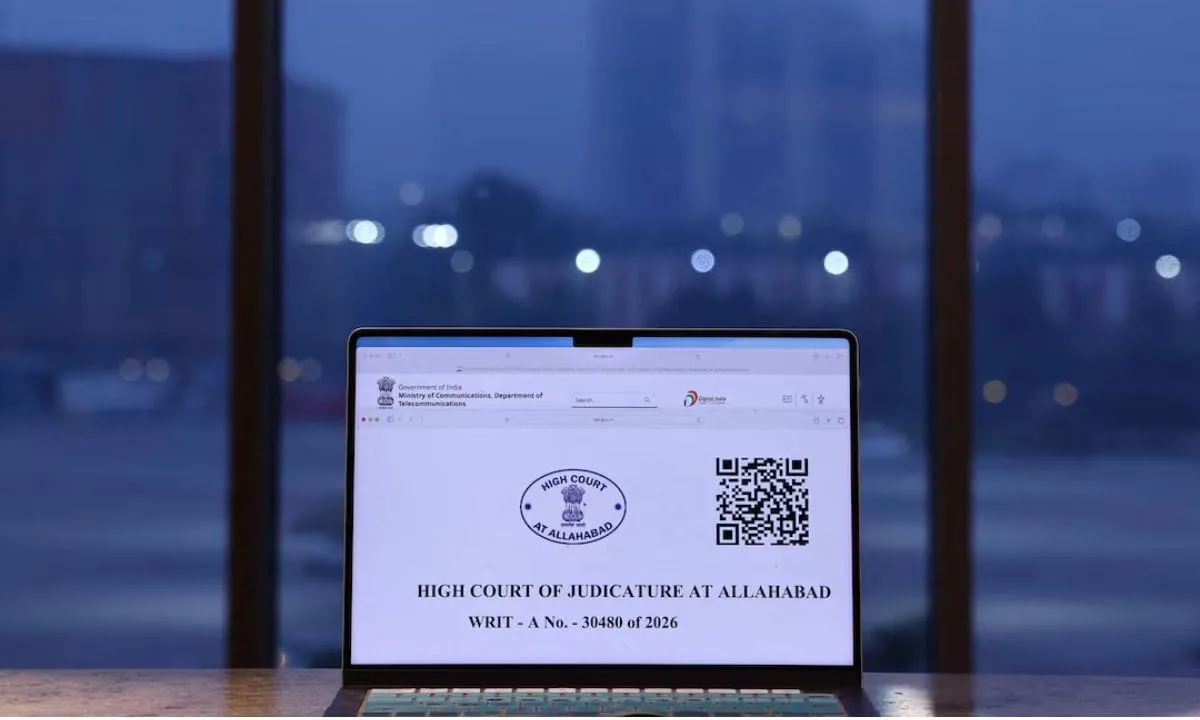
Journalistic investigation previously identified two state court orders as completely fake, relying on official comments from police and the respective court registries. Both fabricated documents carried forged court logos, unauthorized seals, and a fraudulent QR code designed to trick compliance officers. These fraudulent orders, along with official correspondence showing ministry officials directing internet providers to remove the websites, had been publicly available on the Department of Telecommunications website for months. On Saturday, one of the fake orders remained accessible on the public site, while the other had been removed following media scrutiny.
Role and Responsibilities of the Department of Telecommunications
The Department of Telecommunications functions as a vital arm of the Indian government, shaping policy, granting licenses, and managing spectrum for telecommunications services. It holds sweeping authority to issue directives to internet service providers regarding network management and content restrictions. When courts issue lawful orders under statutory provisions, the department acts as an administrative conduit to enforce compliance across digital networks. However, the reliance on emailed documents without rigorous cross-checking has exposed systemic vulnerabilities in how administrative bodies handle judicial mandates.
Neither Amit Agrawal, his ministry, nor Prime Minister Narendra Modi's office responded to requests for comment regarding the security lapse. The absence of immediate public statements highlights the sensitivity of the incident, which touches upon core issues of administrative oversight and cyber security within critical government infrastructure. Observers note that administrative machinery must tighten verification protocols to prevent similar security breaches in the future.
Broader Legal Concerns Regarding Falsified Legal Documents
Concerns over falsified legal documents have been growing steadily within the Indian judicial system. India's Supreme Court last year stated explicitly that the forgery of judges' signatures strikes directly at the foundation of public trust and that such offences cannot be treated as routine administrative errors. In July, the apex court set aside a tribunal's orders that relied entirely on non-existent judgments, demonstrating the rising frequency of fraudulent legal citations. Similar issues are not confined to South Asia, as a United States judge also recently disqualified lawyers over the use of fabricated legal citations in foreign courts.
The convergence of digital technology and legal administration requires robust verification measures to protect the integrity of state actions. As law enforcement agencies continue their criminal probe into the unidentified perpetrators who sent the emails, public attention remains focused on how the Department of Telecommunications will reform its compliance procedures to prevent future exploitation by bad actors.