Punjab Chief Minister Maryam Nawaz Mandates 24 Hour Angioplasty Across All Hospitals
Chief Minister of Punjab Maryam Nawaz has directed that patients requiring angioplasty at any hospital in Punjab should not have to wait more than 24 hours. The strict timeline applies across the entire regional healthcare network, marking a major policy shift toward rapid intervention for acute cardiovascular conditions. Heart disease remains a leading cause of medical emergencies across the region, making prompt surgical intervention critical for patient survival and recovery.
The directive was issued during an official visit by the chief minister to the District Headquarters Hospital in Jhelum. During this inspection tour, she reviewed existing medical infrastructure, spoke with recovering patients, and inaugurated several newly upgraded healthcare facilities designed to decentralize advanced medicine from major urban hubs.
Expansion of Cardiac Care Infrastructure at District Headquarters Hospital Jhelum
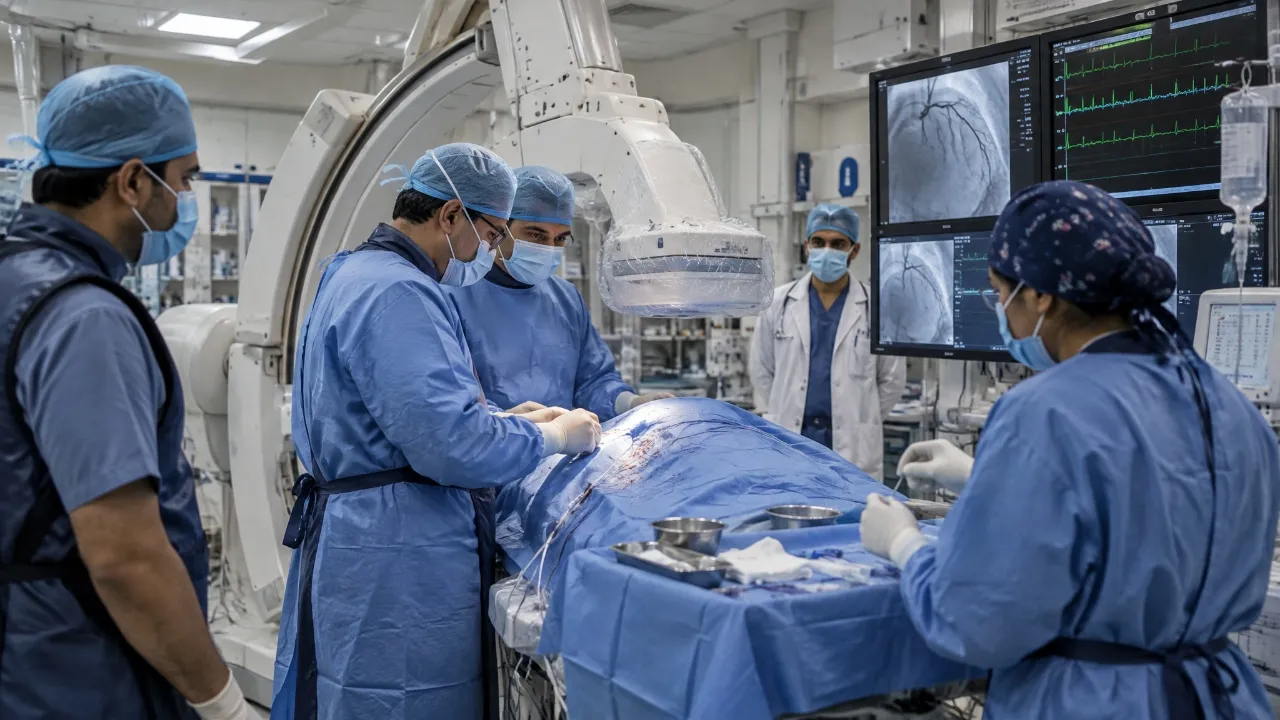
The core of the recent announcement centers on the inauguration of a newly established cardiac catheterisation laboratory, commonly known as a Cath Lab, at the District Headquarters Hospital in Jhelum. This advanced medical unit comes fully equipped with specialized diagnostic and surgical technology, including angiography machines, angioplasty tools, electrocardiogram equipment, a modern operation theatre, and life support ventilators. According to official hospital data released during the visit, this newly operational facility has already provided medical care and interventions to 2,400 patients since opening its doors.
During her tour of the facility, the chief minister conducted a thorough inspection of the medical wards, the semi-modular unit, and the operation theatre. She personally checked the quality standards and expiry dates of essential medicines and pharmaceutical injections stored in the pharmacy and treatment rooms. Furthermore, she observed a live angiography procedure directly from the central control room to evaluate the technical proficiency and readiness of the resident surgical staff.
Real World Impact on Cardiac Patients and Regional Access
The establishment of regional cardiac units directly addresses long-standing logistical challenges for residents living outside major metropolitan centers like Lahore and Faisalabad. Highlighting the tangible impact of accessible cardiac care during her Jhelum visit, a Dubai-based driver named Shehzad Naveed shared his personal medical journey with the chief minister. He explained that he had returned to Pakistan specifically to seek medical treatment after developing a serious heart condition while working abroad.
Shehzad Naveed noted that he had initially been given a hospital appointment in Faisalabad that required a week of waiting before any procedure could take place. Acting on his sister's advice, he redirected his travel to Jhelum instead, where medical staff performed an immediate angioplasty without the standard bureaucratic or scheduling delays. Maryam Nawaz emphasized that the opening of the new Cath Lab meant local residents and returning expatriates would no longer need to travel long distances to other cities just to receive essential cardiac treatment.
Broader Infrastructure and Community Development Initiatives in Jhelum
Beyond healthcare reforms, the chief minister's itinerary in Jhelum included the formal inauguration of several civic and community development projects. She officially opened the newly restored Gymnasium and Sports Complex, a renovation project completed at a total cost of Rs1.195 billion. During her time at the sports complex, she interacted directly with local athletes and players, and even played a brief match of badminton to encourage youth participation in physical fitness programs.
Following her engagements at the sports complex, the chief minister visited the private home of a local resident who is a registered beneficiary of the Apni Chhat Apna Ghar housing initiative. This public welfare program aims to provide secure housing solutions and financial assistance to lower-income families across the region. By combining rapid healthcare mandates with large-scale investments in public recreation and housing, the administration continues to roll out multi-sectoral reforms aimed at improving the daily standard of living for residents throughout Punjab.





