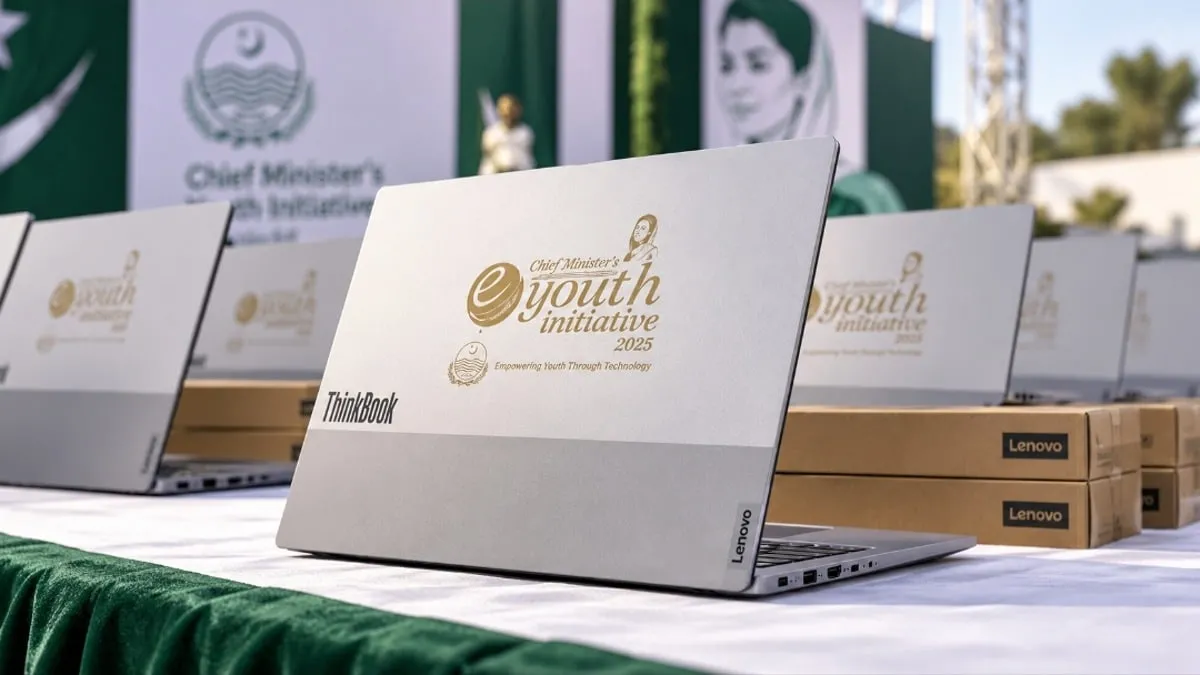
Punjab Chief Minister Distributes Laptops in Jhelum
Punjab Chief Minister Maryam Nawaz Sharif distributed laptops among students in Jhelum during a ceremony on Tuesday, November 10, as part of the provincial government's efforts to support higher education and digital learning.
The distribution event took place at Government Comprehensive High School in Jhelum, where students gathered to receive their devices. This initiative forms a central part of the broader provincial strategy to integrate modern technology into classrooms and lecture halls across Punjab.
Local educational administrators and government officials attended the ceremony to oversee the distribution process. The event highlights ongoing public sector investments in youth development and technological literacy within the region.
Honhaar Scholarships Awarded to 109 Students
She also awarded Honhaar scholarships worth approximately Rs. 2.5 million to 109 students. Addressing the ceremony at Government Comprehensive High School in Jhelum, Maryam congratulated the students and praised their parents for the sacrifices they had made to support their children's education.
The Honhaar scholarship program aims to ease financial pressures on high-achieving scholars from diverse economic backgrounds. Recipients were selected based on academic performance metrics designed to reward consistent study habits and high test scores.
Financial assistance of this nature allows recipients to cover tuition fees, books, and other academic expenses without facing immediate monetary strain. Families often struggle with the rising costs of schooling, making institutional support vital for continued attendance.
Education as a Fundamental Right Rather Than a Favor
She said laptops and scholarships were students' rights rather than government favors, adding that financial difficulties should not prevent talented students from pursuing their education.
Public policy experts often emphasize the importance of viewing educational access through a rights-based framework. When governments treat learning tools as entitlements for citizens, accountability and consistency in resource distribution tend to improve.
By removing monetary barriers, public programs help bridge the gap between privileged and marginalized youth. This approach encourages broader participation in academic institutions and strengthens the future workforce.
Promoting Merit in Education and Employment
The chief minister also emphasized merit in education and employment, saying students should receive opportunities based on their abilities rather than political connections or recommendations.
Fair evaluation systems ensure that candidates who work hard achieve recognition regardless of their social standing or familial networks. Meritocratic principles are essential for building trust in public institutions and government administration.
Educational boards and hiring committees must maintain transparent criteria to evaluate applicants fairly. Upholding these standards encourages young scholars to invest their time in genuine academic achievement.
Plans for Nawaz Sharif Schools of Eminence Across Punjab
Maryam said the Punjab government was working to improve public schools and provide students with modern educational facilities. She also highlighted plans to establish nearly 300 Nawaz Sharif Schools of Eminence across the province, equipped with computer, artificial intelligence and science laboratories.
The proposed network of institutions aims to upgrade infrastructure in underfunded areas, bringing advanced learning environments to more communities. Classrooms will feature updated teaching tools and specialized equipment designed for technical subjects.
Science and computer laboratories allow learners to gain practical experience alongside theoretical knowledge. Preparing students for technical fields requires investment in physical facilities that match modern industry standards.
Encouraging Youth Development and National Contribution
She urged young people to focus on education, develop their skills and contribute to the country's development.
National progress depends heavily on the intellectual and professional capacity of the younger generation. Skill acquisition programs and higher education access provide the tools necessary for citizens to build sustainable careers.
Leaders frequently call upon youth to channel their energy into productive academic and professional pursuits. Community engagement and steady employment help drive economic stability at both the local and national levels.