Punjab Extends CM Solar Panel Scheme With 100000 New Units
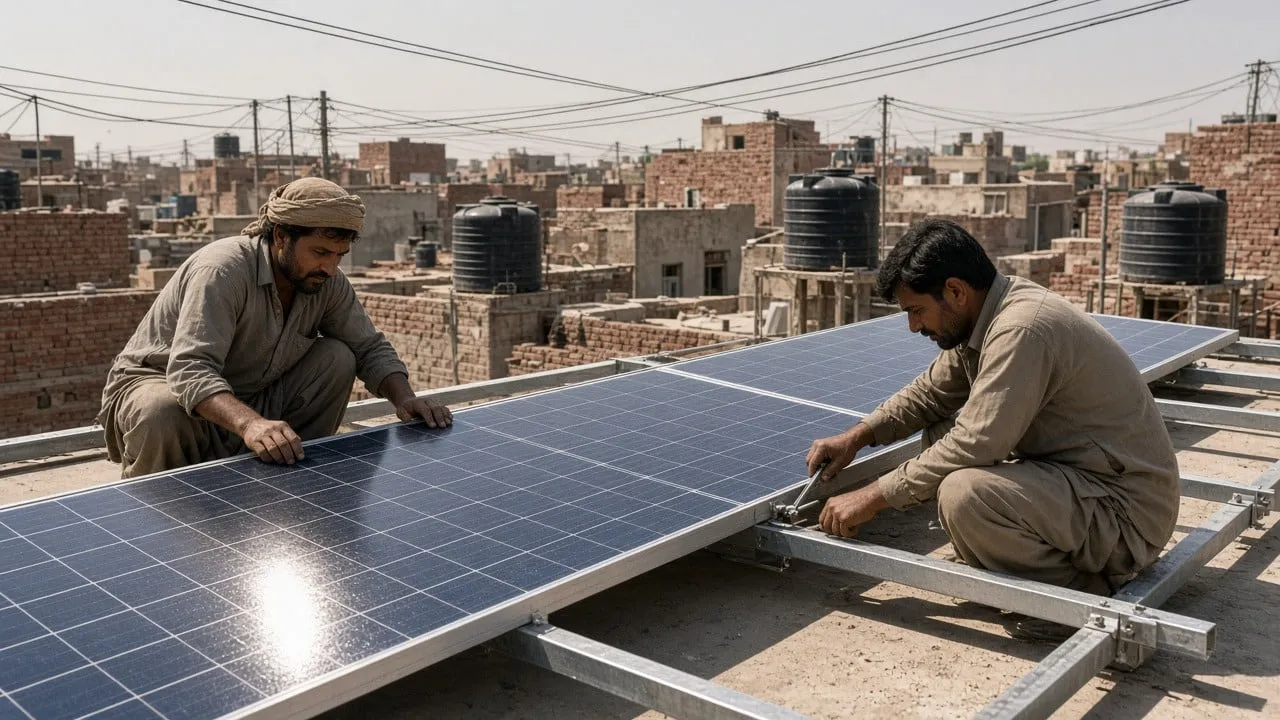
Punjab will give solar panels to 100,000 more people after Chief Minister Maryam Nawaz Sharif approved the second phase of the CM Solar Panel Scheme and ordered its size to be raised from 90,000 to 100,000. This major development comes as the provincial administration attempts to address high utility costs and persistent energy challenges faced by ordinary citizens across the region. The decision was taken at a special meeting chaired by the chief minister, where Provincial Minister Faisal Khokhar and the Energy Secretary gave a detailed briefing on the progress of ongoing renewable energy initiatives and future projections for the power sector.
The expansion of this welfare program marks a direct response to widespread public demand for relief from surging utility expenses. As conventional energy prices continue to strain household budgets, decentralized solar power generation offers a practical alternative for domestic consumers. Government officials have spent recent months evaluating the outcomes of initial distributions to ensure that subsequent phases deliver maximum utility to deserving applicants. The administration continues to prioritize sustainable infrastructure as a core component of its provincial development strategy.
Success and Savings From Phase I of the Solar Initiative
The meeting was told that more than 350,000 people applied in the first phase of the scheme, and 89,869 of them received solar panels. Officials said these households have saved around one-third on their electricity bills. The overwhelming volume of applications highlights the severe financial pressure placed on families by traditional grid electricity rates. Local authorities managed a rigorous verification process to distribute the initial units transparently to eligible applicants who met the established criteria.
According to a public survey by the Energy Department, people said their electricity bills have dropped to nearly half because of the scheme. Punjab earlier extended the deadline for the scheme due to heavy public interest, allowing more citizens to complete their applications. Independent consumer feedback mirrors the findings of the departmental survey, confirming that households are experiencing tangible relief during peak consumption cycles. These early metrics provide the empirical basis for scaling up the program in the newly approved second phase.
Expanding Renewable Energy to Cholistan Region
The chief minister also approved a pilot project of 5,000 solar panels in Cholistan, and gave in-principle approval to shift water supply schemes at 40 sites in Cholistan to solar energy. The vast desert territory presents unique developmental challenges, particularly regarding access to reliable electricity for daily survival and agricultural sustenance. Traditional grid extension across remote desert terrain involves prohibitive costs and massive transmission losses, making localized solar generation an optimal solution for the area.
Transitioning local water supply systems to renewable energy ensures that communities and livestock maintain access to vital water resources without relying on diesel generators or unstable power lines. Municipal planners have noted that solar-powered pumps reduce operational downtime and eliminate fuel transportation expenses in isolated rural pockets. This targeted intervention in the region represents a shift toward region-specific resource management, using abundant local sunlight to solve persistent logistical hurdles.
Green Energy Upgrades for Schools and Hospitals
She ordered an energy audit of all major hospitals and directed that electric panels be installed according to each hospital's energy load. Healthcare facilities consume massive amounts of electricity around the clock to run life-support systems, diagnostic equipment, and climate control units. Conducting comprehensive energy audits allows engineers to determine precise power requirements and design dedicated solar arrays that guarantee uninterrupted medical services while cutting institutional overhead costs.
So far, 76 schools in Punjab have been shifted to solar energy as a pilot project. Educational institutions function as vital community hubs, and equipping them with independent power systems shields students from frequent classroom disruptions caused by grid failures. School administrators have reported smoother daily operations since the integration of photovoltaic units, freeing up limited institutional budgets previously spent on high electricity tariffs for instructional resources.
Transforming Waste Into Power Across Punjab
The meeting gave in-principle approval to a pilot project to produce energy from 3,000 tons of waste, and asked for a plan on waste-to-energy and biofuel projects with Suthra Punjab. Urban and rural centers generate immense quantities of refuse daily, creating severe disposal and environmental hazards if left unmanaged. Converting municipal and agricultural refuse into usable electricity offers a dual benefit of cleaning up local neighborhoods while simultaneously adding valuable capacity to the regional power pool.
Officials said Punjab produces 490,000 tons of animal waste that could generate 7.15 billion cubic meters of biogas, while animal, farm and solid waste together could produce 1.6 billion units of electricity. A report on a biorefinery in Nankana using paddy and other crop leftovers was also presented during the session. Agricultural residue management remains a critical environmental issue, particularly during harvest seasons when crop stubble burning contributes significantly to regional air pollution. Using paddy waste for industrial biorefineries transforms an environmental liability into a productive economic asset.
Future Outlook for Provincial Energy Programs
The comprehensive policy approach demonstrated in recent administrative meetings points toward a diversified energy future for the province. By combining household solar distributions with large-scale institutional audits and agricultural waste conversion, local authorities are addressing energy scarcity from multiple angles. Public stakeholders expect further announcements regarding implementation timelines and application procedures for the newly expanded ten-thousand-unit quota in the coming weeks. Monitoring committees will oversee the rollout of these diversified projects to ensure technical standards are met across all participating districts.
As these green initiatives progress, the provincial government aims to establish a self-sustaining model for regional power generation that reduces reliance on imported fossil fuels. Citizens interested in participating in upcoming phases of public energy schemes are advised to monitor official communications from the Energy Department for verified submission guidelines and eligibility updates. The systematic transition toward localized renewables reflects a broader modernization of public infrastructure designed to withstand future economic and environmental pressures.





