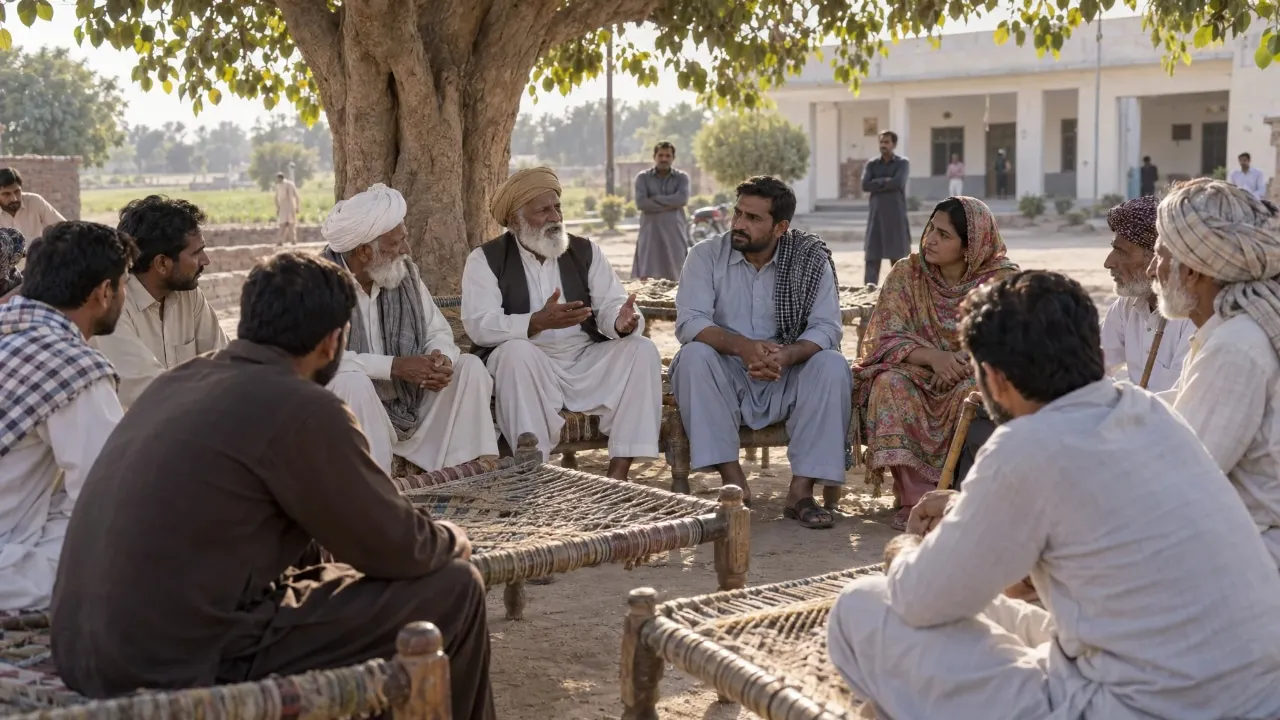
Punjab Approves New Panchayat System for Local Dispute Resolution
In an effort to encourage community involvement in the legal system and ease the burden on courts, Punjab Chief Minister Maryam Nawaz Sharif has given in-principle approval to the creation of a panchayat system that aims to resolve local disputes through mediation, reconciliation, and amicable settlements. The initiative represents a significant administrative shift in how minor conflicts are handled across the region, turning back to historical traditions of community-led conflict resolution while establishing modern legal oversight. By integrating local leaders into a structured mediation framework, the provincial government seeks to address the massive backlog of cases plaguing formal judicial institutions.
The chief minister chaired a special meeting where authorities briefed her on the proposed framework. During this session, officials outlined the operational blueprint for the upcoming panels, emphasizing that participation will rely on the mutual consent of conflicting parties. In order to resolve conflicts with the permission of all parties, panchayat committees will be established at the union council, village, locality, and mauza levels. This decentralized approach ensures that citizens can access dispute resolution mechanisms close to their homes without enduring the financial and temporal costs of traveling to district courts.
Background of Traditional Dispute Resolution in Punjab
The concept of community-based arbitration has deep historical roots in the region, drawing from centuries-old traditions where respected elders gathered to settle local disagreements. Historically, village councils served as the primary forum for maintaining social harmony, addressing property boundaries, minor personal disputes, and family grievances through dialogue. Over decades, the formalization and centralization of the judicial process largely sidelined these informal mechanisms, leading to overburdened courts and delayed verdicts for ordinary citizens. By reviving this framework under a modern legislative umbrella, the administration is attempting to bridge the gap between customary practices and state law.
Modern legal systems in South Asia have frequently struggled with structural backlogs, where millions of pending cases create years of delays for litigants. Courts often spend valuable judicial time on minor neighborhood disputes that could theoretically be resolved through local consensus. The provincial administration contends that returning to community mediation will restore social cohesion while allowing formal courts to focus on serious criminal and complex civil litigation. This dual approach aims to modernize the administration of justice without discarding cultural heritage.
Structure and Membership of the Panchayat Committees
The composition of these mediation panels is designed to incorporate respected and impartial figures from each locality. Permanent residents of the corresponding areas shall be chosen as panchayat members by deputy commissioners based on their reputation, objectivity, and discernment. This selection process is intended to guarantee that only individuals of high standing and moral integrity hold positions of authority within the panels, ensuring public trust in their decisions.
The proposed membership reflects a diverse cross-section of society, drawing on individuals with administrative, educational, and legal experience. Lambardars, educators, retired judges, former military officers, retired public servants, and other esteemed community members will be among the proposed membership. This variety of backgrounds ensures that panels possess the wisdom, life experience, and procedural understanding necessary to navigate complex interpersonal disputes fairly and effectively.
Legal Safeguards and Jurisdiction Boundaries
To prevent abuses of power and protect vulnerable populations, the government has instituted strict legal boundaries for the panels. Officials said the system would operate within clearly defined legal boundaries, ensuring fairness and impartiality while improving access to justice for women, minorities, poor and marginalised communities. These safeguards are essential for maintaining human rights standards and preventing local power dynamics from subverting justice.
A negative list specifying matters beyond the panchayats' jurisdiction will also be issued to prevent the system's potential misuse against women and vulnerable groups. Criminal offenses and serious legal violations will be strictly excluded from community mediation, ensuring that such cases are handled exclusively by the formal judiciary. Furthermore, the proposed framework will not undermine citizens' right to seek judicial protection, and the jurisdiction of courts will remain intact. If mediation fails or if a party remains dissatisfied, the constitutional right to approach traditional courts stays fully operational.
Rules, Responsibilities, and Implementation Steps
The operational success of the initiative depends on clear administrative guidelines and regulatory frameworks. The chief minister directed the authorities to formulate comprehensive rules, policy guidelines and regulations to clearly define the powers and responsibilities of panchayats. These documents will outline procedural rules for filing complaints, conducting hearings, and recording settlements, ensuring transparency at every stage of the process.
She added that the project aimed to rekindle Punjab's centuries-old custom of settling small conflicts via mutual understanding and community mediation. By encouraging face-to-face dialogue, the government hopes to repair fractured community relationships rather than merely issuing court judgments that often leave underlying tensions unresolved. She noted that discourse and the knowledge of reputable community members may assist in resolving many disagreements and that courts should not always be the first venue for doing so.
Economic and Social Impact on Citizens
Litigation in formal courts often imposes heavy financial burdens on working-class families due to legal fees, transportation costs, and lost wages. According to her, the proposed Punjab Panchayat Act will offer a straightforward, affordable, and accessible method for resolving customary disputes under a legal framework. This affordability makes legal redress attainable for individuals who might otherwise abandon legitimate claims due to poverty.
The chief minister stated that the government aimed to empower people by allowing them to take part in local decision-making. She also stated that the project would assist in bringing quick and inexpensive justice closer to people's doorsteps and lessen the load of cases on courts. By decentralizing minor dispute resolution, the province expects to foster greater civic engagement and strengthen community bonds while simultaneously optimizing the efficiency of the formal judicial apparatus.





