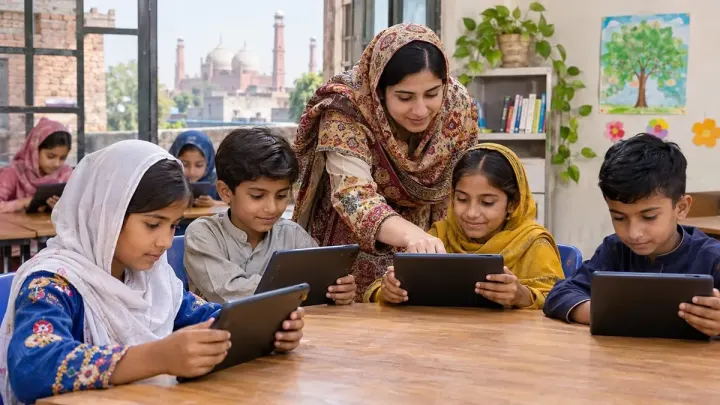
Punjab Chief Minister Maryam Nawaz Sharif attended a laptop and Honhaar Scholarship distribution ceremony at Pir Mehr Ali Shah Arid Agriculture University in Rawalpindi on November 24, handing out devices and scholarship awards to students under the provincial government's education initiatives.
The event marked a significant scaling up of two flagship programmes: the Honhaar merit-based scholarship, now expanded from 30,000 to 50,000 beneficiaries, and the laptop allocation, increased from 40,000 to 112,000 units. The chief minister used the platform to stress that access to educational resources is a right, not a favour, and warned that any child forced to abandon studies because of poverty would signal a failure of the government.
What Are the Honhaar Scholarships and Laptop Allocation?
Honhaar is a Punjab government scheme launched to reward high-performing students from under-privileged backgrounds. Applicants must meet academic merit criteria and demonstrate financial need. Successful candidates receive a cash stipend that helps cover tuition, books, and other school-related costs. The programme originally covered 30,000 students; the latest announcement raises that figure to 50,000, reflecting a broader reach into rural and low-income districts.
The laptop allocation programme, introduced in previous years, provides each eligible student with a personal computer to support digital learning, especially in remote or resource-constrained schools. The initial target of 40,000 laptops has been more than doubled to 112,000, a move intended to bridge the digital divide that became stark during the COVID-19 pandemic when many classes shifted online.
Why the Expansion Matters for Punjab's Education Landscape
Punjab, Pakistan's most populous province, faces persistent challenges in ensuring equitable education. According to the provincial education department, enrollment rates have risen steadily, yet dropout rates remain high among families facing economic hardship. By increasing scholarship numbers and providing laptops, the government aims to reduce financial barriers that often force students to leave school.
Experts note that merit-based scholarships like Honhaar can improve academic outcomes by motivating students to maintain high grades. Simultaneously, access to laptops enables the use of e-learning platforms, digital libraries, and virtual labs, which are increasingly part of the national curriculum.
How the Distribution Was Conducted
During the ceremony, the chief minister addressed a crowd of students, parents, and university officials. She emphasized that the laptops were awarded on the basis of merit and hard work, urging recipients to accept them with pride. She also told the audience that students need not thank the government for receiving the devices, as education is a right.
Each laptop was handed to a student after verification of eligibility documents, which include previous academic transcripts, a household income declaration, and a nomination from the school principal. The Honhaar scholarship certificates were similarly distributed, with officials reading out the names of the newly selected beneficiaries.
Impact on Students, Parents, and Schools
The immediate impact is tangible: 112,000 students will now have a personal computer for coursework, research, and exam preparation. For many, this is the first device they will own, shifting learning from a shared community computer centre to a personal study environment.
Parents of scholarship recipients gain relief from the financial strain of tuition fees and school supplies. The cash stipend, while modest, can cover transportation costs, uniforms, and other recurring expenses that often cause families to withdraw children from school.
Schools benefit from the programme as well. With more students equipped with laptops, teachers can integrate digital resources into lesson plans without worrying about unequal access among pupils. The provincial education department has also pledged to provide training for teachers on effective use of the devices.
Historical Context of Punjab's Education Initiatives
Punjab has a long history of government-led education reforms. In the early 2000s, the province introduced the Punjab Education Reform Programme (PERP) to improve school infrastructure and teacher training. The Honhaar scholarship was launched in 2016 as part of a broader push to reward merit and reduce dropout rates among low-income families.
The laptop scheme began as a pilot in 2018, targeting 10,000 students in remote districts. Positive feedback and improved digital literacy scores led to a phased expansion, culminating in the current allocation of 112,000 units. The pandemic accelerated the need for such devices, as schools shifted to online instruction for several months in 2020-2021.
Implementation Challenges and Government Response
Scaling up two large-scale programmes presents logistical challenges. Distribution requires coordination between the provincial education department, district education officers, and participating schools. To ensure transparency, the government has set up an online portal where applicants can track the status of their scholarship or laptop request.
Critics have previously raised concerns about delays in device delivery and the risk of corruption in the selection process. In response, the chief minister's office announced stricter monitoring mechanisms, including third-party audits and random spot-checks at district offices.
What Comes Next: Monitoring and Future Plans
Following the November 24 ceremony, the provincial education department will begin the first phase of laptop distribution, targeting students in the 9th and 10th grades across 20 districts. The Honhaar scholarship disbursement will be synchronized with the academic calendar, with funds released at the start of each semester.
Officials have indicated that they will collect usage data from the laptops to assess how they support learning outcomes. The data will inform future policy adjustments, such as expanding internet connectivity in schools that lack reliable broadband.
While no further expansion numbers have been announced, the chief minister signalled that the government remains committed to "ensuring that no child is deprived of education because of financial difficulties." Stakeholders are advised to watch for upcoming provincial budget allocations, which may fund additional scholarships or technology upgrades.