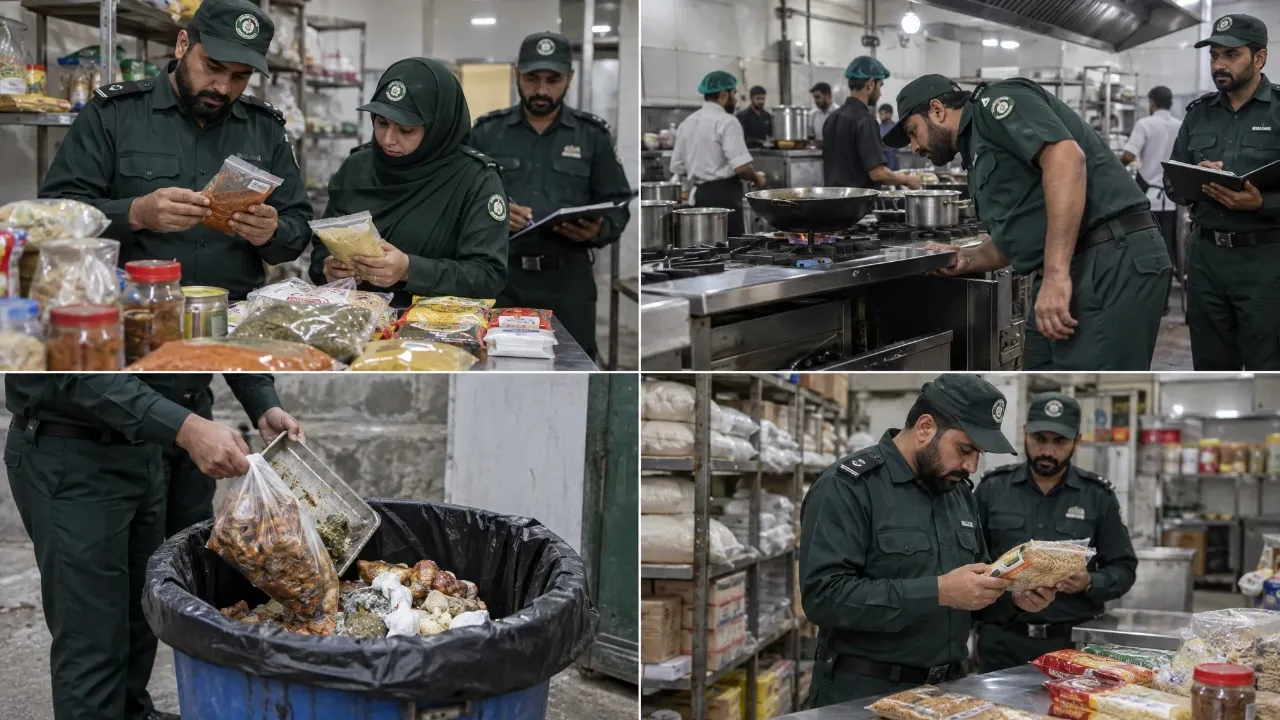
Punjab Food Authority Inspections Target Multan Division
The Punjab Food Authority stepped up its enforcement drive across Multan division to eliminate food safety violations and ensure the availability of safe and quality food to the public. Health inspectors and enforcement teams deployed resources across multiple districts to crack down on commercial kitchens, production plants, and retail outlets failing to meet established hygiene standards.
During comprehensive inspections of food establishments across Multan, Vehari, and Lodhran, enforcement teams imposed cumulative fines of Rs. 283,000 on businesses found violating food safety regulations. Furthermore, 25 kg of banned and substandard food items and 30 kg of counterfeit packaging material were discarded to prevent them from reaching consumers.
Regulatory bodies such as the Punjab Food Authority operate to protect public health by setting strict operational parameters for commercial food handlers. These standards cover every aspect of food production, from raw material sourcing and storage hygiene to pest control and worker cleanliness. Routine checks and surprise raids are common tools used by food safety regulators to compel businesses to comply with the law.
Multan District Enforcement Actions and Fines
In Multan, enforcement teams focused heavily on production units and manufacturing facilities supplying goods to local markets. Inspectors uncovered multiple breaches of hygiene protocols during visits to industrial and commercial zones within the district.
In Multan, a sweets and confectionery production unit on Munirabad, Khanewal Road, was fined Rs. 50,000 for inadequate pest control arrangements, use of substandard cutting boards, and failure to cover food items properly. Open food items in confectionery production create severe risks of contamination by insects and dust.
Two vermicelli production units and a snacks production unit at Suraj Kund Road, Rangeelpur, and Hassan Sawali Chowk were each fined Rs. 25,000 for poor sanitation in washing areas, unclean machinery, and pest infestation in storage facilities. Machinery accumulation of old residue serves as a breeding ground for bacteria, prompting immediate legal action by the visiting officers.
Vehari District Food Safety Crackdown
Moving beyond the main city of Multan, enforcement squads inspected commercial operations in the Vehari district, uncovering illegal substances and severe storage violations in restaurants and processing mills.
In Vehari, a restaurant at New Sabzi Mandi, Burewala Road, was fined Rs. 25,000 for using banned China salt in food preparation and improper storage of food items in freezers. The use of restricted flavor enhancers remains a frequent target for inspectors due to health concerns associated with these additives.
A spice grinding unit at Mouza Malla Wala faced a fine of Rs. 60,000 following the recovery of expired chemicals and scrap packaging material. A sweets production unit at Chak 517, Channu Mor, Burewala, was also fined Rs. 30,000 for using prohibited food colours and adulterating food ingredients.
Lodhran District Kitchen and Market Raids
Operations in the Lodhran district targeted local eateries, banquet facilities, and retail shops to verify compliance with provincial health codes. Inspectors found numerous infractions regarding how food is stored and processed for public consumption.
In Lodhran, a tikka shop at Jalalpur Mor was fined Rs. 18,000 for storing food in contaminated freezers and maintaining unhygienic kitchen conditions. Freezers holding raw meats alongside cooked items without proper separation present major cross-contamination hazards.
A marriage hall near the railway crossing was fined Rs. 25,000 for storing spices in open conditions and cutting food directly on the floor. A supermarket in Main Bazaar, Kahror Pakka, was also penalised Rs. 25,000 for selling loose cooking oil, which lacks proper labeling and traceability required by food safety laws.
Future Outlook for Food Safety Enforcement
The Punjab Food Authority reiterated that protecting public health through strict enforcement of food safety laws remains a top priority. Consumer advocacy groups and public health officials continually press for rigorous oversight of commercial food supply chains to prevent foodborne illnesses.
Inspections and enforcement operations will continue across the division, and no compromise will be made on the quality and safety of food supplied to consumers. Business owners across the region face ongoing scrutiny, with repeat violations often leading to heavier financial penalties or permanent closure orders.





