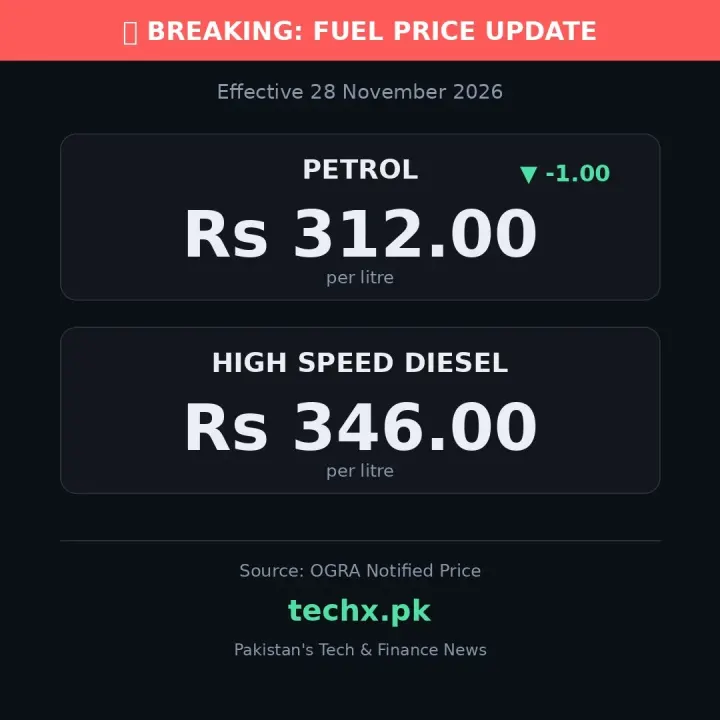
Pakistan's Oil and Gas Regulatory Authority (OGRA) announced on 28-Nov-2026 a daily revision of ex-depot petrol and diesel prices, lowering motor spirit to Rs. 312.00 and keeping high-speed diesel at Rs. 346.00.
The shift, effective from 17-Jul-2026, is a direct response to the severe volatility caused by the 2026 US-Israel war on Iran, which has crippled global oil shipments and forced the government to protect consumers.
Why Daily Price Adjustments Were Introduced
Until mid-2026, Pakistan adjusted fuel prices on a monthly basis, a practice that often left consumers exposed to sudden spikes when international crude prices surged. The federal government, citing the need to "shield the local economy from extreme market volatility," mandated OGRA to move to a 24-hour pricing cycle.
Daily adjustments give the regulator the flexibility to reflect real-time changes in global oil markets, freight costs, and exchange-rate movements. By aligning pump prices with the latest market data, the government hopes to prevent the kind of abrupt price shocks that have historically sparked public unrest.
What the New Prices Look Like
OGRA released a table showing the revised ex-depot prices for 28-Oct-2026, the most recent data point in the daily series:
- Motor Spirit (MS): Rs. 313.00 → Rs. 312.00 (decrease of Rs. 1.00)
- High Speed Diesel (HSD): Rs. 346.00 → Rs. 346.00 (no change)
According to a statement from OGRA, the adjustments will be paused on Saturdays, Sundays and public holidays, meaning the price set on the preceding Friday will remain in effect over the weekend.
Background: The 2026 US-Israel War on Iran and Its Impact on Oil Supplies
The current pricing regime cannot be understood without the broader geopolitical context. In early 2026, a conflict erupted between the United States and Israel on Iranian territory, marking the largest disruption to world energy supplies since the 1970s oil shocks.
In February 2026, Iran blocked maritime traffic through the Strait of Hormuz, a narrow waterway that handles roughly 25 % of the world's seaborne oil trade. The blockade halted a critical conduit for crude flowing from the Gulf to Europe and Asia.
In retaliation, the United States imposed a naval blockade on Iranian ports, further constraining Iran's export capacity. A brief ceasefire in June raised hopes for a return to normalcy, but the truce collapsed on 8-Jul-2026 after renewed strikes on commercial vessels. Iran shut the strait again, prompting the U.S. to launch successive airstrikes aimed at reopening the passage.
These continuous crossfires have throttled global oil shipments, driving up freight rates, increasing insurance premiums, and creating sharp swings in Brent and WTI crude benchmarks. For oil-importing nations like Pakistan, the ripple effect appears as higher import bills and pressure on the foreign-exchange reserves.
How OGRA Calculates Daily Prices
OGRA follows a formula stipulated in the Oil and Gas Regulatory Authority (Pricing) Rules 2020. The ex-depot price is derived from four components:
- International crude oil price (average of Brent and WTI for the previous day)
- Freight and insurance costs to transport crude to Pakistani ports
- Conversion and refining margin set by the Ministry of Petroleum
- Exchange-rate conversion from USD to Pakistani rupee, based on the State Bank's reference rate
Each component is updated daily, and the resulting figure is published on OGRA's website at 10:00 AM local time. Retailers must adjust pump prices within two hours of the announcement.
Impact on Consumers, Businesses, and the Economy
The Rs. 1.00 reduction in petrol translates to a modest saving for commuters, especially those who drive more than 30 km per day. For a typical private car consuming 7 L per 100 km, the daily saving is roughly Rs. 0.70, amounting to about Rs. 21 per month.
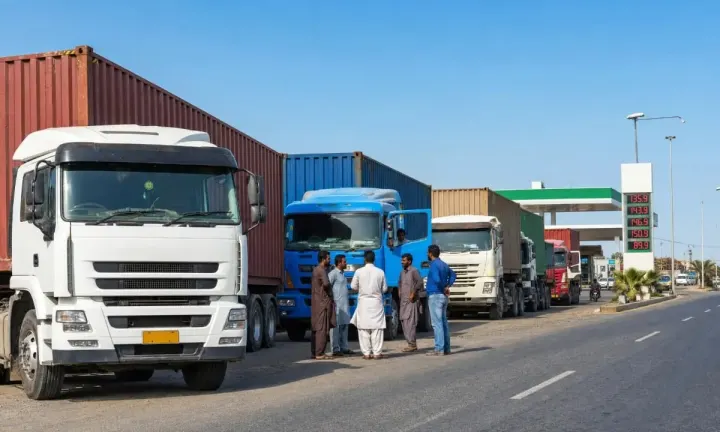
Diesel, used heavily by transport trucks, construction equipment, and generators, remains unchanged. This stability prevents a sudden cost surge for logistics firms that already operate on thin margins.
On a macro level, smoother fuel price movements help stabilize inflation, which the Pakistan Bureau of Statistics tracks closely. Fuel price volatility has historically been a major driver of headline inflation, affecting food and transport costs across the country.
What Comes Next: Monitoring and Potential Adjustments
OGRA has indicated that the daily pricing mechanism will remain in force until the global oil market stabilises. No specific end date has been set, but the regulator will review the policy every three months.
Stakeholders are advised to monitor the following indicators:
- Changes in Brent and WTI crude prices, published by the Intercontinental Exchange (ICE)
- Freight rate fluctuations reported by major shipping lines such as Maersk and MSC
- State Bank of Pakistan's daily USD/PKR reference rate
- Developments in the Strait of Hormuz, reported by the International Maritime Organization
Any significant shift in these variables could trigger a new round of price adjustments, either upward or downward.
Practical Takeaways for the Public
Consumers should check the daily price bulletin on OGRA's official website or through local news channels before filling up. Since weekend prices stay fixed, planning fuel purchases ahead of Saturdays can avoid unexpected cost spikes.
Businesses that rely heavily on diesel should continue budgeting based on the current Rs. 346.00 rate but remain alert for future changes, especially if the geopolitical situation in the Persian Gulf escalates further.
Overall, the daily pricing regime represents a proactive step by the Pakistani government to mitigate the fallout from a volatile global oil environment while keeping inflationary pressures in check.