Punjab School Education Department Orders Removal of Unhygienic Food Stalls Near Schools
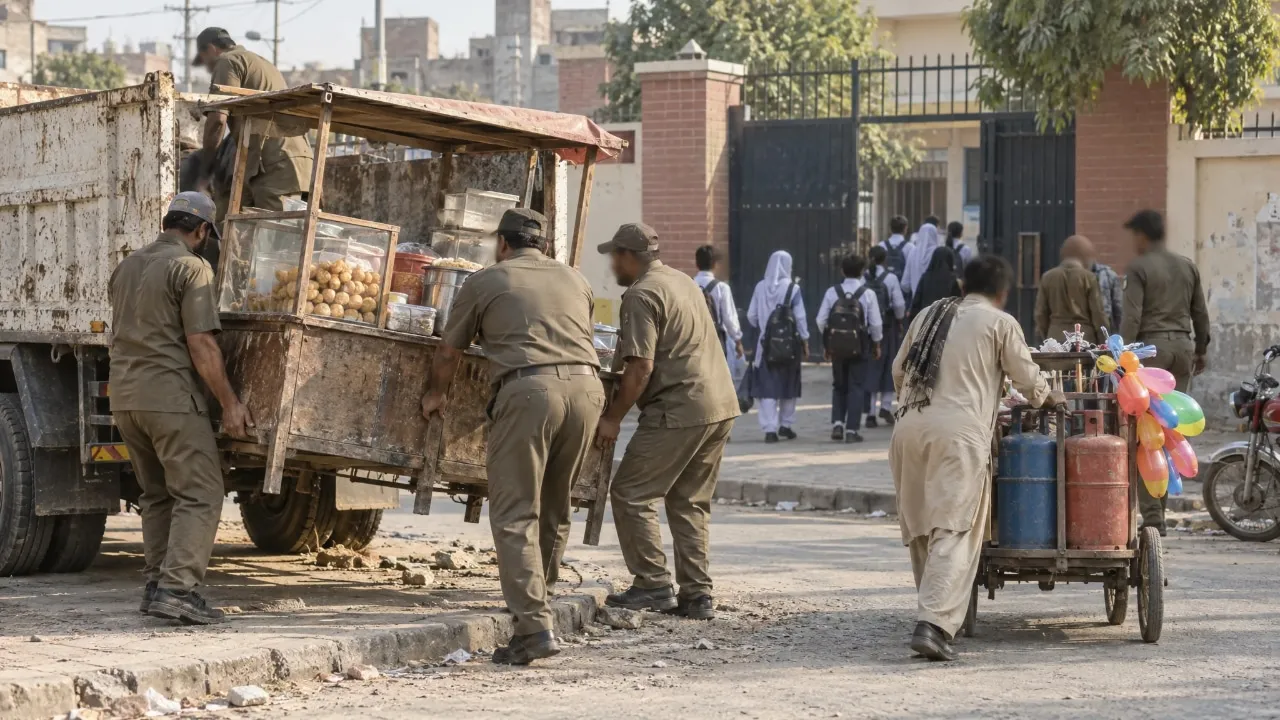
Punjab's School Education Department has ordered the immediate removal of substandard food stalls outside government and private schools across the province, and has also directed action against balloon-filling carts operating near school premises. The sweeping directive comes as part of an urgent provincial effort to secure learning environments and protect young students from multiple public health and safety hazards that routinely gather around educational institutions.
For years, parents and educators have expressed growing concern regarding the presence of unregulated vendors crowding school gates. These mobile vendors often sell unregulated snacks exposed to dust, vehicle exhaust, and flies, raising serious questions about food safety. By targeting these operations, the provincial government aims to eliminate the daily health risks posed to children who consume these items during school breaks.
Crackdown Targets Three Specific Hazards Around Educational Institutions
The department has issued a formal notification targeting three distinct categories of risks that threaten the daily safety of students entering and leaving campus grounds. The directive leaves no room for ambiguity regarding the types of unauthorized operations that must be cleared from the vicinity of learning centers.
Unhygienic Food Stalls Selling Substandard Snacks
The primary focus of the new order is the removal of unhygienic food stalls selling substandard snacks at school gates. These vendors operate without licenses or health inspections, offering cheap consumable goods that frequently fail basic quality checks. Removing them permanently from school perimeters is a necessary measure to curb foodborne illnesses among school-age children.
Balloon-Filling Carts Operating Near School Premises
In addition to food vendors, the notification explicitly targets balloon-filling carts operating near schools. These carts often present obstruction hazards on narrow sidewalks and frequently draw large crowds of children, creating chaotic scenes during morning drop-off and afternoon dismissal times.
Rickshaws and Carts Carrying Gas Cylinders and Flammable Material
Perhaps the most critical safety hazard identified in the directive involves rickshaws and carts carrying gas cylinders and flammable material. The presence of compressed gas tanks in densely populated areas surrounding schools poses a severe risk of explosion or fire, threatening the lives of hundreds of children and pedestrians in the immediate vicinity.
Province-Wide Survey Ordered by Punjab Authorities
To ensure total compliance with the new mandate, the department has ordered a comprehensive survey around every government and private school in Punjab. Officials will act against unhygienic food sellers and encroachments without delay. This systematic review requires field officers to map out all problem areas and document unauthorized structures operating within the designated safety zones of educational facilities.
Local authorities cannot afford delays in executing these checks, as the safety of students remains a top priority for the provincial administration. The survey acts as the foundation for enforcement actions, ensuring that no school is left unprotected from the risks associated with unauthorized street vendors and mobile carts.
Three-Way Enforcement Team Formed for Immediate Action
The notification brings in a joint enforcement team to guarantee that orders are carried out swiftly and thoroughly across all districts. This multi-agency approach combines the distinct powers and jurisdictional authority of three key bodies to ensure maximum effectiveness on the ground.
- District administration
- Police
- Food Authority
By uniting local bureaucrats, law enforcement officers, and food safety inspectors, the government has created a formidable operational unit. Furthermore, school heads must also report activities around their institutions immediately, establishing a direct channel of communication between campus administrators and enforcement squads.
Public Awareness Campaign and Seven-Day Reporting Deadline
Enforcement alone cannot solve the issue of street-level hazards, which is why the department will run an awareness campaign targeting students, parents, and the local community to protect children. Educating families about the dangers of consuming unregulated street food helps reduce the customer base that sustains these illegal vendors, reinforcing the physical removal of stalls with behavioral changes.
Time is of the essence in this province-wide operation. All districts must submit a comprehensive report, complete with photographs, to the School Education Department within seven days. This strict reporting requirement ensures accountability at every level of local governance and provides concrete proof that the directives are being implemented without exception.