Rawalpindi Police Enforce New Safety Standards for VIP Route Security
Rawalpindi Police have introduced strict new regulations requiring high-visibility reflective vests for all police personnel deployed on VIP and VVIP route security duties. This mandatory equipment policy seeks to enhance officer safety while simultaneously ensuring clear identification during high-profile movements across the region. Authorities designed the directive to address long-standing concerns regarding uniform consistency and visibility during critical security operations.
The enforcement follows administrative observations noting that police officers frequently wore jackets and caps of varying colors and designs during the winter season. Such discrepancies made it difficult for the public and fellow officers to distinguish law enforcement personnel from civilians in busy environments. By standardizing the apparel, the department resolves identification challenges that previously complicated security management on major roadways.
Operational Directives Issued to Division Heads
Superintendent of Police (SP) Security has formally distributed these instructions to key regional commanders. The directive reached the SPs governing the Rawal, Potohar, and Sadar divisions, alongside the SP Headquarters. These commanders bear the responsibility of briefing all relevant officers and station house officers regarding the updated standard operating procedures.
Station house officers must ensure strict compliance across their respective jurisdictions whenever high-profile convoys transit through the city. The operational chain of command requires immediate implementation of the gear policy for every upcoming movement. Failure to adhere to the clothing standards will likely result in internal accountability measures within the force.
Specific Uniform Requirements Under the New Directive
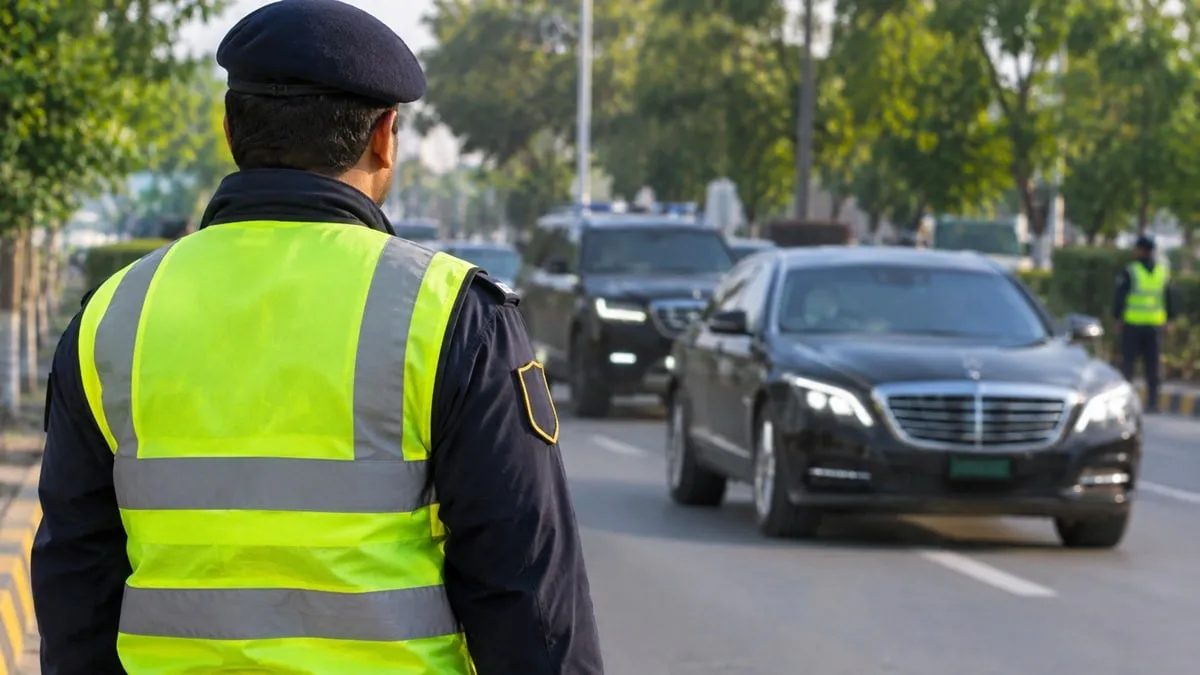
Under the newly established rules, police personnel must wear jackets adhering strictly to the prescribed police design during any VIP and VVIP movements. Officers assigned specifically to route security duties face an additional layer of requirements. They must wear high-visibility reflective vests securely over their designated department jackets.
This dual-layer requirement guarantees that officers maintain professional uniform standards while gaining maximum visibility. The standardized jackets eliminate the visual confusion caused by unauthorized winter wear. Meanwhile, the reflective vests serve an explicit functional purpose during traffic control and perimeter security operations.
Why High-Visibility Gear Matters for Roadway Safety
The core rationale behind the mandate centers on making officers significantly more visible to motorists from a considerable distance. This visibility factor becomes critical during night operations and other low-light conditions, such as heavy fog or early morning patrols. Roadway security duties inherently expose personnel to fast-moving traffic and potential accidents.
Enhancing the silhouette of security personnel helps drivers spot checkpoints and route cordons well in advance. Reducing these operational risks protects officers from vehicular hazards while they manage complex traffic diversions. The department expects the measure to decrease preventable accidents involving duty personnel significantly.
Background of Police Uniform Regulations and Security Protocols
Law enforcement agencies historically enforce strict dress codes to project authority, maintain discipline, and ensure public trust. In urban centers like Rawalpindi, managing VIP and VVIP movements demands extensive manpower and precise coordination among multiple police divisions. Officers often stand stationed along arterial roads for hours, requiring gear that withstands harsh weather while maintaining operational readiness.
Previous winter seasons exposed vulnerabilities when officers adopted civilian-style winter garments for warmth. While officer comfort remains important, operational security dictates that police personnel must remain instantly recognizable. The new directive bridges the gap between weather protection and uncompromising visual identification standards.
Impact on Local Traffic Management and Daily Operations
Motorists traveling through Rawalpindi during high-profile visits will notice a distinct change in how security personnel present themselves along roadways. The bright reflective vests allow drivers to identify police cordons from afar, enabling smoother compliance with traffic redirection. This visual clarity helps prevent sudden braking or confusion among civilian drivers navigating restricted zones.
For the police force itself, the change streamlines command and control functions. Supervisors inspecting route deployments can instantly verify that every post is manned by properly equipped personnel. The uniform approach removes ambiguities during high-stress operational hours when clear communication and recognition are vital.