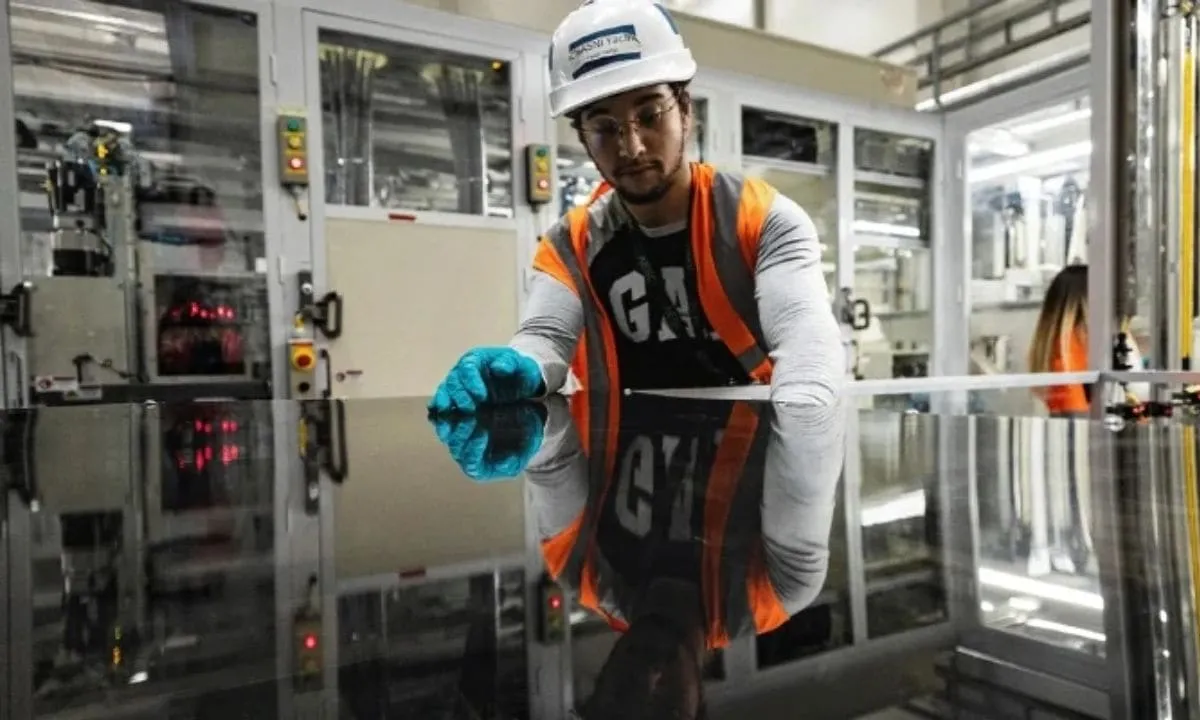
Margalla Heavy Industries Limited, a company owned by the military, partnered with local investors and Chinese collaborators to build a $2.25 billion lithium-ion battery manufacturing facility in Rawalpindi. Manufacturing should start six to eight months after state policy approval.
Hamad Ali Mansoor, CEO of the Engineering Development Board, told the media that feasibility work is finished and the project waits for final approval. He stated the structure is finished and machinery is already in place.
The deal was concluded in July alongside an unnamed local private investor and a Chinese firm identified as a top-tier manufacturer. The facility will create lithium-ion cells holding an annual capacity exceeding 1,000MW, starting with an initial 200-300MW output from the first factory.
The site sits at Heavy Industries Taxila within the Rawalpindi district. Margalla Heavy Industries Limited builds defense gear like battle tanks, armored vehicles, drones, and protective items, alongside electric buses, two-wheelers, and compact battery energy storage systems.
Muhammad Ameen, general manager for digital media at the company, could not be reached immediately for a statement.
Prime Minister Shehbaz Sharif cleared the Automotive and Auto Parts Manufacturing Policy 2026-2031. This framework now requires International Monetary Fund clearance regarding tax incentives for electric vehicles and possible effects on state revenue.
The Engineering Development Board projects that demand for battery energy storage systems could hit 100,000MW by June 2030 if economic growth reaches 5 percent or higher.
Should gross domestic product growth drop under 3 percent, demand is expected to reach up to 80,000MW. Mansoor explained that homes, commercial properties, factories, and electric transport including two-wheelers, three-wheelers, cars, buses, and trucks will drive this demand.
Grid stabilization alone may demand 3,000-5,000MW of battery storage, and satisfying total projected needs calls for four to five gigafactories priced between $1 billion and $1.25 billion each.
The state drafted a lithium battery manufacturing policy and sent it to the Ministry of Industries in March, where it waits for approval. The blueprint outlines four large factories, with three placed in Punjab divisions including Lahore, Faisalabad, and Rawalpindi, and one in Karachi.
Makers will need to export a set share of their output, though Mansoor withheld specific targets prior to formal approval. He added that the policy includes global safety and performance rules.
Pakistan currently puts together about 3,000-4,000MW of batteries alongside components like motors, chargers, and controllers. Mansoor noted that domestic production for all these components will reach 100 percent by next year.