Why Russell Brand Was Sentenced to Prison
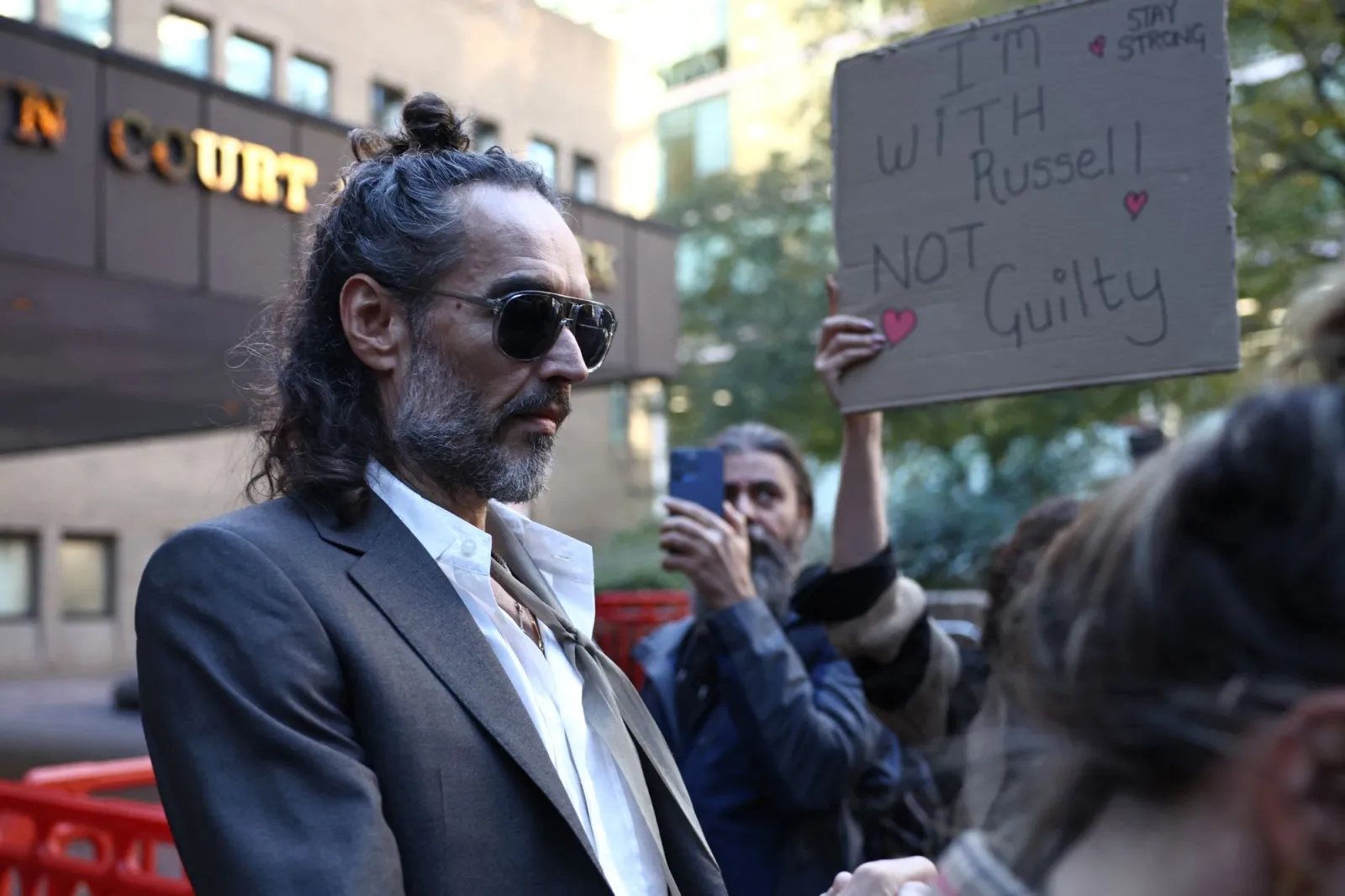
Actor, comedian, anti-vaxxer and convicted rapist Russell Brand received a 10 years and six-month sentence on Monday following his conviction for rape and sexual assault. The legal outcome marks a dramatic fall for the celebrity, who has spent recent years pivoting toward online commentary and anti-establishment messaging. Despite the gravity of the legal judgment, a group of dedicated followers gathered outside the court to display banners and voice their backing for the disgraced entertainer.
Banners displayed outside the courthouse featured slogans such as, \"Russell Brand we stand with you!\" and \"Christ was crucified for telling the truth\". To these supporters, the lengthy prison term represents an establishment conspiracy rather than a legitimate delivery of justice. This loyal faction mirrors the online audience that gravitated toward his digital broadcasts over the past several years.
How Russell Brand Built an Online Audience of Conspiracy Theories
During his transition away from mainstream entertainment, Brand found a lucrative new audience by broadcasting alternative theories and anti-establishment viewpoints. His digital reach expanded significantly, resulting in 6.6 million subscribers on YouTube and 1.4 million followers on the right-wing video platform Rumble. By focusing on incendiary topics such as vaccines and allegations against a corrupt global elite, he cultivated a devoted base of followers.
This demographic proved receptive to his reinvention as a political and social commentator. Gullible and time-rich, these individuals flocked to his online preaching. When legal scrutiny intensified, this digital community provided both financial backing and an echo chamber that dismissed allegations as attacks by mainstream institutions.
The Timing of Russell Brand and His Conversion to Christianity
A central element of Brand's recent public persona has been his conversion to Christianity in 2024. The spiritual re-brand arrived shortly after sexual abuse allegations against the star were first aired in a 2023 episode of Channel 4's Dispatches. Observers and critics noted the convenient timing, viewing the religious shift as an effort to deflect from mounting controversies and connect with a new demographic of believers.
Rather than projecting deep spiritual contemplation, his public displays of faith often involved shouting, performative gestures, and self pity. His appearances, including an infamous struggle to find a particular bible verse on Piers Morgan's show, drew skepticism. Whether calculated or sincere, the religious narrative allowed him to garner support amid wider condemnation and showbiz isolation.
Podcasting Through the Trial With Sunday Service
Even as legal proceedings advanced, Brand and his wife Laura continued recording episodes of their weekly podcast, titled Sunday Service with the Brands. Billed as a weekly conversation exploring Christianity, spirituality, faith, and current events, the broadcasts drew criticism for tone-deaf delivery. In one instance, the couple sat in matching leopard print loungewear grinning for the cameras during a period starkly at odds with the dark and harrowing revelations from victims heard in court.
Far from traditional religious programming, the podcast served as a platform for Brand to attack the corrupt media barely a few minutes into the episode. Observers noted that blaming outside forces is a common reaction from public figures facing scrutiny and exposure. The juxtaposition of cosy domesticity with serious criminal convictions left a difficult impression for many following the case.
The Reaction of Supporters Outside the Courtroom
The presence of supporters outside the courtroom highlights the enduring power of celebrity devotion, even for a fallen figure. While celebrity cronies vanished, these god-fearing groupies continued to keep the faith. Their actions demonstrate how online radicalisation and religious framing can merge to create unwavering loyalty despite severe legal judgments.
Critics argue that true religious practice should separate itself from political agendas, external movements, and the egos of controversial figures. Observers suggest that the most constructive path for these church cheerleaders would be to withdraw their backing from a convicted offender rather than treating him as a persecuted figure.