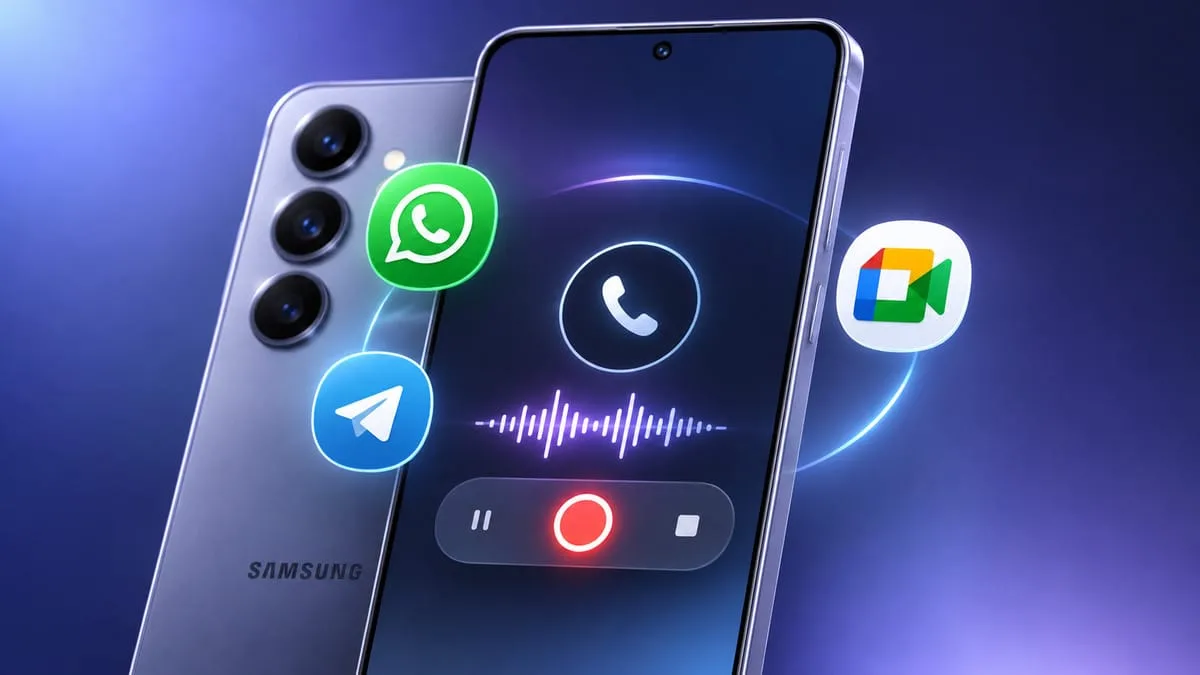
Samsung is reportedly preparing a new feature for One UI 9.5 that would allow Galaxy smartphone users to record voice calls made through third-party applications, including WhatsApp, Telegram, and Google Meet. This upcoming software enhancement addresses a long-standing limitation for mobile users who frequently rely on internet-based communication platforms for personal and professional conversations.
The feature could remove the need for third-party recording applications or complicated workarounds, which users currently rely on to record calls made outside Samsung's default Phone app. By integrating native support directly into the software ecosystem, the company aims to provide a streamlined experience for capturing audio from various communication channels.
How Samsung Native Call Recording Works
Samsung already supports recording regular cellular calls through its Phone app in supported regions. However, that functionality does not currently extend to voice calls made through apps such as WhatsApp and Telegram, forcing users to seek alternative methods.
According to a new report, One UI 9.5 could introduce a dedicated setting for recording Voice over Internet Protocol calls. The feature would reportedly appear in Samsung's default Phone app under the following menu path:
Settings > Call recordings and transcripts > Record calls in other apps
The menu would display compatible third-party applications installed on the smartphone. Users could then enable or disable call recording separately for each supported application using individual toggle switches. Leaked screenshots show WhatsApp, Google Meet, and Telegram among the supported applications, though the source only had these compatible apps installed, suggesting the final list could include additional services.
Understanding Voice over Internet Protocol Technology
Voice over Internet Protocol, commonly known as VoIP, allows users to transmit voice communication over internet connections rather than traditional analog telephone networks. Applications like WhatsApp, Telegram, and Google Meet use this technology to connect users globally without relying on standard cellular voice minutes. Because these data packets travel through different pathways than standard cellular calls, traditional mobile recording tools often fail to capture both sides of the conversation clearly.
Hardware manufacturers typically find it challenging to intercept audio streams from encrypted messaging platforms due to privacy protocols and application sandboxing. Samsung's approach involves building system-level hooks into the software interface to capture audio directly from the device's audio routing layer. This method ensures high audio fidelity for both incoming and outgoing voices during a VoIP session.
Legal Restrictions and Regional Availability
Although the feature could make recording internet-based calls easier, Samsung may restrict its availability in certain countries. Call recording laws differ between regions, and some countries require the consent of all participants before a conversation can be recorded. Legal frameworks vary widely across different jurisdictions, with some nations imposing strict criminal penalties for recording phone calls without notifying the other party.
As a result, the new option may only appear on Galaxy smartphones in markets where Samsung is permitted to offer the functionality. The company has not confirmed which countries or devices would support the feature, and regional firmware variations often dictate whether standard call recording appears on user devices.
Timeline for One UI 9.5 and Software Releases
Samsung is currently rolling out the stable One UI 9 update to eligible Galaxy smartphones. The company is expected to introduce One UI 9.5 before releasing One UI 10, although it has not announced an official launch date.
If the leaked information is accurate, One UI 9.5 could expand Samsung's existing call recording capabilities to popular internet-based communication applications. However, Samsung has not officially confirmed the feature, and its availability may change before the final software release.