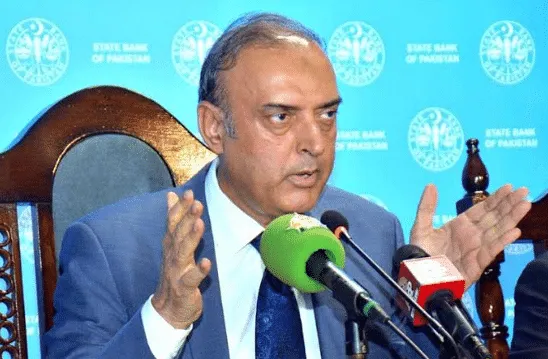
State Bank of Pakistan (SBP) Governor Jameel Ahmad called for climate finance to give priority to women, smallholder farmers and small businesses during the opening of a four-day joint learning program organized by SBP and the Alliance for Financial Inclusion (AFI) in Islamabad.
The announcement came as the program assembled 38 participants from central banks and financial regulators in 24 countries across four continents to discuss how inclusive green finance policies can be operationalised.
Why the Call Matters for Pakistan's Climate-Resilient Economy
Ahmad linked climate change and financial exclusion, noting that communities most exposed to climate shocks often have the least access to formal financial services. He argued that climate finance must move beyond funding green projects and also help vulnerable groups anticipate risks, build resilience and adapt to a changing climate.
Background: Pakistan's Recent Climate Shocks and Their Economic Toll
Pakistan experienced catastrophic floods in 2022 that caused nearly $15 billion in physical damage and another $15 billion in economic losses. The disaster affected more than 30 million people and damaged 2.2 million homes. The scale of loss highlighted gaps in the country's financial system - gaps that the governor says can be addressed only through a blend of green and inclusive policies.
Since the floods, the SBR has taken steps to embed climate considerations into its regulatory framework. The Green Banking Guidelines were issued in 2017, followed by the Environmental and Social Risk Management Framework in 2022. In December 2025, the central bank released Climate Stress Testing Guidelines to assess banks' ability to withstand climate-related shocks.
Explainer: How SBP's Green Finance Framework Operates
The SBP's Green Taxonomy classifies environmentally sustainable activities, providing a common language for banks, investors and regulators. The taxonomy feeds into credit-allocation schemes that direct financing toward sectors such as renewable energy, climate-smart agriculture and low-carbon transport.
Parallel to the green side, SBP's financial inclusion agenda has lifted the overall inclusion rate to 71 percent. The gender gap in inclusion has narrowed to 27 percent, meaning women now have better access to bank accounts and credit than they did a decade ago. The governor highlighted the Pakistan Women Inclusive Finance Program, supported by the Asian Development Bank, as a model for scaling gender-focused financing.
Impact on Key Stakeholders
Women entrepreneurs stand to gain from targeted credit lines, capacity-building workshops and the Women Entrepreneurs Finance Code, which Pakistan joined in 2025. SBP serves as the anchor institution for the code, coordinating with banks to ensure that loan products meet women's needs.
Smallholder farmers, who produce the bulk of Pakistan's food, can benefit from climate-smart agriculture financing that links weather-index insurance, micro-loans and advisory services. By linking these products to the Green Taxonomy, the SBP aims to reduce the cost of capital for climate-resilient farming practices.
Micro- and small-scale businesses in sectors such as renewable energy installation, waste management and sustainable construction also become eligible for preferential financing under the new guidelines.
What the Four-Day AFI Program Covers
Participants will exchange experiences on implementing green finance, supporting climate-smart agriculture and removing barriers to inclusion, including gender-related challenges. The program follows AFI's four-pillar approach - Promotion, Provision, Protection and Prevention - to structure policy dialogue.
During the inaugural session, AFI Director of Strategy, Member Engagement and Evaluation Aban Haq and World Bank Operations Manager Lasse Melgaard emphasized the importance of knowledge-sharing platforms. Melgaard welcomed the platform created by SBP and AFI for collaboration and the exchange of implementation experiences among member institutions.
Next Steps and What to Watch For
SBP plans to disseminate its Green Taxonomy and climate risk framework to regulators across the AFI network, fostering regional harmonisation of standards. The central bank also intends to pilot climate-risk stress testing with a select group of banks later this year.
Stakeholders should monitor the rollout of targeted financing schemes announced during the program, especially those aimed at women and smallholder farmers. The success of these schemes will depend on how quickly banks adapt their credit-risk models to incorporate climate scenarios.
Practical Takeaways for Readers
- Women entrepreneurs can now look for loan products aligned with the Women Entrepreneurs Finance Code, which promises more flexible terms.
- Smallholder farmers should watch for new micro-loan offerings that bundle climate-risk insurance with credit.
- Businesses seeking green financing can refer to the Pakistan Green Taxonomy to ensure their projects qualify for preferential rates.
The joint learning program, held in Pakistan for the first time, aims to strengthen peer networks and knowledge exchange among participating jurisdictions, laying the groundwork for more inclusive and resilient financial systems worldwide.