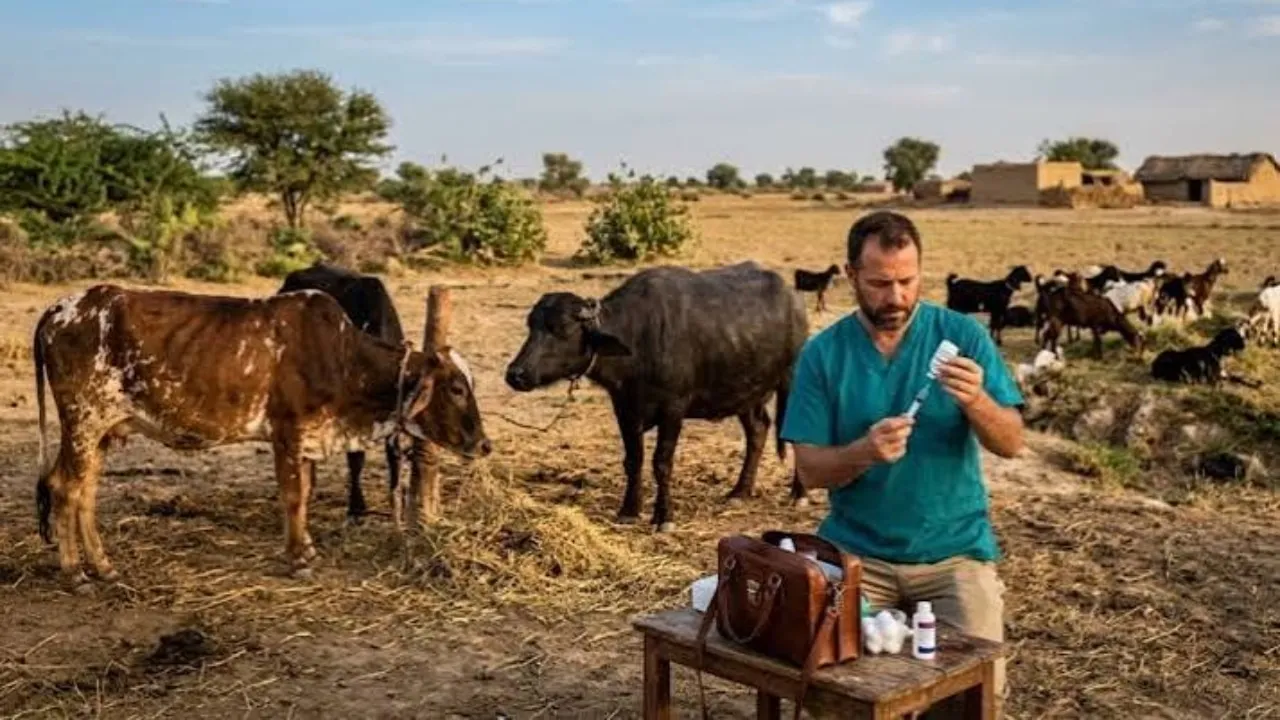
Sindh's livestock department, together with private firm FoneGrow, completed the province's first embryo transfer experiment at the Sindh Institute of Animal Science, marking a milestone in modernising cattle breeding.
Livestock Minister Muhammad Ali Malkani briefed Chief Minister Syed Murad Ali Shah on the successful trial, after which the CM said the technology could shrink a 30-year breeding cycle to five years.
The government has now placed an order for 132 embryos of the Red Sindhi and Guzera breeds, signalling a scaling-up of the programme.
What Is Embryo Transfer and How Does It Work?
Embryo transfer (ET) is a reproductive technology that involves collecting fertilised embryos from a donor cow and implanting them into surrogate mothers. The process begins with super-ovulation, where a donor is given hormones to produce multiple eggs. After artificial insemination, embryos are harvested, evaluated for viability, and then transferred to recipient cows that will carry them to term.
Because the donor can produce many embryos in a single cycle, a single high-quality bull can sire dozens of calves in a short period. This accelerates genetic improvement compared with traditional breeding, which relies on natural mating and takes many generations to fix desired traits.
Why Sindh Is Turning to Embryo Transfer
The province of Sindh, home to over 30 million livestock animals, has long struggled with low milk yields and limited meat production. According to the Pakistan Bureau of Statistics, average milk output per cow in Sindh is below the national average of 2,200 litres per year. Poor genetics, outdated breeding practices, and limited access to high-performing bulls have kept productivity low.
Embryo transfer offers a way to introduce superior genetics quickly. Red Sindhi cattle are prized for their heat tolerance and decent milk yield, while Guzera (or Guzerat) cattle are known for their muscular build and high meat conversion rates. By combining these traits, Sindh hopes to create a dual-purpose herd that thrives in the province's hot climate and meets growing demand for dairy and beef.
How the Project Was Implemented
The experiment was a joint effort between the Sindh Livestock Department and FoneGrow, a private organisation specialising in reproductive technologies. The partnership leveraged the facilities at the Sindh Institute of Animal Science, which houses a fully equipped laboratory, a controlled-environment animal house, and a team of veterinarians trained in ET protocols.
Key steps in the pilot included:
- Selecting elite donor cows from the Red Sindhi and Guzera breeds based on pedigree and health records.
- Administering a hormone regimen to induce super-ovulation.
- Performing artificial insemination using semen from proven bulls.
- Harvesting embryos 7-8 days post-insemination and grading them under a microscope.
- Transferring viable embryos into synchronized recipient cows.
- Monitoring pregnancies through ultrasound and providing post-transfer care.
The pilot resulted in a pregnancy rate of 70 % and a live-birth rate of 65 %, figures that align with global benchmarks for ET programmes.
Economic and Social Impact of Faster Breed Development
Reducing the breed-improvement timeline from 30 years to five years could translate into substantial economic gains. A study by the International Livestock Research Institute (ILRI) estimates that each litre of additional milk can add roughly Rs. 30 to a farmer's annual income. If the new breeds raise average milk yield by 500 litres per cow, a typical smallholder with ten cows could see an extra Rs. 3 000 per year.
Beyond income, improved cattle can enhance food security. Higher meat yields from Guzera genetics can help meet the rising demand for protein in urban centres such as Karachi and Hyderabad. Moreover, healthier, higher-producing cattle reduce the need for frequent replacement, lowering the cost of herd turnover for farmers.
Government Plans and Future Steps
Following the successful trial, the Sindh government placed an order for 132 embryos, 72 Red Sindhi and 60 Guzera. The order is intended to seed breeding farms across the province, with the first batch expected to be implanted by the end of the next quarter.
To ensure the programme's sustainability, the department plans to:
- Train additional veterinary staff in ET techniques through workshops conducted by FoneGrow.
- Establish a provincial embryo bank to store high-quality embryos for future use.
- Provide subsidies to small-scale farmers for acquiring embryos and related veterinary services.
- Monitor performance metrics such as milk yield, growth rate, and disease resistance over a three-year period.
These steps are aligned with the Sindh Livestock Development Strategy 2024-2030, which targets a 20 % increase in milk production and a 15 % rise in meat output by 2030.
Challenges and Risks
While embryo transfer offers clear benefits, it also presents challenges. Maintaining cold-chain logistics for embryo transport is critical; any temperature deviation can reduce viability. Additionally, the technology requires skilled personnel, and scaling up may strain the limited pool of trained veterinarians.
There are also biosecurity concerns. Introducing new genetics must be accompanied by strict disease-screening protocols to avoid spreading infections such as bovine tuberculosis or brucellosis, which are endemic in parts of Pakistan.
What This Means for Farmers and the Livestock Sector
For the average Sindhi farmer, the programme promises access to superior genetics without the need to import expensive bulls. Embryos can be purchased at a fraction of the cost of a high-performing bull, and the technology reduces the time needed to see results on the farm.
Moreover, the government's subsidy scheme is expected to lower financial barriers, encouraging wider adoption among marginal farmers who constitute the bulk of the province's livestock owners.
International Context and Comparisons
Embryo transfer is widely used in countries such as Australia, the United States, and Brazil to accelerate dairy and beef improvement. In Brazil, for example, the use of ET has helped double the average milk yield of Holstein-Friesian cows over two decades. Sindh's initiative mirrors these global trends, positioning the province to compete regionally in livestock productivity.
Regional neighbours, including Rajasthan in India, have also begun pilot ET projects, suggesting a broader South Asian shift toward high-tech animal breeding.
Monitoring and Evaluation Framework
To assess the programme's impact, the Sindh Livestock Department will publish annual reports detailing embryo survival rates, calf growth metrics, and farmer income changes. Independent audits by the Pakistan Agricultural Research Council will verify data integrity.
Stakeholder feedback sessions will be held bi-annually, allowing farmers to voice concerns and suggest improvements. This participatory approach aims to ensure that the technology remains farmer-centred and adaptable to local conditions.