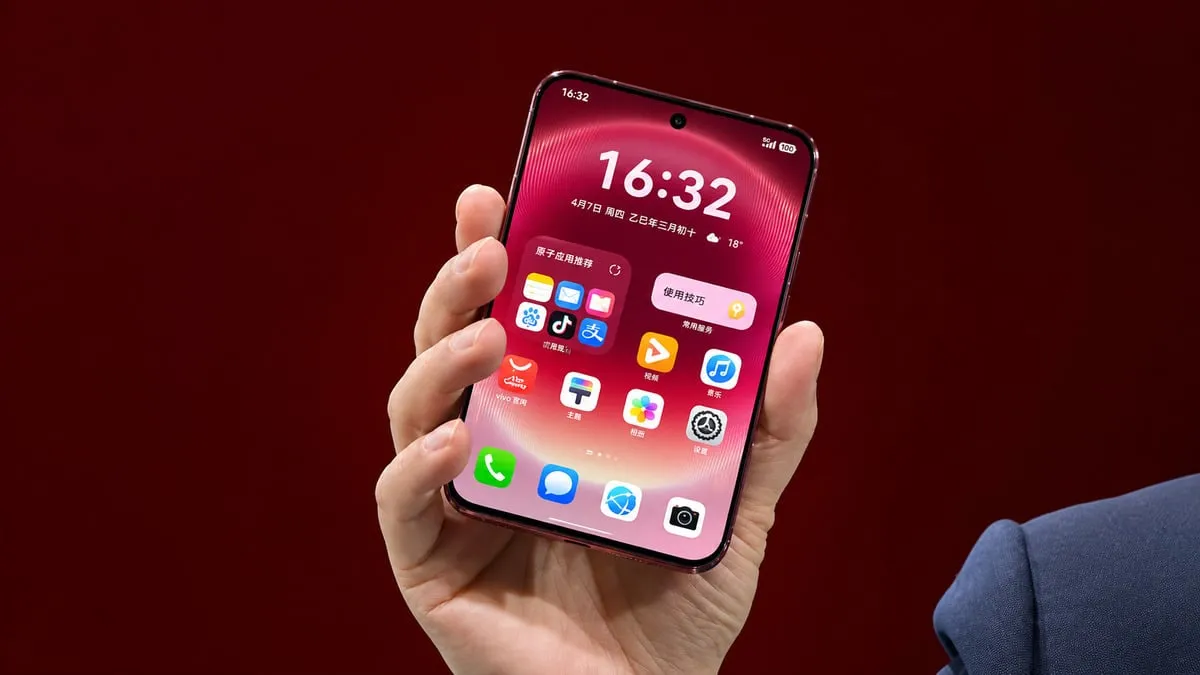
Vivo Reportedly Developing Wide-Screen Smartphone for 2027 Launch
Vivo is reportedly developing a wide-screen smartphone for 2027, joining Xiaomi, Huawei, and other Chinese manufacturers exploring phones with broader displays. According to tipster Digital Chat Station on Weibo, the upcoming device could feature a compact display measuring less than 6.5 inches rather than a large screen. Although the tipster did not directly name Vivo, references in the post have been widely interpreted as pointing to the company. This development places Vivo alongside major industry competitors as the market shifts toward alternative aspect ratios and screen geometries for mobile devices.
The smartphone market has largely converged on standard candybar dimensions with tall, narrow screens designed for vertical scrolling and media consumption. However, manufacturers are continually testing new form factors to capture consumer interest and differentiate their hardware lineups. A broader aspect ratio changes how users interact with keyboards, view documents, and consume video content without requiring a folding mechanism. By exploring this design direction, Vivo indicates a willingness to experiment with physical dimensions while retaining traditional candybar construction rather than pursuing dual-screen or foldable architectures.
Understanding Wide-Screen Form Factors in Modern Mobile Devices
The concept of a wide-screen smartphone involves a broader horizontal dimension compared to standard modern handsets. Traditional phones often use tall aspect ratios such as 20:9 or 19.5:9 to maximize vertical space while keeping the device narrow enough for one-handed operation. A wider aspect ratio shifts this balance, providing more horizontal screen real estate. This layout recalls earlier mobile design experiments but applies modern manufacturing techniques, high-resolution panels, and thin bezels to create a functional daily driver.
Huawei has already introduced the Pura X View with a 6.39-inch OLED display and a 16:9.5 aspect ratio. Vivo's upcoming device could offer a similar screen size, matching the physical footprint and display proportions established by competing hardware. Meanwhile, Xiaomi, Honor, and Oppo are also reportedly developing wide-screen smartphones, with launches expected in 2027. This synchronized industry interest suggests that component suppliers are preparing panels with these specific dimensions for multiple brands.
Design Expectations and Potential Hardware Specifications
The rumored smartphone is expected to feature a traditional non-folding candybar design with a wider aspect ratio than conventional smartphones. Unlike foldable phones that rely on flexible plastic OLED panels and complex hinges, a wide-screen candybar phone uses standard rigid glass protection and a solid chassis. This approach avoids the crease issues and durability concerns associated with folding screens while still offering a distinct visual and ergonomic experience.
Digital Chat Station has not shared details about the phone's processor, cameras, battery, or charging capabilities. For now, the leak only points to a possible 2027 launch and a display smaller than 6.5 inches. Vivo has not officially confirmed the device, its specifications, or whether it will join an existing lineup such as the Vivo X500 series. Industry watchers must wait for regulatory filings or official announcements to learn more about the internal hardware powering this conceptual device.
Speculation Surrounding the Vivo X Note Series
Some fans have suggested that Vivo could launch the upcoming smartphone as the X Note 2. The original Vivo X Note debuted in 2022 with a 7-inch LTPO AMOLED display and Qualcomm's Snapdragon 8 Gen 1 processor. However, the company never introduced a direct successor, leaving a gap in its product ecosystem for large-screen or alternative-format productivity devices.
If Vivo adopts a display smaller than 6.5 inches, the new device would be considerably more compact than the original X Note. The original X Note was categorized as a massive phablet, whereas a screen under 6.5 inches aligns more closely with standard pocketable dimensions while retaining the broader width. The X Note 2 name remains speculation, as Vivo has not confirmed any plans to revive the series.
Industry Trends and Competitor Strategies for 2027
The convergence of multiple brands toward wide-screen formats highlights a broader search for hardware differentiation in a mature smartphone market. As internal components like processors and camera sensors reach high levels of refinement, manufacturers look to exterior design, screen proportions, and physical ergonomics to attract buyers. Developing a wide-screen device requires custom software optimization to ensure that applications scale correctly on a broader canvas without visual distortion.
Huawei, Xiaomi, Honor, and Oppo are all charting paths toward alternative display geometries, setting the stage for a competitive hardware landscape in 2027. Vivo's rumored entry into this category shows that the company intends to keep pace with domestic rivals testing non-standard aspect ratios. Consumers and analysts will monitor supply chain reports over the coming months for additional leaks concerning panel production, software adaptations, and official corporate roadmaps.