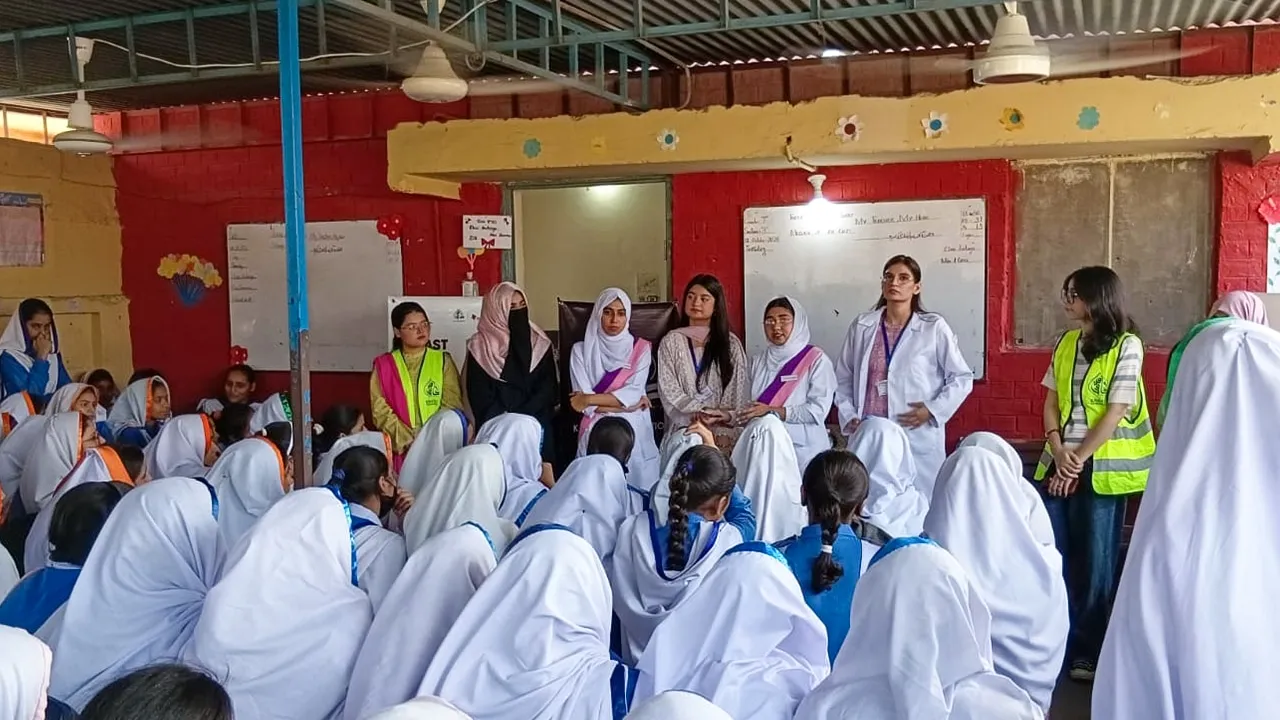
During this Pink October, Wateen shifted its corporate awareness efforts outside the office walls and into classrooms across Lahore, partnering with Kaavish Foundation and Shalamar Hospital to reach approximately 500 school-going girls with vital health education.
While companies often limit health sessions to female employees, Wateen wanted to reach young girls who lack safe spaces to ask questions about their changing bodies, tackling the silence and misinformation surrounding breast health.
Taking Awareness Beyond The Workplace
Wateen previously held internal sessions for women within the company, but this year the firm moved that commitment into communities and classrooms throughout Lahore to confront embarrassment and years of gendered upbringing.
Achieving this goal required proper medical expertise and established community trust rather than a standard corporate presentation.
Building Trust To Break The Silence
Kaavish Foundation served as the outreach partner to open doors within communities and classrooms, while Shalamar Hospital provided breast health specialists, doctors, and surgeons as knowledge partners to deliver accurate guidance.
By combining community trust and medical care, the initiative successfully reached about 500 students across Government Girls High School in Wafaqi Colony, Government Girls Kinnaird High School, and Begum Inayat Welfare Home.
Making Room For Difficult Conversations
Beyond the statistics, the program created space for teenagers to overcome awkwardness, ask serious questions, and challenge myths they had learned growing up.
The sessions encouraged students to listen and speak up, aiming to normalize seeking reliable health information rather than turning teenagers into medical experts during a single meeting.
Where The Real Impact Begins
Wateen noted that changing generational attitudes requires continuous effort beyond a single campaign, hoping the knowledge shared in these classrooms will extend into homes and foster open discussions about women health.
True corporate social responsibility goes beyond wearing pink ribbons, requiring companies to help spark essential conversations in places where topics are frequently avoided, one classroom and one dialogue at a time.