Understanding the Non-Custom-Paid Vehicle Crisis in Khyber Pakhtunkhwa
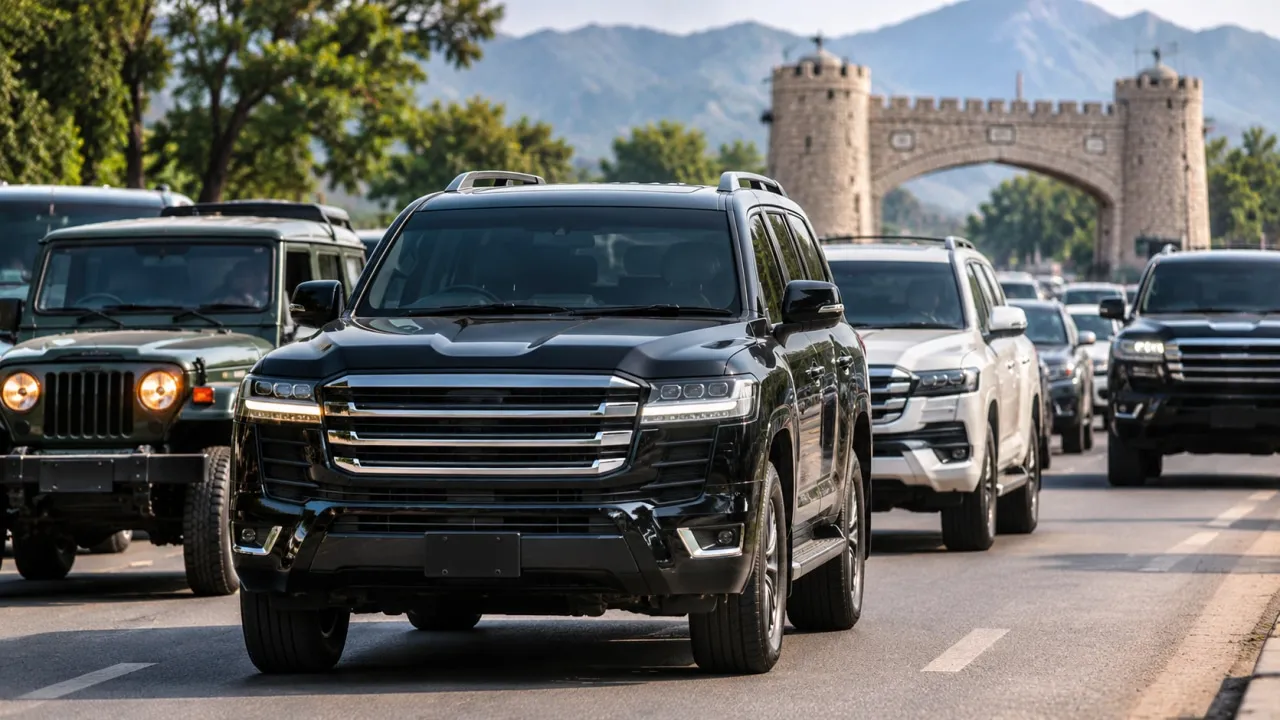
An estimated 400,000 non-custom-paid vehicles are operating in Khyber Pakhtunkhwa's merged districts and Malakand Division despite the expiry of the legal exemption that previously allowed their use, according to an official document. These automobiles circulate freely across mountainous terrains and regional highways without official registration, standard taxation, or formal documentation, creating a massive regulatory challenge for state institutions.
The five-year concession expired on June 30, 2023, and no new legal order has been issued to authorize the continued use of these vehicles. The KP Excise Department has completed profiling 169,860 vehicles, while an estimated 180,000 to 230,000 remain unrecorded. Without an active legal framework, every single one of these motor cars operates outside national tax laws and regulatory oversight.
The document also estimates that 700 to 1,000 additional NCP vehicles enter the affected areas every month, highlighting the scale of the enforcement challenge. This steady influx compounds the existing backlog, showing that the regional transportation grey market continues to expand even while authorities debate long-term policy solutions.
Malakand Division Focuses the Scale of Unregistered Transport
The number of NCP vehicles in Malakand Division is estimated at 270,000. The division had 109,117 reported vehicles in 2018, while district administrations reported 125,393 vehicles to Customs, most of them located in Malakand. This high concentration points to how deeply integrated foreign-sourced transport has become in the local economy of Pakistan's northern regions.
Under the Customs Act, 1969, NCP vehicles are liable to seizure and legal action. However, enforcement has remained limited because of security concerns and the absence of a permanent Customs presence in the affected areas. Law enforcement personnel often face operational hurdles that prevent routine policing and vehicle inspections in remote mountain valleys.
Customs authorities also face a lack of secure facilities to detain seized vehicles and resistance from local communities. Operations have largely been restricted to areas surrounding the affected regions because of security and operational difficulties. Without safe storage compounds or backup support, officers cannot safely impound thousands of cars.
The Absence of a Regularization Mechanism
The document highlights that no clear mechanism exists to regularize the 169,860 vehicles already profiled by the provincial authorities. Owners who participated in data-collection drives still possess no legal pathway to pay duties and obtain legitimate registration plates.
It also raises concerns over reports that terrorists are using NCP vehicles for transportation and logistical purposes. Because these machines lack tracker systems or verifiable ownership records, militant groups frequently exploit them to move undetected across administrative boundaries.
Between August and December 2023, Customs authorities registered 70 major cases involving NCP vehicles. These interventions demonstrate that while broad enforcement is difficult, authorities intercept high-profile shipments when specific intelligence becomes available.
The document describes the issue as a significant legal, revenue, and enforcement challenge, calling for a coordinated and clearly defined policy at the federal level. Resolving the crisis requires bridging the gap between Islamabad and provincial administrators.
Clashes Between Federal and Provincial Governments Over Amnesty
The matter is not new. In 2023, the federal government ruled out an amnesty scheme for NCP vehicles, citing Pakistan's IMF commitments and concerns over corruption in previous regularization attempts. International lenders monitor taxation reforms closely, making blanket pardons politically sensitive for federal finance ministers.
In 2024, the KP government proposed a six-month amnesty to bring more than 200,000 vehicles into the tax net, with owners paying customs duties and registration fees. Provincial leaders argued that collecting revenue locally would benefit the regional economy while documenting previously hidden assets.
The provincial government accused the Centre of sitting on its proposal but Federal tax authorities, however, have reservations about another amnesty, pointing to alleged fraud in earlier schemes. Tax officials remember past regularization drives where documentation was falsified to clear smuggled automobiles improperly.
The disagreement has resurfaced in 2026, with federal authorities reportedly considering phased enforcement, temporary registration and action against certain categories of vehicles, while local communities have resisted taxation and enforcement measures. Citizens accustomed to using inexpensive imported transport view new fiscal demands with deep suspicion, setting the stage for ongoing institutional friction.