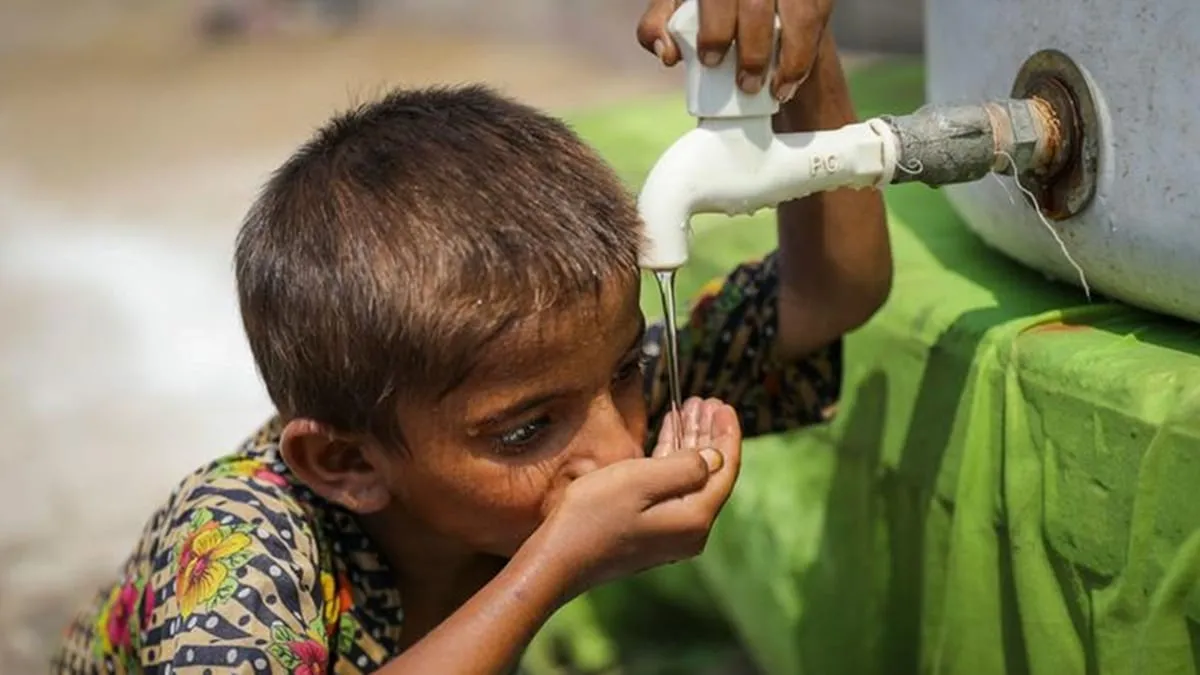
The World Bank has approved $300 million in financing to expand access to clean drinking water, sanitation, and hygiene services for 1.5 million people across selected rural areas of Sindh. The project aims to tackle unsafe water supplies and poor sanitation, which contribute to widespread child malnutrition and stunted growth in the province.
The financing will support the first phase of the Sindh Transformational Accelerated Rural Water Supply, Sanitation, and Hygiene Services Project, known as STAR WASH-1.
The initiative will provide targeted communities with safe water supplies, improved sanitation facilities, and better hygiene services.
Why Child Stunting Is Central to the Project
More than half of children under five in rural Sindh suffer from stunted growth. The World Bank attributes the condition largely to repeated bouts of diarrhoea caused by contaminated water and inadequate sanitation. Diarrhoeal disease interferes with nutrient absorption, limiting both physical stature and cognitive development.
"Stunting is among Pakistan's most severe and persistent human capital challenges, and unsafe water, sanitation and hygiene is a major underlying driver," said Bolormaa Amgaabazar, World Bank Country Director for Pakistan. She emphasized that expanding access to water, sanitation and hygiene (WASH) services would directly address one of the root causes of child stunting.
Stunting not only affects individual health; it reduces future earnings potential, increases susceptibility to chronic disease, and places a long-term burden on the health system. By improving WASH conditions, the project seeks to break this inter-generational cycle.
Project Design: Solar-Powered Infrastructure and Job Creation
STAR WASH-1 will finance climate-resilient infrastructure, including solar-powered water supply systems and upgraded sanitation facilities. Solar energy reduces reliance on diesel generators, cuts operating costs, and aligns with Pakistan's commitment to renewable energy under its National Climate Change Policy.
The project also incorporates a social and behavior-change programme aimed at encouraging better personal and environmental hygiene practices. Community health workers will receive training to promote hand-washing, safe water storage, and latrine use.
Target metrics include halving water contamination at the point of use and connecting 80 percent of targeted rural communities to professional water and sanitation service providers. The shift from purely capital-intensive construction to sustainable service delivery is intended to ensure long-term financial viability.
STAR WASH-1 is projected to generate more than 14,000 jobs during its implementation. Positions span construction, solar panel installation, operation and maintenance of water treatment units, and community outreach. The initiative will also support the formalisation of the Sindh People's Housing for Flood Affectees as a rural water and sanitation utility company, creating a legal and financial framework for ongoing service provision.
Financing Structure and the Full Four-Phase Programme
Bekele Debele Negewo, Lead Water Resources Management Specialist at the World Bank, noted that investments in water and sanitation extend beyond physical assets by strengthening human capital and supporting healthier, more productive communities.
STAR WASH-1 is the first phase of a four-phase Pakistan Rural Water, Sanitation, and Hygiene Services Program slated to run over ten years. The total cost of the full programme is $540 million.
Financing breakdown:
- World Bank: $300 million
- Asian Development Bank: $150 million under a Full Mutual Reliance Framework
- Government of Sindh: $90 million equivalent in counterpart funding
How STAR WASH-1 Aligns With National and International Policies
The project aligns with the World Bank Group's Water Forward initiative, which frames water security as a foundation for employment, investment, economic growth, human development, and resilience. Within Pakistan, the initiative dovetails with the National Water Policy (2018) that calls for universal access to safe water by 2030, and the Pakistan Vision 2025 which targets reductions in child malnutrition.
Provincial authorities in Sindh have identified WASH as a priority in the Sindh Sustainable Development Strategy 2022-2027. The strategy emphasises climate-smart infrastructure, community participation, and gender-sensitive service delivery, principles embedded in STAR WASH-1.
Implementation Timeline and Monitoring Mechanisms
The first phase will begin in early 2027, with a 24-month construction window for solar-powered water plants and sanitation blocks. Following construction, a 12-month period will be devoted to community training and the rollout of behaviour-change campaigns.
Monitoring will be conducted through a joint steering committee comprising World Bank officials, representatives from the Asian Development Bank, and the Sindh provincial government. Quarterly progress reports will track key performance indicators such as:
- Percentage of households with access to safe drinking water
- Incidence of diarrhoeal disease in children under five
- Number of functional sanitation facilities per 1,000 population
- Employment generated directly and indirectly by the project
What Residents Can Expect on the Ground
For villagers in the selected districts, the project will bring concrete changes: piped water points powered by solar panels, gender-segregated latrines, and community hand-washing stations. Local entrepreneurs will have the opportunity to operate water kiosks under the new utility company, creating a revenue stream that can be reinvested in maintenance.
Health workers will conduct regular visits to educate families on safe water storage, proper hand-washing techniques, and nutrition. Schools will receive safe drinking water facilities, reducing absenteeism caused by water-borne illnesses.
What to Watch for as the Project Moves Forward
Stakeholders will monitor the following milestones:
- Completion of the first solar-powered water treatment plant by Q4 2028
- Achievement of the 80 percent service-provider connection target by mid-2029
- First annual health impact assessment report, expected in early 2030
Broader Implications for Pakistan's Rural Development
If successful, STAR WASH-1 could serve as a model for other provinces facing similar WASH challenges. The integration of renewable energy, private-sector participation, and behaviour-change programming reflects a shift toward sustainable service delivery rather than one-off construction projects.
Reducing child stunting has macro-economic benefits: a healthier workforce, lower health-care costs, and improved educational outcomes. The project therefore contributes to Pakistan's broader goals of poverty reduction and inclusive growth.
Overall, the $300 million World Bank financing marks a decisive step toward ending water-related health crises in rural Sindh and safeguarding the development potential of the province's youngest citizens.





