Xiaomi has introduced the Xiaomi 18 Pro and Xiaomi 18 Pro Max to international markets at its global launch event in Paris on November 17, 2026. This announcement marks a major shift for the company, bringing a high-end device lineup to global buyers after the previous Xiaomi 17 Pro series remained exclusive to China.
The new flagship smartphones arrive with a distinctive set of hardware choices, including dual 200MP Leica cameras, secondary AMOLED screens mounted on the back panel, advanced Qualcomm Snapdragon processors, and energy-dense silicon-carbon batteries. Consumers across international regions can now access specifications that compete directly with top-tier competitors in the mobile industry.
Design and Display Specifications of the Xiaomi 18 Pro Series
The Xiaomi 18 Pro features a compact 6.4-inch LTPO AMOLED display with a resolution of 1120 × 2436 pixels. Meanwhile, the larger Xiaomi 18 Pro Max offers a 6.9-inch LTPO AMOLED panel with a resolution of 1208 × 2624 pixels. Both screens support a smooth refresh rate of up to 120Hz and achieve a peak brightness of 4,000 nits.
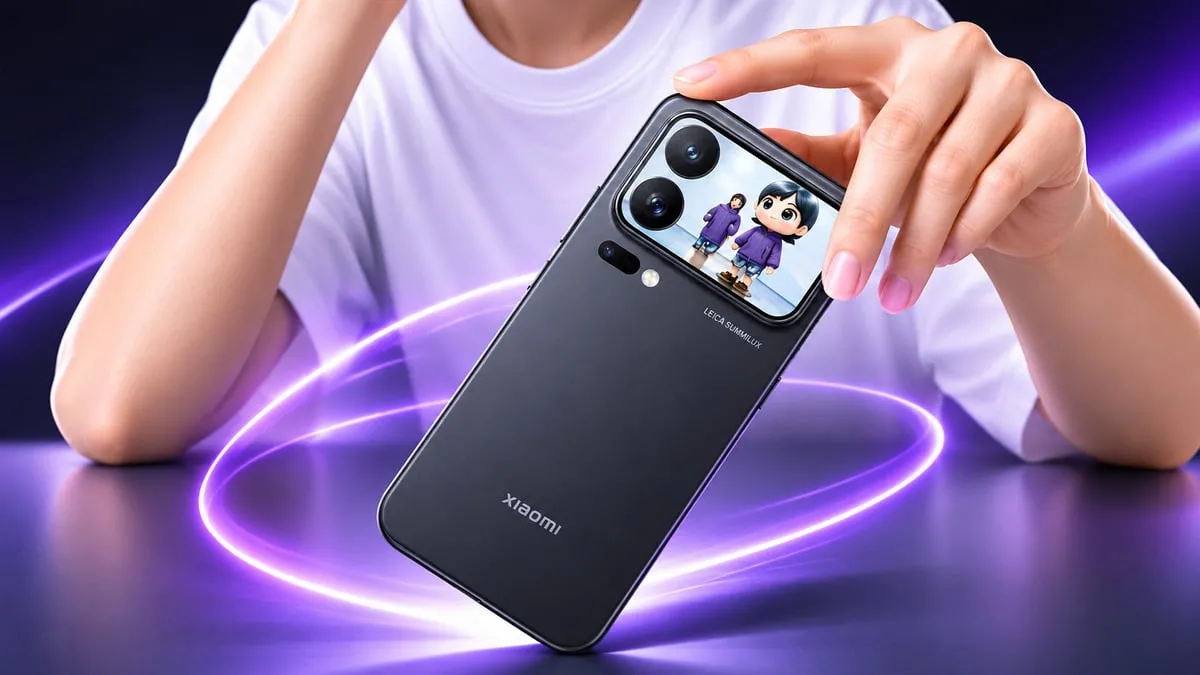
Beyond the primary screen, the Xiaomi 18 Pro integrates a 2.7-inch secondary AMOLED display beside its rear cameras. The Pro Max version steps up to a slightly larger 2.9-inch rear screen. These secondary panels serve multiple practical functions, including showing notifications, incoming calls, reminders, timers, and boarding passes without opening the main interface.
Users can also use these rear screens as viewfinders when capturing selfies with the primary camera system. Xiaomi includes customizable widgets, AI-generated wallpapers, and interactive application cards for the rear panels. Additionally, the phones incorporate Xiaomi Privacy Display technology, which limits side-angle visibility to keep on-screen content private from nearby onlookers. Both models are manufactured in four color options consisting of Black, Cosmic Blue, White, and Velvet Red.
Internals, Processing Power, and HyperOS Software
Performance forms a core element of the new series, with the Xiaomi 18 Pro running on Qualcomm's Snapdragon 8 Elite Gen 6 chipset. The higher-tier Xiaomi 18 Pro Max relies on the Snapdragon 8 Elite Extreme Gen 6 processor. Both silicon components use a 2nm manufacturing process, with the Pro Max processor capable of reaching a maximum CPU frequency of 5GHz.
On the software side, the devices operate on Xiaomi HyperOS 4 built on top of Android 17. The hardware supports up to 16GB of RAM and 1TB of internal storage, though exact retail configurations can vary depending on the target market. The interface integrates several artificial intelligence additions, such as personalized application cards, document summarization, voice translation, and AI-generated wallpapers.
The integration between the primary hardware and software allows the rear displays to present selected data feeds without requiring the user to wake the main screen. Furthermore, an AI Creativity Assistant comes built into the software suite, supporting motion deblurring, reflection removal, and advanced image expansion for photography enthusiasts.
Leica-Branded Camera System and Dual 200MP Sensors
Optics are a primary selling point for the new releases, as both smartphones incorporate Leica-branded camera arrays featuring two distinct 200MP sensors. The camera module houses a 200MP main camera using Leica Summilux optics alongside a 200MP periscope telephoto camera. A 50MP ultrawide camera and a 50MP front-facing camera complete the photographic hardware.
The Xiaomi 18 Pro Max stands out with a 1/1.28-inch main camera sensor and a 1/1.56-inch periscope telephoto sensor that delivers 3.2x optical zoom capabilities. The telephoto unit also accommodates macro photography, focusing on subjects positioned as close as 12cm away. Xiaomi introduces a Power Prism telephoto system alongside specialized Leica shooting modes, including black-and-white film simulations and vintage-style image profiles.
Videographers benefit from 8K video recording at 30fps supported by built-in stabilization. As noted, the rear display panels allow creators to frame photographs and videos accurately while using the primary camera array for self-portraits or vlogging tasks.
Battery Capacities, Charging Speeds, and European Pricing
Power delivery differs slightly between the international editions and their domestic counterparts. The global Xiaomi 18 Pro includes a 6,000mAh silicon-carbon battery supporting 90W wired charging and 50W wireless charging. The global Xiaomi 18 Pro Max steps up to a 7,050mAh battery with 100W wired and 50W wireless charging capabilities.
These international capacities are somewhat reduced compared to the versions sold in China, where the Xiaomi 18 Pro contains a 7,000mAh battery and the Pro Max features an 8,500mAh cell. Regarding retail costs, the Xiaomi 18 Pro starts at €1,099 for the variant with 12GB of RAM and 256GB of storage. The Xiaomi 18 Pro Max carries a price tag of €1,399 for the 16GB RAM and 512GB storage configuration.
Buyer support packages include selected after-sales benefits, such as one complimentary screen replacement and one rear-cover, rear-display, or camera-lens replacement within a 24-month window, subject to eligibility terms. Buyers also receive international warranty coverage alongside trial subscriptions for Spotify Premium, YouTube Premium, and Google AI Pro. While regional sales timelines vary across territories, Xiaomi confirmed that official pricing and availability for Pakistan have not been announced.