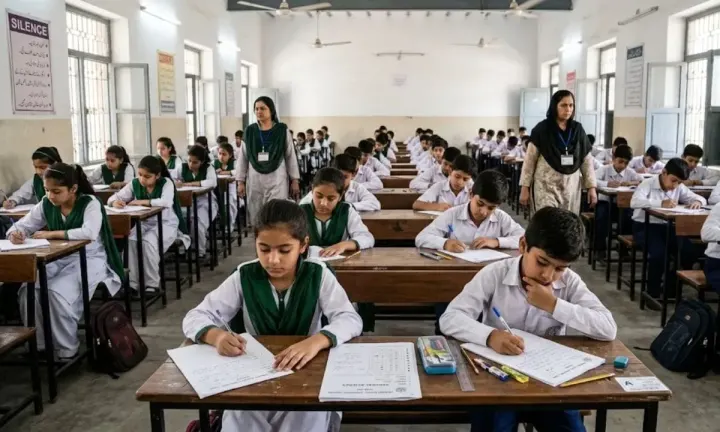
The Board of Intermediate and Secondary Education (BISE) Rawalpindi has postponed the Computer Science papers of the Intermediate Second Annual Examinations 2026 in Jhelum district, rescheduling them for November 30.
Why the Schedule Change Was Made
The papers were originally scheduled for November 10. The decision followed a request from the Jhelum deputy commissioner, who cited administrative and security arrangements for the expected visit of Punjab Chief Minister Maryam Nawaz Sharif to Jhelum and Pind Dadan Khan on the same day.
According to a letter obtained by Dawn, the deputy commissioner informed the BISE Rawalpindi chairman that the district administration would deploy administrative and security personnel for the chief minister's visit. The official said these arrangements could affect the smooth and uninterrupted conduct of the examinations and requested that the papers be moved to another date.
Official Response and Revised Timetable
BISE Rawalpindi accepted the request and rescheduled the Computer Science examinations for both morning and evening groups. Board spokesperson Arslan Cheema confirmed that Controller of Examinations Mubashir Saeed had issued a notification announcing the revised schedule.
The board clarified that the postponement applies only to examination centers in Jhelum district. Students appearing at centers in other districts under BISE Rawalpindi will take their Computer Science papers on November 10 as originally scheduled.
In Jhelum, the morning group's paper will now take place on Monday, November 30, during the morning session, while the evening group's examination will be held during the evening session at the previously assigned centers.
The controller of examinations also said the board would issue new roll number slips for affected students. However, students can continue using their previously issued roll number slips as well.
Background: How BISE Examinations Are Managed
BISE Rawalpindi is one of Pakistan's provincial examination boards, responsible for conducting intermediate (higher secondary) examinations across several districts, including Rawalpindi, Jhelum, and others. The board follows a strict calendar set each year, with separate dates for each subject and separate sessions for morning and evening groups to accommodate the large number of candidates.
Examination logistics involve coordination between the board, district administrations, and security agencies. Each centre receives a roll number slip, a sealed question paper, and invigilators appointed by the board. Any disruption, such as a large public event, a security operation, or a natural disaster, can jeopardise the integrity of the exam process.
Explainer: Role of the Deputy Commissioner in Exam Scheduling
The deputy commissioner (DC) is the senior administrative officer of a district, overseeing law and order, revenue collection, and implementation of provincial policies. While the DC does not set exam dates, the office can request changes when district-level events threaten the smooth conduct of examinations.
In this case, the DC's letter highlighted two specific concerns: the need to allocate police and administrative staff to secure the chief minister's itinerary, and the potential for traffic congestion and crowd control issues that could delay students arriving at exam centres.
Impact on Students and Schools
The postponement directly affects roughly 1,200 students registered for Computer Science in Jhelum district. These learners must adjust study schedules, revise travel plans, and possibly rearrange personal commitments such as part-time jobs or family responsibilities.
Schools and private tuition centres in Jhelum will also need to adapt. Many provide last-minute revision sessions aligned with the original November 10 date; they will now have an additional ten days to prepare students, which could be beneficial for those who felt under-prepared.
For students in other districts, the schedule remains unchanged, meaning they will sit for the same paper on November 10. This split timing creates a brief period where results will be processed for two different dates, but the board's standard procedures can accommodate such variance.
What Comes Next: Administrative Steps and Deadlines
After the board's notification, the following steps are expected:
- Distribution of new roll number slips to Jhelum candidates, either through school offices or direct mail.
- Re-printing and secure transport of the revised question papers to the designated centres on November 30.
- Briefing of invigilators and security staff about the changed timetable.
- Final confirmation of the chief minister's itinerary to ensure no further clashes.
The board has not indicated any further changes, but any additional large-scale events in Jhelum before November 30 could prompt another review. Students and parents are advised to monitor official board communications, which are typically posted on the BISE Rawalpindi website and circulated through school heads.
Practical Takeaways for Affected Candidates
Students should keep the following in mind:
- Check the revised roll number slip once it arrives; the slip number remains the same, but the date field will show November 30.
- Confirm the exact centre and session (morning or evening) assigned to you, as the board has kept the original centre allocations.
- Use the extra ten days to review key topics, especially practical coding questions that often appear in Computer Science papers.
- Arrange transportation early, as traffic may still be heavier due to the chief minister's visit on the same day.
- Stay updated through school notices or the board's official SMS alerts.
By following these steps, students can minimise disruption and maintain focus on their preparation.
Broader Context: Exam Scheduling Around Political Events
Postponing examinations for security reasons is not unprecedented in Pakistan. Similar adjustments have occurred during elections, high-profile judicial visits, and natural disasters. The practice reflects a balance between safeguarding students' right to a fair exam environment and ensuring public safety.
Critics sometimes argue that such changes cause inconvenience, but the legal framework empowers district administrations to request alterations when public order is at stake. The board's swift acceptance of the Jhelum DC's request demonstrates compliance with that framework.
As the November 30 date approaches, the board will likely conduct a dry run to verify that question papers reach each centre on time and that security protocols are in place. Successful execution will reaffirm the board's capability to manage unforeseen disruptions while upholding examination standards.