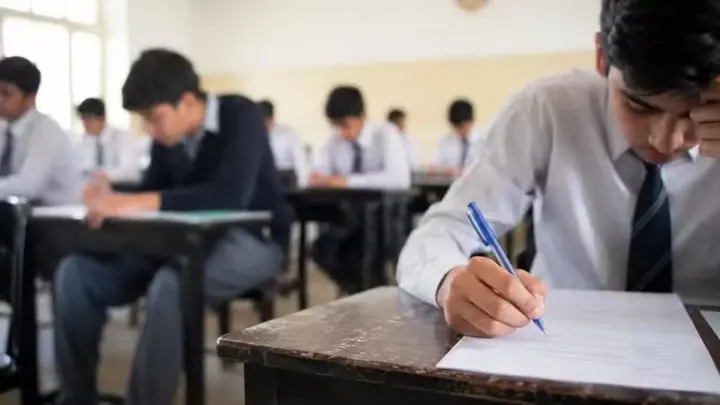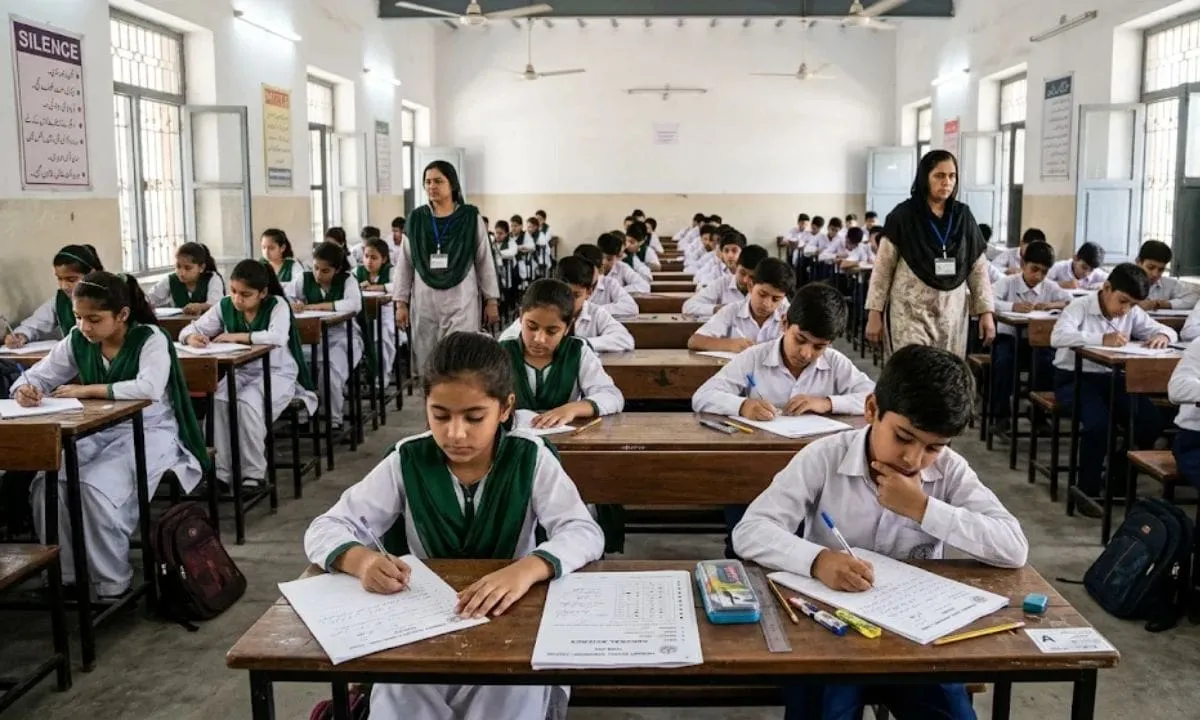
Punjab has postponed the planned board examinations for Class 5 students, replacing them with an assessment exercise by the Punjab Education, Curriculum, Training and Assessment Authority (PECTAA) for the current academic year.
According to media reports, students will appear in regular board examinations from next year as part of a phased examination system introduced to reduce academic pressure on children.
Punjab Education Minister Rana Sikandar Hayat said the Class 5 assessment would be conducted through a transparent and fair process.
Meanwhile, Class 8 examinations will continue under the existing system, with students appearing in four major subjects. The examinations will be conducted using special e-sheets, while on-screen marking will be introduced to ensure the digital assessment of answer sheets.
Back in August, the Punjab Education Department announced that board examinations would be introduced for Grades 5 and 8 starting in 2026. The decision followed poor student performance in recent Board of Intermediate and Secondary Education (BISE) examinations for Grades 9 and 10.
Private educational institutions were exempt from the requirement, with participation remaining voluntary for private schools and mandatory for government schools.
Why Punjab Is Changing the Class 5 Exam Structure
The shift comes after a series of evaluations of student outcomes across the province. In 2022 and 2023, BISE results for Grades 9 and 10 showed a decline in pass rates, prompting officials to reconsider the assessment timeline for younger learners. Education experts argue that early high-stakes testing can increase stress and may not accurately reflect learning.
By moving the Class 5 board exam to a later year and substituting it with a PECTAA-run assessment, the province hopes to give teachers more time to strengthen foundational skills before subjecting pupils to a formal board test.
How the New Assessment Will Be Conducted
PECTAA, the body that designs curriculum and oversees testing, will administer the assessment using a blend of written tasks and practical activities. The authority has pledged a transparent process, with clear guidelines released to schools in early September.
Key features of the assessment include:
- Standardized question papers distributed to all participating schools.
- Answer sheets designed for manual marking, avoiding the digital platform used for Grade 8.
- Independent moderators appointed to audit scoring and address any discrepancies.
Schools will receive the papers two weeks before the scheduled test date, allowing teachers to conduct brief revision sessions without intensive cram.
What Happens to Class 8 Exams Under the Current System
While Class 5 moves to an assessment model, Class 8 students will sit for examinations in four major subjects as usual. The province has introduced special e-sheets for these exams, a step toward full digitisation.
On-screen marking will be used for the first time, meaning that answer sheets will be scanned and evaluated by software that flags inconsistencies for human reviewers. This hybrid approach aims to speed up result processing and reduce human error.
Impact on Government and Private Schools
Government schools are required to follow the new assessment schedule. Private schools, however, remain exempt unless they choose to participate voluntarily. This dual approach reflects the province's intent to pilot the system in the public sector before broader adoption.
For teachers in government schools, the change means adjusting lesson plans to align with the assessment criteria rather than board exam syllabi. Training workshops organized by PECTAA will run throughout October and November to equip educators with the necessary tools.
Background: The 2026 Board Exam Plan
In August, the Punjab Education Department announced a long-term plan to introduce board examinations for Grades 5 and 8 beginning in 2026. The announcement was a response to data showing that students struggled with the transition from primary to secondary education, especially in mathematics and science.
The 2026 rollout was intended to be phased, with Grade 5 exams first, followed by Grade 8 two years later. The current postponement delays the Grade 5 component by one year, aligning it with the broader phased strategy.
What Parents and Students Should Expect
Parents can expect a communication packet from their school outlining the assessment dates, format, and preparation tips. No additional fees are being introduced for the assessment, as it is funded by the provincial education budget.
Students will not face the high-stakes pressure of a board exam this year. Instead, they will complete the PECTAA assessment, which will be scored and reported in a manner similar to regular school reports.
Next Steps and Monitoring
The Education Ministry has set up a monitoring committee to review the assessment's effectiveness. The committee will publish a report by March 2025, covering student performance, teacher feedback, and any logistical issues.
Should the assessment prove successful, the Ministry plans to retain the phased board exam schedule for 2026, with the possibility of extending the transparent assessment model to other grades.
Practical Takeaways for Readers
1. Class 5 board exams are postponed; an assessment will replace them for the current year.
2. Class 8 exams continue with e-sheets and on-screen marking.
3. Private schools can opt in, but participation is not mandatory.
4. The change is part of a broader effort to reduce academic pressure and improve learning outcomes.
5. A review will be published in early 2025 to inform future policy decisions.