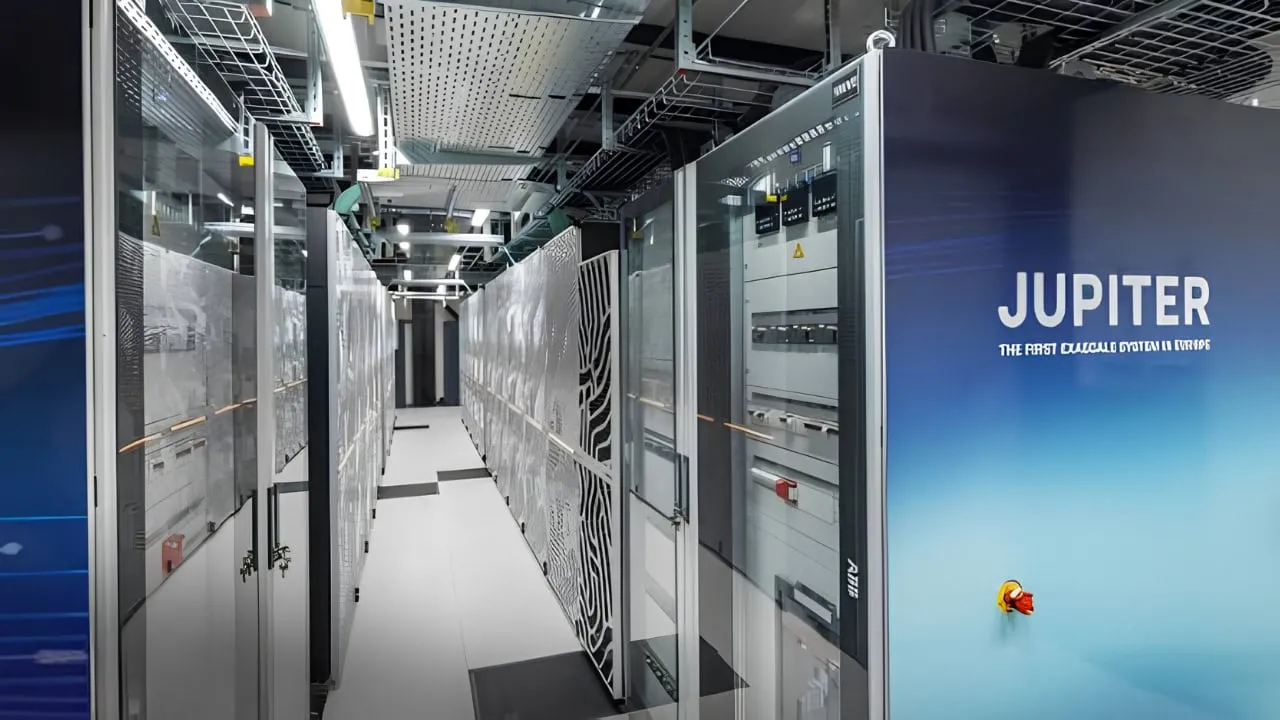
NVIDIA ran a simulation of a 104-qubit fault-tolerant quantum computer on JUPITER, which is Europe's initial exascale supercomputer. Situated at the Jülich Supercomputing Centre in Germany, this test stands as the biggest comprehensive simulation of its type so far. According to NVIDIA, the project assists in evaluating quantum computer designs prior to the physical creation of the hardware.
The corporation revealed this achievement on October 21, preceding GTC Berlin 2026. The simulation simulated magic state cultivation, which is a process for creating specific quantum states required by fault-tolerant operations. NVIDIA stated that this technique requires 90% fewer qubits than older methods to produce these states. The complete simulation executed on standard hardware instead of a quantum processor.
Magic states are distinct qubit configurations used by fault-tolerant quantum computers during operations. Because of this, any enhancement in creating them directly lowers the complexity of constructing a functional quantum device. The simulation incorporated actual hardware noise, including interference from control machinery, rather than operating under perfect circumstances. It also followed about 35.2 trillion complex amplitudes within its state vector.
The 104-qubit execution used 8,192 NVIDIA GH200 Grace Hopper GPUs across the architecture of JUPITER. Investigators built and evaluated the model on an NVIDIA GB200 NVL72 system at the NVIDIA Accelerated Quantum Research Center before expanding to JUPITER. They expanded tests from four GPUs up to hundreds before using the full scale of JUPITER. This staging process cut the simulation schedule down from weeks to days.
Jülich executed a 50-qubit simulation on JUPITER under noise-free conditions in November 2025. The recent 104-qubit simulation more than doubled the qubit total while incorporating realistic noise simulation. JUPITER launched in September 2025 as the initial exascale system in Europe, achieving over a billion billion calculations every second.
"Useful quantum computing will require fantastically complex, fault-tolerant systems," stated NVIDIA CEO Jensen Huang. Kristel Michielsen, director of the Jülich Supercomputing Centre, noted that "Europe's investment in JUPITER gives researchers the ability to investigate questions that were previously beyond reach."
The disclosure arrived days prior to the keynote speech by Huang at GTC Berlin. The news also followed Germany establishing an artificial intelligence partnership with NVIDIA at an investment summit in Berlin. NVIDIA stated the simulation could quicken advancements in drug discovery, financial modeling, and materials science.