The Covid test-and-trace pingdemic had a direct impact on the economy, the pandemic inquiry found yesterday.
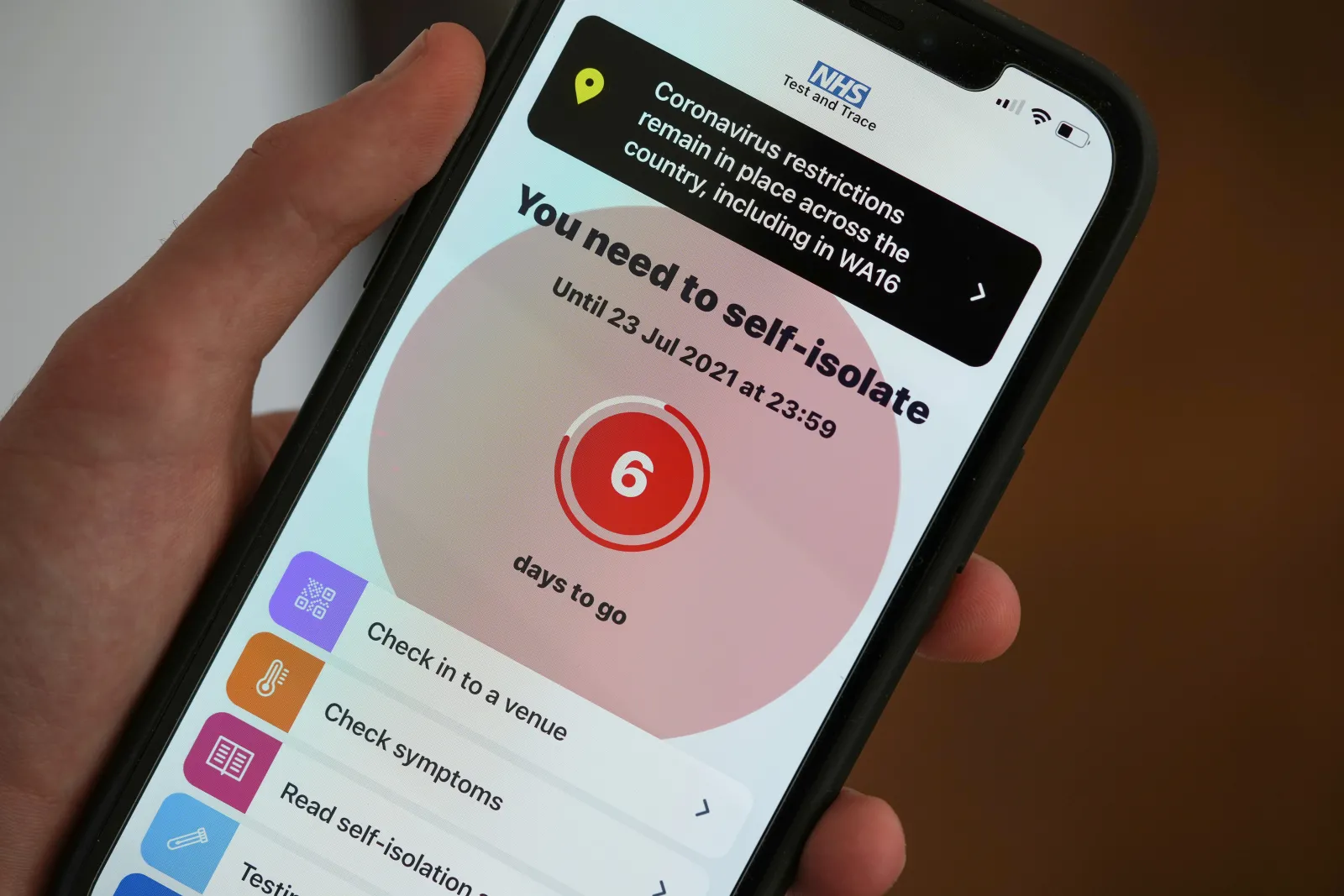
Between 2020 and 2022, the system alerted those on the NHS Covid app if they had come in contact with someone who tested positive, and told them to self-isolate even if having no symptoms.
How Many People Were Forced to Isolate?
In July 2021, 4.5 million, about seven per cent of the population, were isolating, owing to getting a ping. The report said: "This had a significant impact on labour supply as large numbers of people were temporarily unable to attend work."
Why the Pingdemic Affected Labour Supply
The NHS Covid app was introduced as part of the UK's Test, Trace, Protect (TTP) strategy, a legal framework that required anyone receiving a proximity alert to stay at home for ten days. The rule applied to all sectors, from retail and hospitality to manufacturing and public services. Because the guidance did not differentiate between symptomatic and asymptomatic individuals, many workers who felt well nevertheless had to miss shifts.
Employers reported staffing shortages that forced some businesses to close temporarily, reduce opening hours, or rely on costly agency staff. The hospitality sector, already weakened by earlier lockdowns, saw a sharp drop in revenue during the peak of the pingdemic, with the British Hospitality Association estimating a loss of £1.2 billion in July alone.
Background to the Test-and-Trace System
Test-and-trace was launched in May 2020 under the direction of Public Health England (PHE), which later became the UK Health Security Agency. The system combined laboratory testing, manual contact tracing, and a digital exposure notification app. By early 2021, the NHS Covid app had been downloaded by more than 30 million people, making it one of the most widely used health apps in the world.
However, the app's algorithm relied on Bluetooth proximity data that could generate false positives, especially in crowded indoor settings. Critics argued that the lack of a symptom check before issuing an isolation order amplified the economic impact without proportionate health benefits.
What the Inquiry Says About the PCR Test
The inquiry also found the UK created a world-beating Covid test thanks to a £25 billion spend, but thousands died because we were too slow to use it.
Its latest report praised the now-defunct Public Health England for developing a "gold standard" coronavirus PCR test by January 2020, before other countries. The test achieved a sensitivity of 99.8 per cent and a specificity of 99.9 per cent, meeting WHO criteria for a reliable diagnostic tool.
Despite the technical success, the rollout was delayed by bureaucratic hurdles and supply-chain bottlenecks. The report notes that health chiefs were blind to the bug spreading "with deadly speed, virtually unchecked" because community testing capacity remained limited until the autumn of 2020.
Border Controls and Early Containment Failures
A failure to close international borders and stop early cases coming in from abroad were also a "critical gap" in UK defences, the UK Covid-19 Inquiry said. The first wave entered primarily through travellers from Europe and the United States, at a time when quarantine rules were either absent or poorly enforced.
Pre-prepared strategies would have avoided lockdowns and better equipped countries including Germany and Singapore had lower death rates. The inquiry points to Germany's rapid deployment of mandatory testing for inbound passengers and Singapore's aggressive contact-tracing workforce as models that the UK could have emulated.
Publication Timeline and the Seventh Report
The seventh out of ten reports, examining the NHS test, trace and isolate systems, was published on Thursday. Each report builds on the previous one, gradually painting a picture of systemic shortcomings and missed opportunities.
Chair of the inquiry, Baroness Heather Hallett, said: "When Covid-19 arrived in January 2020 the United Kingdom was simply not prepared.
"For the first three months of the pandemic, Covid-19 spread across the country virtually unchecked.
"Too many lives were cut short."
Impact on Specific Sectors
Retail chains such as Tesco and Sainsbury's reported that up to 15 per cent of their workforce were unavailable on any given day in July 2021 because of isolation alerts. The logistics sector, which underpins food and medical supply chains, faced similar pressures, leading to delayed deliveries and higher freight costs.
In the public sector, schools and local councils struggled to maintain essential services. The Department for Education estimated that 120,000 teachers were absent due to isolation orders during the summer term, prompting a temporary shift to remote learning in several regions.
What Comes Next?
The inquiry's final report is due later this year. It is expected to include recommendations on improving digital contact-tracing accuracy, establishing clearer criteria for isolation, and creating a rapid-deployment framework for future pandemics.
While the legal requirement for isolation from the NHS app has been lifted, the government has indicated that lessons learned will inform the design of any future health-security digital tools.
Practical Takeaways for Readers
For workers, the key lesson is to stay informed about any new public-health guidance that may affect employment rights. Employers should review contingency plans that include flexible staffing and remote-work options to mitigate similar disruptions.
For policymakers, the report underscores the need for a balanced approach that protects public health without imposing disproportionate economic costs. Investing in rapid-scale testing and clear border protocols can reduce reliance on blanket isolation measures.
Overall, the inquiry paints a picture of a system that achieved scientific breakthroughs but faltered in execution, leaving both lives and livelihoods at risk.