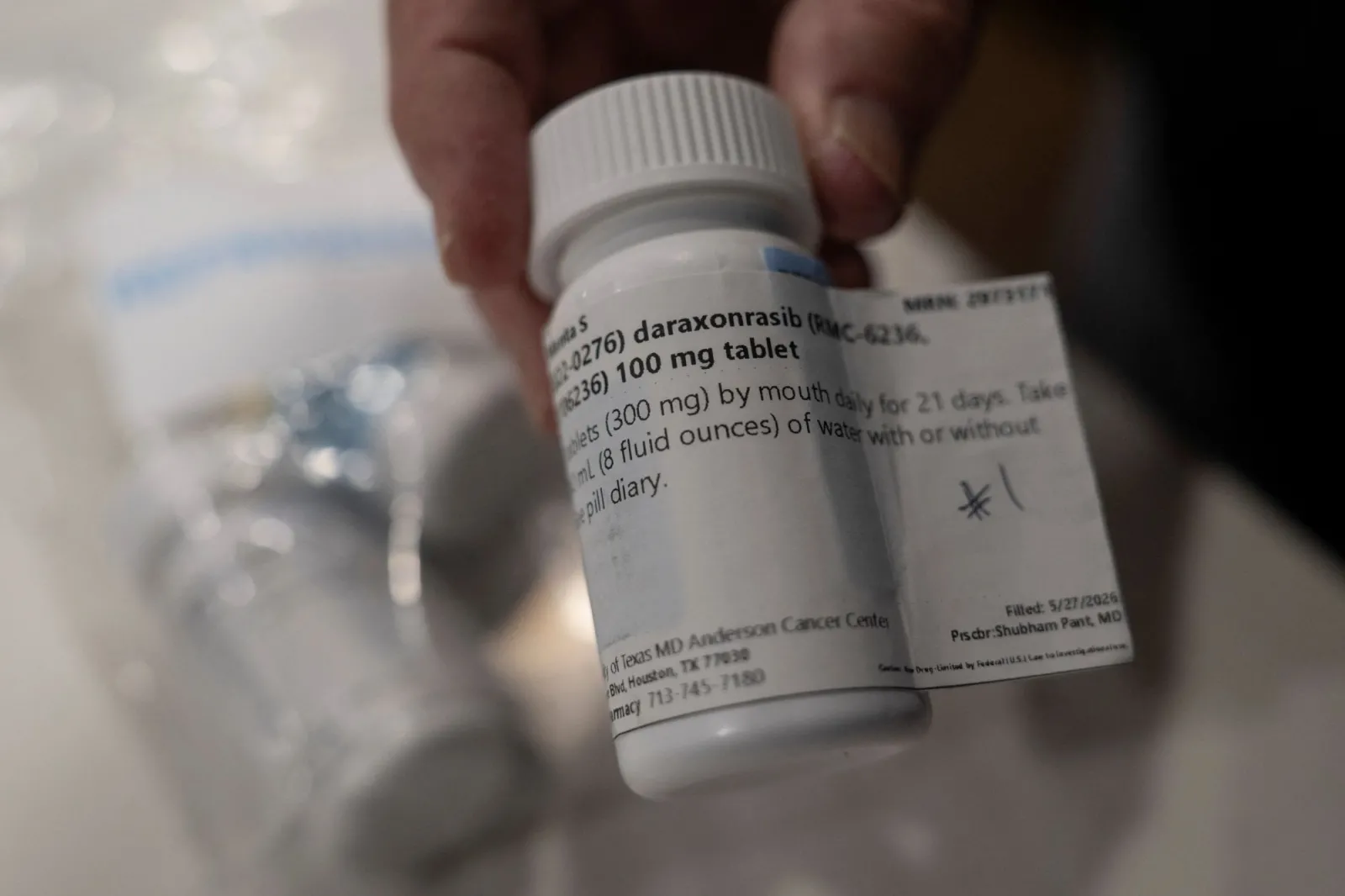
A clinical trial presented in Barcelona has shown that the oral KRAS inhibitor daraxonrasib, when used with standard chemotherapy, eliminated detectable tumours in one in twelve patients with advanced pancreatic cancer and raised one-year survival to 76.6%.
The findings, announced at the European Organisation for Research and Treatment of Cancer (EORTC) meeting, represent the most striking response recorded in decades for a disease that kills more than half of patients within three months of diagnosis.
What the Trial Revealed About Daraxonrasib
The study enrolled 61 patients with aggressive, late-stage pancreatic tumours. Participants received daily daraxonrasib tablets alongside conventional chemotherapy. After a median follow-up of 18 months, tumours had shrunk or vanished in 60.7% of the cohort, and 8.2% showed no detectable disease on imaging.
Overall, tumour growth was halted in 90.2% of patients. Most notably, 1 in 12 (8.2%) had complete radiological remission, a result described by the trial's presenter, Dr Wungki Park of Memorial Sloan Kettering Cancer Centre, as "the closest thing to a cure."
One-year overall survival was 76.6%, compared with the historical 40-45% rate for chemotherapy alone. The median time to disease recurrence for those whose cancer returned was 12.8 months.
How Daraxonrasib Works
Daraxonrasib is a small-molecule inhibitor that binds to the mutated KRAS protein, a driver mutation present in more than nine in ten pancreatic tumours. By locking the KRAS protein in an inactive state, the drug blocks a key signalling pathway that fuels uncontrolled cell growth.
KRAS has long been considered "undruggable" because of its smooth surface and high affinity for natural nucleotides. Recent advances in molecular design allowed daraxonrasib to achieve selective, high-affinity binding, effectively shutting down the oncogenic signal.
Why Pancreatic Cancer Is Hard to Treat
Pancreatic cancer is the deadliest common cancer in the UK, with around 11,500 new cases diagnosed each year and 10,200 deaths, according to Cancer Research UK. More than half of patients die within three months of diagnosis, largely because the disease is usually detected at an advanced stage.
Early symptoms, such as vague abdominal pain, unexplained weight loss, indigestion, diarrhoea, constipation, steatorrhoea, and jaundice, are often mistaken for benign conditions. This diagnostic delay limits the window for curative surgery, leaving systemic therapy as the primary option for most patients.
Expert Reactions to the Results
Michelle Mitchell, chief executive of Cancer Research UK, called the data "the biggest leap forward we've seen in decades for pancreatic cancer patients and could offer real hope to people facing one of the deadliest and most difficult-to-treat cancers."
Dr Wungki Park emphasized the unprecedented nature of the responses: "In about one in 12 patients, it (the cancer) completely disappeared... this is the closest to cure." He noted that fewer than 5% of participants stopped treatment, indicating good tolerability.
Madina Kara, head of research at Pancreatic Cancer UK, stressed the need for larger studies but welcomed the trend: "These encouraging results now show that daraxonrasib and chemotherapy can be effective when used in combination."
Potential Impact on NHS Treatment Pathways
While the data are promising, the drug is not yet approved for routine use on the NHS. The UK Medicines and Healthcare products Regulatory Agency (MHRA) will require evidence from larger, phase-III trials before granting marketing authorisation.
If subsequent trials confirm the survival benefit, daraxonrasib could become part of the standard first-line regimen for advanced pancreatic cancer, potentially extending life expectancy and improving quality of life for thousands of patients each year.
Next Steps for Research and Patients
Two larger, multicentre trials are already recruiting in Europe and North America. These studies will assess overall survival, progression-free survival, and quality-of-life endpoints in a more diverse patient population.
Researchers also plan to explore daraxonrasib in combination with immunotherapy agents, given early laboratory data suggesting KRAS inhibition may enhance tumour antigen presentation.
Patients currently enrolled in the trial will continue to be followed for long-term outcomes, including overall survival beyond two years and any late-emerging safety signals.
Practical Takeaways for Patients and Caregivers
- Early recognition of pancreatic-cancer symptoms, persistent abdominal or back pain, unexplained weight loss, jaundice, and changes in stool, remains critical for timely diagnosis.
- Patients diagnosed with advanced disease should discuss clinical-trial options with their oncologist, as enrollment may provide access to emerging therapies like daraxonrasib.
- Side-effects reported in the trial were mild compared with standard chemotherapy, but individual tolerance varies; ongoing monitoring is essential.
For clinicians, the trial underscores the importance of molecular testing for KRAS mutations, as patients with the target alteration are the ones who stand to benefit from KRAS-directed therapies.
As the scientific community awaits results from larger studies, the current data offer a tangible reason for optimism in a field that has long suffered from stagnant outcomes.