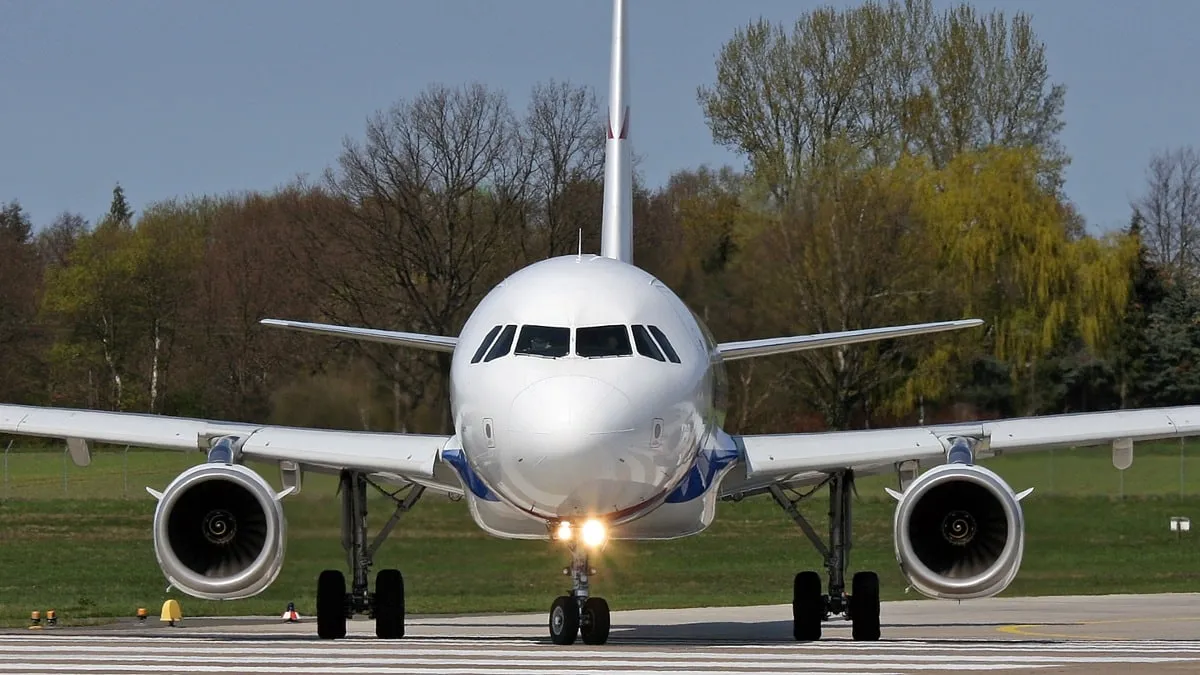
The US Federal Aviation Administration (FAA) ordered a nationwide ground stop for all departing flights on Friday after serious communications problems disrupted the country's air traffic control system.
The FAA cited "extraordinary circumstances" and safety concerns for the decision, preventing aircraft on the ground from taking off across the United States. Planes already airborne were allowed to continue to their destinations and land normally.
International departures were being handled on a case-by-case basis, according to Reuters. The nationwide order followed an earlier halt to air traffic in Chicago linked to communications problems.
What Caused the Nationwide Ground Stop?
The disruption affected communications involving the 22 regional air traffic control centers that coordinate aircraft traveling between airports across the country. Those centers, known as Air Route Traffic Control Centers (ARTCCs), rely on a network of radios, data links and ground-based radar to exchange position reports and clearance messages with pilots.
According to US Transportation Secretary Sean Duffy, technicians were dispatched to investigate the problem. While the FAA has not released a technical bulletin, past incidents have shown that a failure in the Voice Switching and Control (VSC) system or a loss of the Common Aviation Language (CAL) data link can cripple the ability of controllers to issue take-off clearances.
Because the issue spanned multiple centers, the FAA chose a blanket ground stop rather than a piecemeal approach. The decision mirrors the protocol outlined in FAA Order 7110.65, which authorizes a national ground stop when a systemic safety risk is identified.
How Rare Is a Nationwide Halt of Departures?
The incident represents one of the most significant disruptions to US aviation in years. Reuters reported that it was only the second nationwide halt of all departures since the September 11, 2001 attacks, following a system failure that temporarily grounded departures in January 2023.
In the 2001 shutdown, the FAA ordered a ground stop after the terrorist attacks, grounding all civil aviation for several days. The January 2023 event lasted a few hours and was triggered by a software glitch in the FAA's NOTAM system. By comparison, the current stop was prompted by a communications failure, a different technical category that directly impacts the real-time exchange of clearance information.
Airlines responded by notifying passengers, rebooking affected travelers, and activating contingency plans that include standby crew, alternate routing and, where possible, chartering additional aircraft once the ground stop was lifted.
Aging FAA Infrastructure Under Scrutiny
The outage has again drawn attention to aging US air traffic control infrastructure. Congress approved $12.5 billion for modernization last year, including upgrades to communications systems and the replacement of older infrastructure.
The FAA and White House on Friday also sought an additional $30.1 billion from Congress to address remaining problems with the system, according to Reuters. The request targets the NextGen program, which aims to replace radar-based surveillance with satellite-based Automatic Dependent Surveillance-Broadcast (ADS-B) and to install digital data links that can handle higher traffic volumes.
Critics argue that the funding gaps have left key components, such as the Voice Switching System and the En-Route Automation Modernization (ERAM) platform, vulnerable to failure. The FAA's own 2022 audit warned that without accelerated investment, the risk of another nationwide disruption would increase.
Impact on Passengers, Airlines and the Economy
Passengers with scheduled flights have been advised to check directly with their airlines for flight-specific delays, cancellations and revised departure times. As of the latest update, more than 5,000 flights were delayed or cancelled nationwide, affecting an estimated 1.2 million travelers.
Major carriers such as American Airlines, Delta Air Lines and United Airlines activated their customer-service hotlines and posted updates on mobile apps. Business travelers faced missed meetings, while leisure travelers risked losing prepaid hotel reservations and tour packages.
The broader economic impact includes lost revenue for airlines, estimated at $200 million in ticket refunds and rebooking costs, and ripple effects for airports, ground-handling firms and the hospitality sector that depend on passenger traffic.
What Is the FAA Doing to Restore Service?
The FAA announced that once the communications issue is resolved, the ground stop will be lifted in phases, starting with the busiest hubs. Controllers are working with airline operations centers to prioritize flights that have been airborne the longest and those carrying critical cargo.
Technicians are conducting system checks on the affected ARTCCs, verifying that voice and data links are fully functional before granting take-off clearance. The FAA expects a gradual resumption of departures over the next 12-24 hours, though exact timelines will depend on the speed of technical remediation.
What Should Travelers Do Now?
Travelers are urged to monitor airline communications, use official airline apps for real-time updates, and consider alternative transportation where feasible. Those with flexible tickets may be able to rebook without penalty, while passengers with non-refundable fares should contact their airlines for possible vouchers.
Travel insurance policies that cover flight cancellations may provide reimbursement for ancillary costs such as hotel stays and car rentals. Consumers should keep receipts and document all communications with airlines for claim purposes.
What Comes Next for US Air Traffic Control?
The FAA has scheduled a briefing with Congress to discuss the recent outage and the additional $30.1 billion funding request. Lawmakers are expected to scrutinize the allocation of funds, with particular focus on replacing legacy communication hardware and accelerating the rollout of NextGen technologies.
In the meantime, the FAA will publish a post-incident report outlining the root cause, corrective actions taken, and recommendations to prevent recurrence. Industry observers will watch for any policy changes that could affect airline scheduling, crew duty limits and airport slot allocations.