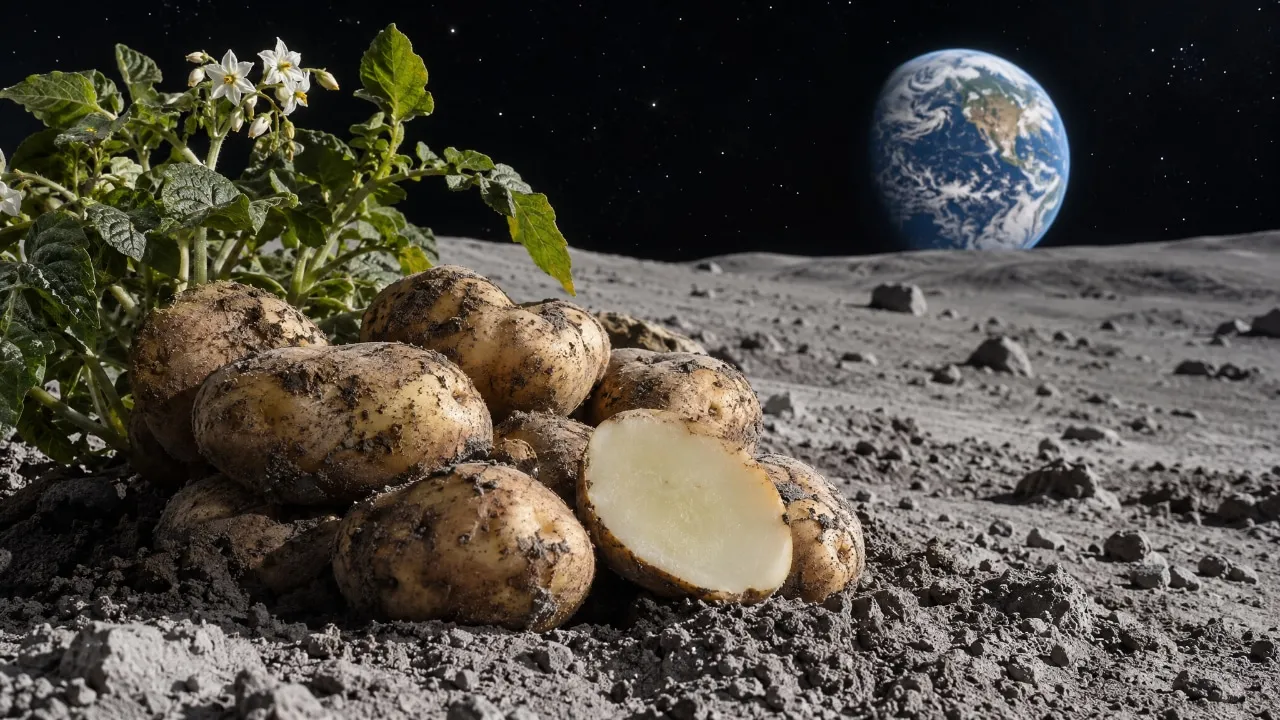
Scientists Grow Safe-to-Eat Potatoes in Moon Soil for Future Lunar Bases
Your favorite starch might be making the jump to the lunar surface. Scientists have successfully grown nutritious, safe-to-eat potatoes in simulated lunar soil, with an eye toward feeding astronauts who may staff moon bases in the coming years.
The research, supported by NASA, used a variety called Modoc, an early-maturing potato with red skin and white flesh. This scientific breakthrough addresses a major logistical hurdle for space agencies aiming to establish permanent human habitation beyond Earth.
The Secret Ingredient Behind Lunar Farming
The trick wasn't fancy tech; it was organic material. Scientists supplemented the lunar simulant with organic matter and found that with enough of it, the potatoes grew just as well as they did in Earth soil.
The study was published in the journal Microgravity, led by Oregon State University plant biologist Aymeric Goyer. Simulating lunar soil, known as regolith simulant, is chemically and physically similar to the actual dust and rock fragments found on the moon, though it lacks the biological components necessary for plant growth.
Why Growing Potatoes on the Moon Matters
The US and China both plan to send astronauts to the lunar surface in the coming years, with long-term bases on the moon. Transporting all food from Earth is impractical, so a local food source is considered vital for sustaining a moon base.
Bringing supplies from Earth incurs massive financial and weight costs for every rocket launch. Establishing in-situ resource utilization, meaning living off the land by using local materials, is the primary method space agencies intend to use for long-duration missions.
Nutritional Benefits of Potatoes for Space Exploration
Potatoes offer significant nutritional advantages for human crews operating in harsh extraterrestrial environments. They pack dense energy profiles into compact growing footprints, making them ideal for controlled environment agriculture.
Potatoes provide more calories per land area than many other crops, according to Aymeric Goyer. They are nutritious, they provide more potassium than a banana, are rich in vitamin C, have good protein, and they have a high satiety index.
Overcoming the Challenges of Lunar Regolith
Actual lunar soil is sharp, abrasive, and completely devoid of organic nutrients. It also lacks water retention capabilities, which makes untreated regolith toxic or fatal to standard plant life.
By blending organic matter into the simulant, the researchers created a growing medium that buffers the harsh chemical properties of the regolith. This mixture allows roots to absorb necessary moisture and nutrients without sustaining damage from the jagged particles.
Future Implications for Deep Space Missions
As space agencies look toward Mars and beyond, agricultural techniques developed for the moon will serve as a blueprint for interplanetary travel. Long transit times mean crews must be self-sufficient for years at a time.
The success with the Modoc variety proves that specific terrestrial crops can adapt to extraterrestrial growing mediums with proper preparation. Researchers will continue testing other crops and soil treatments to build a diverse menu for future astronauts.